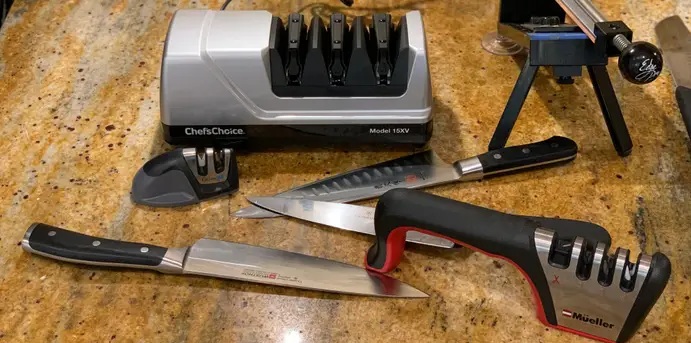
Bite loss from kitchen knives happens gradually and suddenly while chopping. A reliable sharpener should restore the edge, keep the bevel even, and avoid removing excess steel. This year, buyers have several practical choices, from guided bench rigs to simple maintenance tools.
The right sharpening system pick depends on blade value, available space, skill level, and how often the cook needs to reset dull edges after daily work or weekend cooking sessions.
1. Guided Bench Systems
A guided setup suits cooks who want repeatable angles without mastering freehand stonework. With a knife sharpening system that holds the blade path steady, users can focus on pressure, burr formation, and grit progression. This matters for thin chef knives, because small angle changes can shift cutting feel and edge life.
These systems usually include coarse, medium, and fine stones. Coarse stones repair chips or reshape tired bevels. Medium stones build a clean working edge. Fine stones refine the apex for smooth slicing. For many home kitchens, a range near 220 to 1000 grit handles most repair and regular sharpening needs.
A guided bench rig also helps with consistency across a full set. The cook can sharpen a chef knife, utility knife, and slicer with the same angle reference. That reduces guesswork and makes later touch-ups easier.
2. Water Stone Sets
Water stones reward patience and control. They also give strong feedback through sound and feel. A basic set can cover heavy sharpening, edge refinement, and final finishing.
Most kitchens do not need too many stones. A coarse stone around 300 grit fixes damaged edges. A medium stone around 1000 grit restores daily cutters. A finer stone near 3000 grit can improve push cuts and cleaner slices. Very high grits look appealing, but they are less useful for cooks who cut tomatoes, herbs, onions, and cooked proteins every day.
The tradeoff is skill. Freehand sharpening asks the user to hold a steady angle with each stroke. That takes practice. Anyone choosing stones should also budget time for flattening, drying, and storage.
3. Pull-Through Sharpeners
Pull-through sharpeners are common because they are quick. They can help rental kitchens, office break rooms, or low-cost knives that need fast service. The user pulls the blade through fixed slots, and abrasive wheels or rods remove steel.
Their weakness is control. Many remove more metal than needed. Some create rough edges that feel sharp at first but fade quickly. They may also struggle with knives that use thin or unusual bevels. For higher-quality kitchen knives, a guided system or stone set is usually a better long-term choice.
Still, pull-through tools have a place. They fit cooks who need speed, own modest blades, and accept a shorter edge life.
4. Honing Rods and Ceramic Rods
Honing rods do not replace sharpening. They realign or refresh an edge that still has enough steel at the apex. A steel rod works best on softer Western-style knives. A ceramic rod can add light abrasion, which helps revive an edge between full sessions.
Technique also matters. Light pressure is enough, as steep angles and hard strokes can damage thin edges. A few controlled passes per side before prep can keep knives working longer.
These rods are best viewed as maintenance tools. They stretch time between sharpening sessions, but they cannot repair chips, rounded bevels, or fully dull edges.
5. Electric Sharpeners
Electric sharpeners offer speed and convenience. Some use multiple stages for repair, refinement, and polishing. They suit busy kitchens where a consistent, usable edge matters more than fine control.
The concern is steel removal. Powered abrasives can grind fast, especially if the user repeats passes too often. Fixed slots may also limit angle choice. Before buying one, cooks should check whether it matches their knife style, especially thin Japanese profiles or specialty blades.
For standard stainless kitchen knives, an electric unit can be practical. For premium blades, the extra time is usually worth it for greater manual control.
6. Key Buying Criteria
Angle control should come first. A repeatable angle creates predictable results and reduces uneven bevels. The stone range comes next. A useful kit should include enough grit options for both repair and refinement.
Stability also matters. A sharpener that shifts during use creates poor feedback and raises risk. Storage is worth checking, too. Kitchen tools get used more often when setup and cleanup are simple.
Finally, consider replacement parts. Stones, rods, tapes, and hones wear with use. A system with available abrasives can serve for years instead of becoming a single-purpose purchase.
Conclusion
The best sharpening choice depends on how much control, speed, and upkeep a cook wants. Guided bench systems offer the strongest balance for valuable kitchen knives because they combine repeatable angles with flexible stone progressions. Water stones suit patient users, while rods and electric units serve narrower roles.
A smart purchase should protect the blade, restore clean cutting, and make future maintenance simple enough to repeat before knives become truly dull.