Key facts
– What: secure access solutions for construction that manage people and vehicle entry with verified identities.
– Where: temporary and permanent sites across building, civil works and real estate.
– Who: main contractors, subcontractors, facility teams, security providers and system integrators.
– When: from enabling works through handover.
– Why it matters: fewer incidents and losses, less gate congestion, and better audit trails.
Construction sites change daily. Crews rotate, deliveries arrive under time pressure, and multiple subcontractors share the same perimeter. Clients and regulators also expect tighter control over who is on site, when, and for what purpose. This drives demand for secure access solutions for construction that can be deployed quickly and scaled as the project grows.
Technology that fits the construction reality
Keys, paper permits and manual gate logs do not scale on projects with shifting teams and multiple entry points. Identification systems provide a consistent method for credentialing and verification.
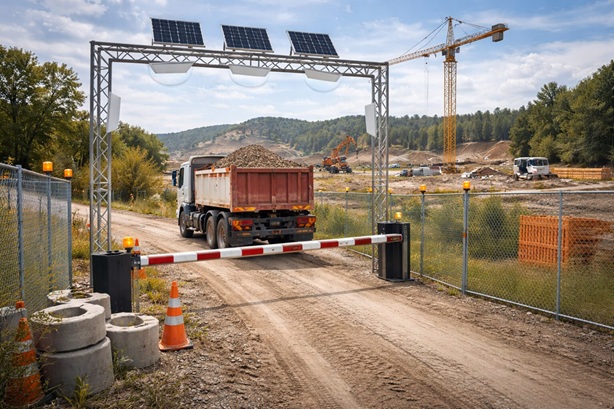
Workers and visitors use secure credentials such as cards, tags or mobile IDs. At the gate, a reader validates the credential and logs the event automatically. For vehicles, identification can be linked to barriers so authorised trucks are recognised quickly, while exceptions follow a defined check-in process.
A phased approach can start with one main gate and a limited set of roles, then expand to additional access points and zones as the site footprint and workforce grow.
Impact on safety, productivity and compliance
Controlled entry helps ensure that only inducted and approved personnel enter high-risk zones, supporting site safety plans. It also creates an auditable trail that supports incident investigations and compliance reporting.
Productivity gains are often most visible at peak times. A morning influx of 200 to 400 workers can create queues if entry is manual. Automated checks reduce gate time and free supervisors to focus on work planning rather than paperwork.
Vehicle access is another pressure point. When deliveries are scheduled in time slots, fast recognition at the barrier helps keep unloading areas flowing and reduces the risk of unplanned vehicles entering the site. Enterprise-grade approaches to identification and access are outlined by Nedap Identification Systems.
Integration with existing systems
Many sites already use CCTV, visitor management tools, time and attendance systems, or logistics booking platforms. Identification delivers more value when it integrates with these components.
Typical integration points include access control platforms for doors and turnstiles, vehicle access for barrier automation, and central administration with role-based access and reporting. Role-based access means permissions are assigned by job function, for example electrician, crane operator or visitor.
Implementation approach
A practical rollout starts with a risk-based access map that identifies critical entry points, high-value storage areas and restricted zones. Next, define credential types, approval workflows and exception handling. Finally, deploy in phases, starting with the main gate and expanding to secondary access points.
From optional to essential
As projects become more complex and compliance expectations rise, access management is shifting from optional to essential. Identification and vehicle recognition support safer sites, more efficient logistics and stronger auditability when planned early and integrated with the wider security and facility ecosystem.