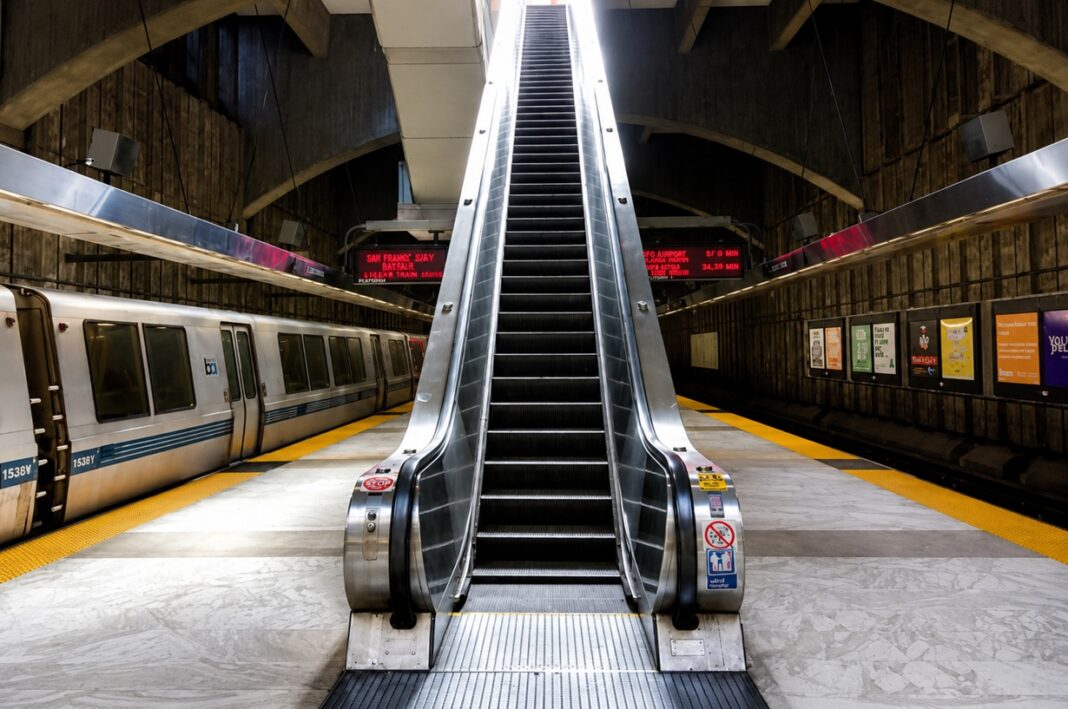
Escalators have become an essential part of modern metro rail systems across the world. In densely populated cities where underground or elevated metro networks are the backbone of urban transportation, escalators play a critical role in ensuring smooth passenger movement between different station levels. Unlike traditional staircases, escalators provide continuous, automated vertical transport, reducing congestion and improving accessibility for millions of commuters every day.
Metro stations often handle extremely high passenger volumes during peak hours, making efficient circulation systems necessary. Escalators help bridge long vertical distances between street level, concourse areas, and platforms, especially in deep underground stations. Their importance extends beyond convenience—they are vital infrastructure elements that influence station design, safety systems, and passenger flow management.
Evolution and Development of Escalators in Metro Systems
The concept of the escalator dates back to the late 19th century, when early moving stair designs were developed for public exhibitions and commercial buildings. Over time, escalators evolved into robust mechanical systems capable of handling heavy daily usage in public transit environments.
Modern metro escalators are electrically powered systems using motor-driven chains and track systems that move a continuous loop of steps. As metro systems expanded globally in the 20th century, escalators became standard equipment in underground stations, particularly in cities like London, Tokyo, Paris, Delhi, and New York.
Metro planners began favoring escalators over stairs in deep stations because of their ability to handle large passenger volumes efficiently. In many systems, escalators became the primary vertical transport mode, with elevators reserved mainly for accessibility needs.
Role of Escalators in Metro Station Design
Escalators significantly influence the architectural and engineering design of metro stations. In deep underground stations, they are often the most space-efficient solution for vertical movement.
Vertical Connectivity
Metro stations typically include three main levels:
- Street level (entry/exit)
- Concourse level (ticketing and security)
- Platform level (train boarding)
Escalators connect these levels in a continuous flow, reducing walking distance and improving passenger distribution.
Station Layout Planning
Engineers design escalator placement carefully to:
- Reduce bottlenecks during peak hours
- Separate incoming and outgoing passenger flows
- Ensure emergency evacuation routes remain clear
- Integrate with staircases and elevators for redundancy
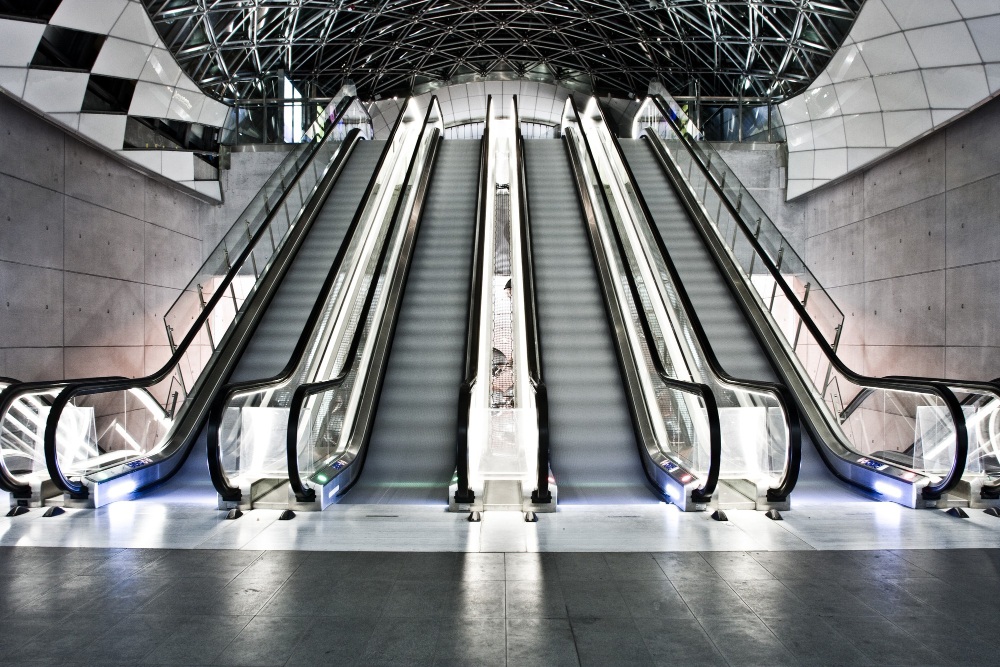
In high-capacity metro systems, multiple escalators are installed in parallel configurations to manage directional flow, especially during rush hours.
Passenger Capacity and Flow Management
One of the most important functions of escalators in metro stations is handling high passenger throughput. A typical metro escalator can carry thousands of passengers per hour depending on speed, width, and user behavior.
Capacity is influenced by:
- Step occupancy (how many passengers stand per step)
- Walking behavior (standing vs walking on escalator)
- Speed of escalator movement
- Width of escalator steps
Studies show that theoretical capacity is rarely achieved in real-world conditions because passenger behavior varies. For example, when commuters choose to walk on one side while others stand, overall efficiency changes significantly. In developing metro systems, overcrowding and uneven distribution can reduce effective capacity.
Despite these variations, escalators remain one of the most efficient methods of vertical transport in public transit systems.
Safety Features and Engineering Design
Safety is a critical aspect of escalator design in metro stations. Given the high passenger traffic and continuous operation, escalators are equipped with multiple safety mechanisms.
Key Safety Components
- Emergency stop buttons at both ends
- Comb plate sensors that detect foreign objects
- Speed monitoring systems
- Handrail synchronization mechanisms
- Anti-slip step design
If an object becomes trapped in the escalator steps or comb plate area, sensors automatically stop the machine to prevent injury or mechanical damage.
Modern escalators also include fire safety integration systems that allow them to be shut down or controlled during emergencies such as smoke or fire detection in stations.
Types of Escalators in Metro Stations
Parallel Escalators
Parallel escalators are the most common type used in metro stations. They are installed side by side, usually with one for going up and another for going down. This setup helps manage heavy passenger flow smoothly, especially during peak hours, and reduces crowding at entry and exit points.
Crisscross (Stacked) Escalators
Crisscross or stacked escalators are arranged in a crossing or zigzag pattern between floors. This design is used in space-limited stations, especially underground ones. It allows efficient vertical movement while saving horizontal space in compact station layouts.
Single Escalator Systems
Single escalator systems use one escalator for both directions at different times or along with stairs. The direction may be changed depending on passenger demand. These are mostly used in smaller stations with lower passenger traffic due to their limited capacity.
High-Capacity Wide Escalators
Wide escalators are designed to carry more passengers at the same time. They allow multiple people to stand side by side, improving flow in busy metro stations. These are commonly installed in major interchange stations with very high ridership.
Inclined and Long-Distance Escalators
These escalators are used in deep metro stations where the vertical distance is large. They are longer and often steeper, taking more time to travel between levels. Strong motors and advanced safety systems are used to ensure smooth operation.
Outdoor or Weather-Resistant Escalators
Outdoor escalators are installed in elevated or open metro stations. They are built with special materials to withstand rain, dust, and temperature changes. These escalators include protective features like drainage systems and corrosion resistance.
Maintenance and Operational Challenges
Escalators in metro systems operate for long hours daily and are exposed to heavy wear and tear. As a result, maintenance is a major operational requirement.
Common challenges include:
- Step chain fatigue due to continuous load
- Handrail wear and misalignment
- Sensor failures
- Weather-related damage in stations exposed to water ingress
- Overuse during peak commuting hours
Many metro systems conduct routine inspections and mid-life refurbishments after several years of service. Preventive maintenance is essential to avoid breakdowns that can disrupt passenger flow and create congestion.
In large metro networks, escalator downtime can significantly affect commuter convenience, especially in deep underground stations where alternatives like stairs require substantial physical effort.
Accessibility and Inclusivity
Escalators contribute to making metro systems more accessible, especially for elderly passengers, children, and people carrying luggage. However, they are not a complete substitute for elevators, which are essential for passengers with disabilities or mobility impairments.
Modern metro stations aim to provide:
- Escalators for general passenger flow
- Elevators for accessibility compliance
- Stairs for emergency evacuation
This combination ensures inclusivity while maintaining operational efficiency.
Energy Efficiency and Smart Technology Integration
With advancements in technology, modern escalators are becoming more energy-efficient and intelligent. Many metro systems now use:
- Sensor-based activation (escalators slow down or stop when not in use)
- Regenerative braking systems that recover energy
- Smart monitoring systems for predictive maintenance
These technologies reduce operational costs and improve sustainability in metro infrastructure.
Conclusion
Escalators in metro stations are far more than just moving staircases—they are essential engineering systems that enable efficient passenger movement in high-density urban transport environments. Their role in connecting station levels, managing crowd flow, ensuring accessibility, and enhancing safety makes them indispensable in modern metro design.
While they face challenges such as maintenance demands and operational wear, continuous technological improvements are making escalators more reliable, energy-efficient, and intelligent. As metro systems expand globally, escalators will remain a cornerstone of urban mobility infrastructure, shaping how millions of people experience daily transit.