
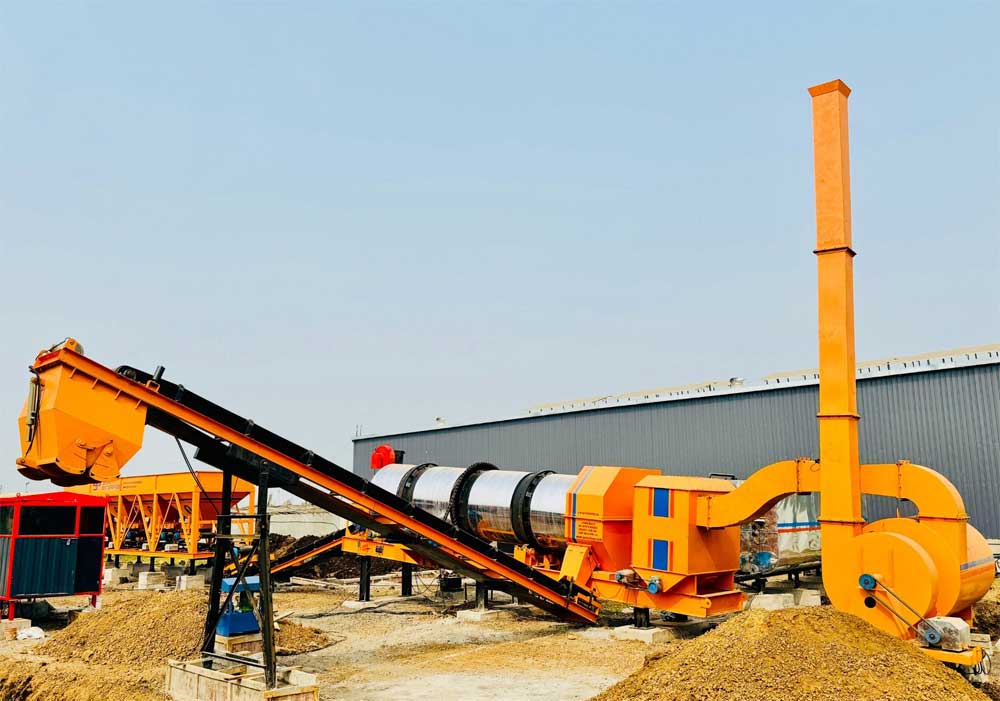
Hot Mix Asphalt (HMA) is the most commonly used material in modern road construction because of its durability, flexibility, and efficiency. The production of HMA relies on specialized plants that control heating, mixing, and proportioning of aggregates, binder, and fillers. HMA plants serve as the central hub for asphalt production. They manage multiple essential functions: heating and drying aggregates, proportioning raw materials accurately, mixing aggregates with asphalt binder, and temporarily storing finished HMA before transport.
Components of an HMA Plant
Modern HMA plants consist of several integrated components that work together to produce high-quality asphalt.
- Cold Feed Bins: Store aggregates of different sizes and feed them in controlled proportions.
- Drying Drum / Dryer: Rotating drum with burners removes moisture and heats aggregates.
- Screening and Elevation Systems: Screen heated aggregates for proper gradation and elevate them to the mixing unit.
- Weighing and Metering Units: Ensure accurate measurement of aggregates, filler, and asphalt binder.
- Mixing Unit: Combines hot aggregates with binder and filler to produce a uniform mixture.
- Storage Silos: Temporarily store the finished HMA before transportation.
- Control System: PLC/SCADA systems monitor and maintain feed rates, temperatures, and mixing parameters.
By working in tandem, these components ensure the production of high-quality asphalt suitable for durable pavements.
Applications of Hot Mix Asphalt
Hot Mix Asphalt is highly versatile and is used in a wide range of road construction and infrastructure projects. Its durability, load-bearing capacity, and smooth finish make it suitable for multiple applications, including:
- Highways and Expressways: Provides long-lasting pavements capable of handling heavy traffic volumes.
- Urban Roads: Smooth, durable surfaces for city streets, reducing noise and improving ride comfort.
- Airport Runways and Taxiways: Offers high strength and flexibility to support aircraft loads.
- Parking Lots and Industrial Pavements: Resists heavy vehicle loads and minimizes surface wear.
- Rural Roads and Access Roads: Economical and durable for less-trafficked routes while maintaining road quality.
By tailoring the mix design, HMA can meet specific performance requirements for different traffic conditions, climates, and construction scales.
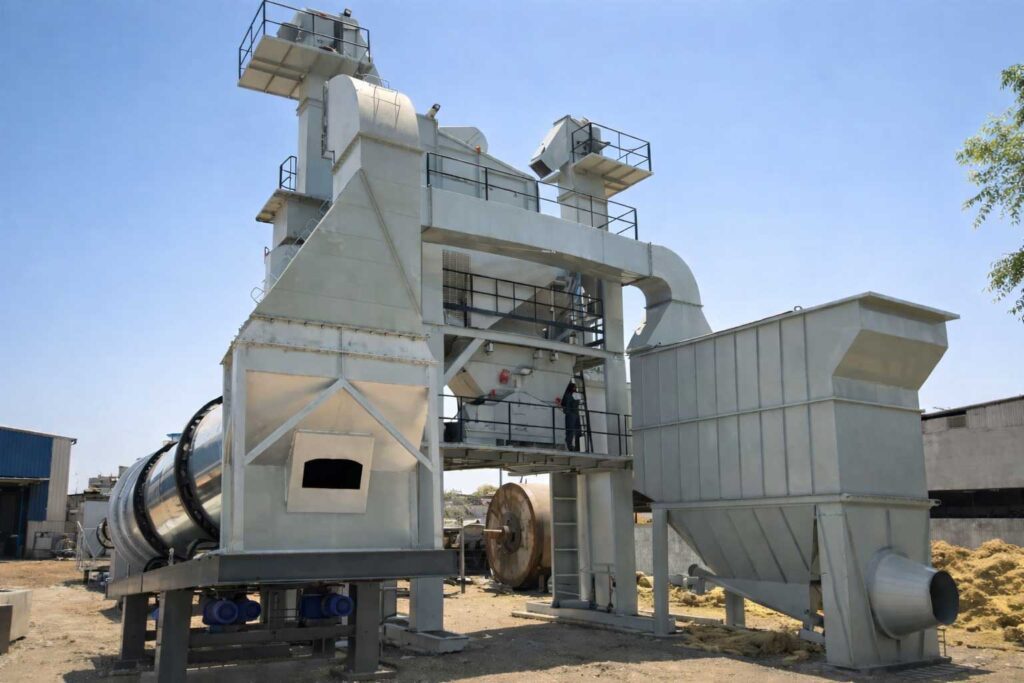
Advantages of HMA Plants
- Consistent Quality: Automated controls ensure uniform asphalt mix, leading to durable and reliable pavements.
- High Production Capacity: Capable of producing large volumes of asphalt to meet the demands of major road projects.
- Flexibility in Mix Design: Batch plants allow for adjustments in aggregate size, binder type, and filler content.
- Rapid Construction: Large-scale production reduces project timelines and minimizes traffic disruption.
- Efficient Use of Materials: Precise weighing and proportioning reduce wastage of aggregates and asphalt binder.
- Recycling Capability: HMA plants can incorporate Reclaimed Asphalt Pavement (RAP), reducing environmental impact.
- Adaptable to Different Projects: Suitable for highways, urban roads, airport runways, and industrial pavements.
- Improved Pavement Performance: Properly produced HMA resists rutting, cracking, and weather-related damage.
- Enhanced Environmental Compliance: Modern plants include emission control systems and energy-efficient burners.
Types of HMA Plants
Hot Mix Asphalt (HMA) plants can be classified based on their production method, mobility, and capacity. Each type has distinct advantages and is selected depending on project size, location, and specific material requirements.
Batch Mix Plants produce asphalt in discrete batches, which allows for flexibility in mix designs. This makes them ideal for projects such as highways and airport pavements where precise control over material proportions and mix quality is critical.
Drum Mix Plants operate on a continuous production basis. In these plants, aggregate drying and mixing occur in a single drum, making them highly efficient for large-scale projects requiring uniform asphalt mixtures. They are especially suitable for long stretches of highways or expressways.
Portable or Mobile Plants are designed to be relocated easily. These plants are particularly useful for remote or temporary project sites where constructing a permanent facility is not feasible.
Stationary Plants are permanent installations with high production capacities. They are used for long-term projects where continuous and large-scale asphalt production is needed, such as urban road networks or extensive highway systems.
Specialized Plants are tailored to meet unique project requirements. They may be designed for high usage of Reclaimed Asphalt Pavement (RAP), low emissions, or production of specific traffic-grade mixes, providing both environmental and performance benefits.
HMA Production Process
The production of HMA involves several critical steps to ensure quality and consistency:
- Material Handling: Aggregates are fed from bins with precise weigh feeders.
- Drying and Heating: Aggregates pass through rotating drums equipped with burners to remove moisture and achieve target temperature.
- Screening and Elevation: Heated aggregates are screened for correct gradation and lifted to the mixing unit.
- Mixing: Aggregates are combined with asphalt binder and fillers to form a homogeneous mixture.
- Storage and Transport: Finished HMA is stored in insulated silos and transported to the paving site while maintaining temperature.
These steps ensure the HMA is workable and meets structural and durability requirements for road construction.
Quality Control
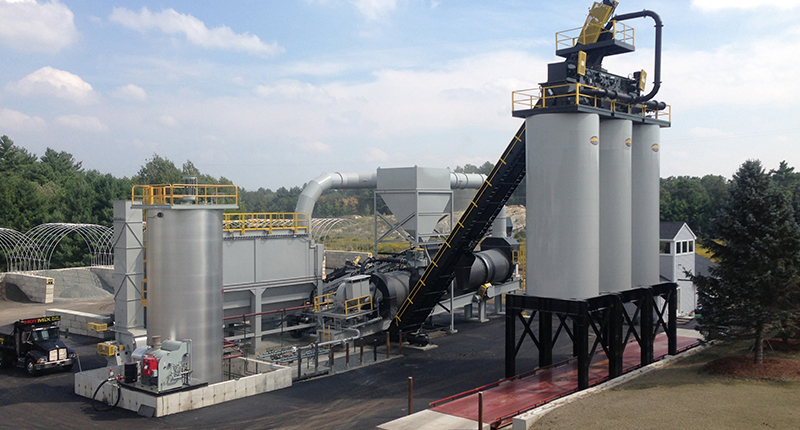
Strict quality control is essential in HMA production. Laboratory testing of aggregates, binder, and fillers ensures materials meet specifications. During production, temperatures are continuously monitored to maintain mix consistency. Automated systems track feed rates, mixing time, and batch uniformity.
Key quality control measures include:
- Material Testing: Gradation, binder properties, and filler quality.
- Temperature Control: Ensures proper compaction and long-term performance.
- Process Monitoring: Automated tracking of feed and mixing parameters to maintain consistency.
Effective quality control ensures pavements meet traffic, environmental, and durability requirements.
Challenges and Limitations
Despite the benefits, HMA plants face challenges. High initial investment is required for equipment and skilled operators. Environmental regulations, such as emissions and dust control, add to operational costs. Asphalt production and paving are temperature-sensitive, necessitating careful monitoring to achieve optimal performance.
Future Trends
HMA plants are evolving toward greater sustainability, efficiency, and automation. Emerging trends include:
- Automation and IoT Integration: Real-time monitoring, predictive maintenance, and optimized production.
- Increased RAP Usage: Reduces raw material consumption while maintaining quality.
- Energy and Emission Reduction: Advanced burners and dust control systems.
- Sustainable Practices: Low-energy production methods, green binders, and carbon footprint reduction.
These trends are making HMA plants more environmentally responsible, cost-effective, and technologically advanced.
Conclusion
Hot Mix Asphalt plants are indispensable for modern road construction, ensuring high-quality asphalt for durable pavements. Advances in automation, recycling, energy efficiency, and emission control continue to enhance plant performance and sustainability. As road infrastructure demands increase globally, HMA plants will remain central to building resilient, efficient, and environmentally responsible road networks.






