
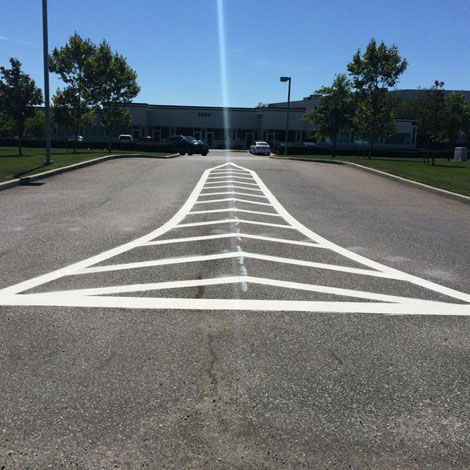
When a customer pulls into your business location, they should easily understand where to drive and park. Bright, well-planned pavement markings serve as a silent navigation system that directs traffic flow, protects people on foot, and stretches your total parking capacity as far as possible. If you have been searching for top-rated parking lot striping near me, you already know your asphalt needs a sharp visual upgrade. But painting a truly functional layout takes a lot more than just spraying down random straight lines. Steering clear of basic layout errors keeps your driving lanes organized, reduces liability headaches, and prevents daily frustration for your visitors.
Key Takeaways
- Spraying new lines right over old, mismatched markings creates a confusing visual grid that leaves drivers guessing where to pull in.
- Squeezing stall widths down too small just to fit more cars leads to constant door dings and blocks your main driving paths.
- Skipping the hard work of pressure washing and sweeping before painting means your expensive new lines will peel off in a few months.
- Getting your handicap space measurements wrong leaves your business wide open to massive civil rights violations and hefty fines.
12 Striping Mistakes That Drivers Should Look Out For
Let’s go through them.
1. Overlaying Paint Directly on Top of Old Layouts
One of the most frustrating things a property manager can do is try to save a quick buck by spraying fresh paint directly over an old layout design. When the afternoon sun hits the blacktop at a flat angle, those old, faded lines show through the new topcoat plain as day. Drivers end up looking at a confusing maze of competing lines, completely stumped about which box they are actually supposed to park inside. If you decide to alter how traffic moves through your lot, you have to mechanically grind off or black out the old layout marks completely before laying down anything new.
2. Making Your Parking Stalls Way Too Narrow
It is always tempting to try and squeeze every single available inch out of your blacktop to get your total vehicle count as high as possible. But when you make your individual parking spaces too skinny, it becomes a nightmare for shoppers to open their doors without hitting the vehicle next to them. Drivers will naturally start taking up two spaces anyway just to protect their cars from dings which completely ruins your extra capacity plans. Standard commercial spots need a sufficient width so people can load up their trunks and step out of their vehicles comfortably.
3. Sloppy Measuring and Uneven Space Widths
When a striping crew rushes through the job or forgets to map out the lot with measuring tape beforehand, you end up with weirdly inconsistent stall sizes across the same row. You might find a giant, oversized space sitting right next to a tiny, cramped slot that could barely fit a compact economy car. These crooked, uneven lines force drivers to park at strange angles just to fit inside them. That sloppy parking causes a bad chain reaction all the way down the lane, leaving multiple spots completely unusable and making your business look messy.
4. Designing Curves with Dangerous Turning Radii
The entrance ways and exit curves of your driving lanes have to match the natural turning radius of normal, everyday cars and trucks. If your painted lane lines cut inward too sharply around concrete islands or sidewalk corners, drivers will constantly run their back tires right over the concrete. This doesn’t just tear up your expensive landscaping borders; it also forces drivers to swing out dangerously wide into oncoming traffic lanes just to make a simple turn without hitting anything.
5. Getting Sloppy with Universal Color Codes
The specific paint colors you use on your pavement carry distinct, universally understood meanings that you cannot afford to mix up. Yellow paint belongs on lines that separate two-way traffic lanes, bright white is what you use for regular parking boxes, and deep blue is legally reserved exclusively for accessible handicap spaces. If you use yellow paint for standard stalls or throw white lines where traffic is supposed to merge, you scramble a driver’s natural habits. Stick to the classic rules so your lot navigation stays automated.
6. Shoving Parking Boxes Up Against Your Dumpster Pads
The waste management companies use massive, heavy-duty trucks that require a ton of open room to back up, align, and lift heavy commercial trash containers. If your layout lines place standard parking spaces right up against the borders of your dumpster enclosure, customers will park there all day long. This traps your trash bins behind personal cars, leading to missed pickups and annoying scheduling logjams. You need to block off these specific service zones with bold, yellow cross-hatched paint patterns.
7. Letting Pedestrian Crosswalks Fade Away into Grays
A commercial parking lot is a shared piece of pavement where heavy moving vehicles constantly cross paths with walking shoppers, parents with strollers, and elderly visitors. If your crosswalk lines have faded down to a dull, barely visible gray, distracted drivers will cruise right through them without tapping their brakes or looking around. You need to use thick, bold patterns to flag your walking zones clearly. High-visibility walking paths force drivers to stay alert and keep your pedestrians safe from close calls.
8. Leaving Out Solid Stop Bar Lines at Intersections
Putting up a tiny, standard metal stop sign at the end of a long exit lane isn’t always enough to grab a driver’s attention on a hectic day. People who are hunting for a specific storefront or looking down at their phones will roll right past signs if there isn’t a corresponding signal painted on the ground. A thick, solid white stop bar painted straight across the asphalt tells a driver’s brain exactly where their front bumper needs to come to a halt, keeping them from poking out into cross-traffic.
9. Treating Accessibility Markings Like an Afterthought
Marking out your handicap parking spaces is one area where you absolutely cannot afford to guess or make mistakes. Federal and state accessibility guidelines lay down incredibly strict rules for stall widths, wide loading aisles for wheelchairs, and proper van-accessible signage. If your striping crew tries to eyeball these measurements or leaves out the cross-hatched loading paths, your property is immediately exposed to severe legal penalties and civil rights lawsuits. Make sure your crew knows the accessibility codes inside and out.
10. Skipping the Necessary Sweeping and Prep Work
You could go out and purchase the most expensive, commercial-grade traffic paint in the world but it will peel right off the ground if you spray it over loose dirt, leaking engine oil, and fine gravel dust. If a crew skips power-brooming and washing down the asphalt before unpacking their spray equipment, the paint adheres to surface dirt rather than the pavement. Within just a couple of months of heavy rain and tire friction, that new paint will flake away completely.
11. Creating Blind Intersections with Poor Stall Placement
The intersections where your secondary parking rows connect to the main perimeter driving lanes must provide unobstructed lines of sight. If your painted parking stalls extend all the way to the absolute edge of the main driving thoroughfare, parked trucks and large SUVs will completely block the view of exiting drivers. People are forced to blindly nose their vehicles out into the live lane just to see if another car is coming. You need to leave generous, unpainted buffer zones at every single intersection.
12. Using Directional Traffic Arrows That Are Way Too Small
When people pull into a large commercial layout, they need immediate, unmistakable visual cues indicating which way traffic flows. If your painted directional arrows are tiny, faint or spaced out too far down the lane, drivers will inevitably turn down one-way rows in the wrong direction. This causes instant gridlock when they run face-to-face into a car heading the right way. Using large, bold stencils at both ends of every single lane keeps your traffic moving safely.
Conclusion
Spending the time and money to get your pavement markings done right completely changes how smoothly your business operates on a daily basis. By avoiding sloppy layout traps like overlapping lines, tiny spaces, and skipping the surface cleaning, you build a welcoming exterior that prioritizes customer safety. When you are ready to give your layout a clean refresh, skip the uncertified, cheap crews and connect with an experienced team specializing in parking lot striping near me to ensure your lines stay crisp, legal, and durable for years to come.






