
Metal fabrication shops often choose between cold saws and band saws for cutting steel, aluminum, tubing, and other alloys. Each machine uses a different cutting method, which affects speed, accuracy, noise, waste, and operating cost.
However, the better choice depends on production volume, material shape, required tolerances, and available floor space. Comparing these factors helps fabricators select equipment that supports consistent results without paying for capacity their work does not require.
Shops reviewing high-performance industrial metal cutting saws for sale should compare feed controls, vise capacity, blade dimensions, coolant systems, and automation options. These features influence output more than the machine category alone. A high-speed saw may add little value if most jobs involve short batches or frequent setup changes.
Cutting Method and Accuracy
Cold saws use a circular blade with hardened teeth. The blade rotates at a relatively low speed while applying strong torque. Flood coolant or mist typically controls heat during the cut. This process produces clean ends, limited burrs, and reliable dimensional control.
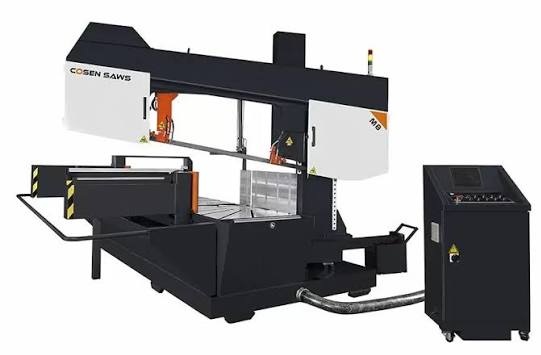
Band saws use a continuous toothed blade that moves around two wheels. The blade removes material gradually, making the machine suitable for steel bars, structural shapes, pipe, and irregular profiles. Cutting speed is usually lower, but the process creates less heat and wastes less material.
For parts requiring repeatable lengths, cold saws often provide a clear advantage. Band saws remain useful when a shop handles varied stock sizes or large workpieces.
Production Volume and Speed
High-volume operations benefit from the rapid cycle times of cold saws. Automatic feeding systems can process repeated lengths with minimal operator input. Their rigid setup also enables dependable production over long runs.
Band saws are better suited to moderate production or mixed workloads. Operators can change material sizes with fewer tooling concerns. A single blade may handle several profiles, although blade selection still matters for tooth pitch and material thickness.
Material Shape and Size
Cold saws work especially well with straight, uniform stock. Their common applications include square tubing, round bar, flat bar, and thin-wall sections. Proper clamping is essential because vibration can damage teeth and reduce cut quality.
Band saws offer greater flexibility for oversized or uneven materials. Horizontal models can cut bundles, channels, angles, and heavy plate sections, while vertical band saws support contour work and manual shaping, though they require greater operator control.
Material hardness also affects blade life. Abrasive alloys, hardened steel, and work-hardened sections require suitable tooth geometry and cutting fluid. Using an incorrect blade can cause rapid wear on either machine.
Cost, Maintenance, and Shop Conditions
Cold saws generally cost more to purchase and operate because they use specialized blades, coolant, and automated components. However, their clean cuts can reduce grinding, trimming, and secondary finishing. That saving may justify the higher initial expense in a high-output facility.
Often, band saws are less expensive to enter and easier to maintain. Blade replacement is usually straightforward, and coolant consumption may be lower. Their larger footprint and slower cycles can affect throughput, especially when demand rises.
Noise, chips, and housekeeping also deserve attention. Cold saws can produce sharp chips at high volume. Band saws create finer, more dispersed debris, depending on blade condition and material type. Guarding, chip collection, and routine inspection should support safe operation.
Choosing the Right Machine
A cold saw is usually the stronger fit when the shop needs rapid cycles, tight length control, and clean finishes across repeated jobs. A band saw makes more sense for varied materials, large profiles, lower production volumes, or flexible cutting requirements.
Before deciding, managers should record daily cut counts, material dimensions, tolerance requirements, blade expenses, and finishing time. A simple cost-per-part comparison can reveal which machine delivers the better return. Supplier support, replacement parts, training, and warranty coverage should also influence the purchase.
Conclusion
Cold saws and band saws each serve valuable roles in metal fabrication. Cold saws favor speed, precision, and repeat production, while band saws provide flexibility across diverse shapes and sizes. The best selection depends on actual work demands rather than advertised capacity.
By reviewing cut volume, stock geometry, tolerances, maintenance needs, and finishing labor, a fabrication shop can choose equipment that improves productivity, controls waste, and supports dependable results over time.






