
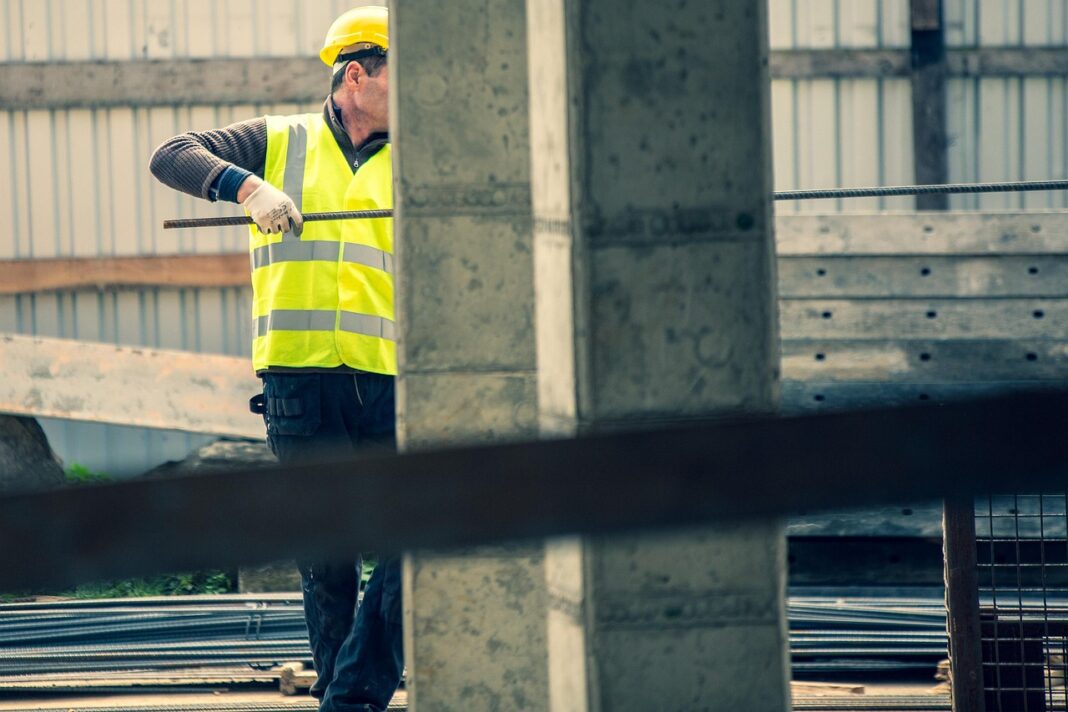
On a construction site, small details affect how smoothly the job runs.
Most companies focus on the obvious ones, labour, scheduling, materials, and safety systems. Workwear is often left until later, treated as something to organise once the bigger decisions are made.
In practice, uniforms do more than make a team look consistent. They help with identification, reinforce structure on site, support a more professional presentation during client visits, and give construction businesses a stronger visual identity across every project.
For builders, subcontractors, fit-out teams, engineers, and service contractors, workwear is part of day-to-day operations. When it is chosen properly, it supports both function and perception.
Why Workwear Carries More Weight in Construction
Construction is a visible industry. Work happens in front of clients, consultants, other trades, delivery drivers, local communities, and sometimes the public.
That creates a different standard from many other sectors. What a team wears becomes part of how the company is judged.
When crews arrive in mismatched clothing, old promotional shirts, or garments with fading logos, it can create avoidable friction. People are harder to identify. The site looks less organised. The business loses a layer of credibility before anyone has even assessed the quality of the work.
Consistent branded workwear helps solve that quickly. It gives the team a recognisable identity on site and signals that the business has clear standards.
That matters whether you are running a commercial build, a residential project, a civil job, or specialist subcontract work.
Better Identification on Busy Sites
One of the most practical benefits of branded workwear is clarity.
Many sites involve several groups working at once. You may have builders, site supervisors, electrical contractors, plumbers, façade crews, waterproofers, flooring teams, and delivery staff all moving through the same environment. Without clear visual distinction, simple interactions become less efficient than they should be.
Branded uniforms help people identify who belongs to which company and who is responsible for what.
That becomes even more useful when garments are chosen with role visibility in mind. For example:
- hi-vis shirts or polos for crew members
- branded outerwear for supervisors and foremen
- consistent logo placement across all garments
- slight garment variations for office staff, estimators, and site managers
This is not about overcomplicating uniforms. It is about making them easier to read at a glance.
On a busy site, that kind of clarity reduces confusion and supports smoother coordination.
Professional Presentation Still Matters on Site
Construction businesses win work on trust as much as technical capability.
A prospective client may not know how to judge build quality in the first ten minutes of a site walk, but they will notice whether the job looks organised. They will notice how the team presents. They will notice whether the business appears structured, consistent, and in control.
Branded workwear contributes to that impression.
A coordinated team suggests discipline. It suggests systems. It suggests the company pays attention to details beyond the bare minimum.
That can influence perception during:
- tender processes
- builder meetings
- site walkthroughs
- consultant inspections
- handover stages
- visits from project stakeholders
None of this replaces good work. But it does shape how the business is read before the full quality of the work becomes visible.
Workwear Supports Safety and Site Control
Uniforms are not a substitute for PPE, and they should never be treated that way. But they do support site control in practical ways.
When teams are clearly branded, it is easier to identify authorised personnel, separate workers from visitors, and monitor movement across the site. In environments where multiple subcontractors are present, that extra layer of recognition can help reinforce a more orderly workflow.
Garment choice matters here too. Construction businesses need branding solutions that work with site conditions, not against them.
That means prioritising garments that are:
- suitable for physical work
- compatible with required PPE
- durable enough for repeated washing
- appropriate for indoor and outdoor conditions
- easy to reorder consistently
The goal is not just to add a logo. The goal is to create a uniform system that still performs properly under day-to-day site demands.
Embroidery or Print: What Makes More Sense for Construction?
This is one of the most common questions when construction businesses order uniforms.
The answer depends on the garment, the working conditions, and how the clothing will be used over time.
When embroidery makes sense
Embroidery is usually the stronger option for garments that need long-term durability and a more structured finish.
It works particularly well on:
- polos
- jackets
- hoodies
- fleeces
- caps and beanies
- supervisor or management uniforms
For construction businesses standardising outerwear, polos, and colder-weather site gear, embroidered workwear is often the more durable long-term option. It holds up well on heavier garments and gives branding a cleaner, more established look, which suits businesses that want to present themselves as organised and reliable.
When print makes more sense
Print can still be the better option in the right context.
It is often more suitable for:
- larger logo placements
- high-volume crew orders
- lighter garments
- temporary project uniforms
- event or campaign-based clothing
The key is choosing the right branding method for the garment and the use case. A business outfitting a short-term crew for a specific project may make a different decision from one building out a long-term uniform kit for site staff and supervisors.
The mistake is assuming one method suits every application. In construction, the better approach is to match the branding method to the garment’s actual job.
Common Mistakes Construction Businesses Make When Ordering Workwear
A lot of uniform issues start before production even begins.
Choosing on price alone
Cheap garments can look acceptable at first and deteriorate quickly once they go through repeated site use and frequent washing. That often leads to replacement costs, inconsistent presentation, and wasted spend.
Ignoring garment purpose
A branded hoodie, a hi-vis tee, and a supervisor jacket do not need to solve the same problem. Construction businesses get better results when they think in categories rather than trying to make one garment work for everyone.
Making the branding too complicated
Workwear should be readable, not overdesigned. Clear logo placement, consistent colours, and strong contrast usually perform better than crowded layouts or excessive decoration.
Failing to standardise
If every team member orders something different each time, the business loses visual consistency. Standardising a core range makes reordering easier and strengthens recognition across projects.
Not checking how the finished garment will present
This is a common issue, especially for businesses placing larger orders. Buyers are not always fully confident in how the final garment will look until they can see the branding applied properly. That uncertainty is understandable when the clothing reflects the company brand and the order value is significant.
Clear proofs or mockups help remove that hesitation before production starts.
A Smarter Way to Build a Construction Uniform Kit
The most effective workwear setups are usually simple.
Rather than treating uniforms as a one-off purchase, it helps to think in terms of a kit that can be repeated as the business grows.
A practical construction uniform system might include:
- hi-vis shirts for site crews
- branded polos for client-facing staff
- hoodies or fleeces for cooler months
- jackets or outerwear for supervisors
- caps or beanies for added consistency
- a documented colour and logo standard for future reorders
This gives the company enough flexibility for different roles and conditions without losing consistency.
It also makes it easier to onboard new staff, replace damaged garments, and keep the business looking uniform across multiple sites.
Why This Matters for Construction Businesses Trying to Grow
As construction businesses scale, presentation becomes less personal and more systemic.
A smaller operator can often rely on direct relationships and founder reputation. A growing company needs stronger visual signals. Vehicles, signage, quoting documents, and uniforms all start working together to reinforce trust.
That is where branded workwear stops being a minor purchase and starts becoming part of the broader business infrastructure.
It supports:
- stronger team identity
- cleaner site presentation
- easier role recognition
- more consistent client-facing branding
- better continuity across repeat jobs
For construction businesses that want to look established rather than improvised, workwear is part of the equation.
Final Thought
Good construction workwear should do three things well.
It should suit the conditions. It should help people identify the team clearly. And it should represent the business properly every time the crew steps on site.
That is why the best uniform decisions are usually practical rather than cosmetic. The goal is not to make construction teams look fashionable. It is to make them look consistent, professional, and ready to work.
For businesses investing in branded clothing, the real value is not just in the logo. It is in what that consistency communicates across every project.






