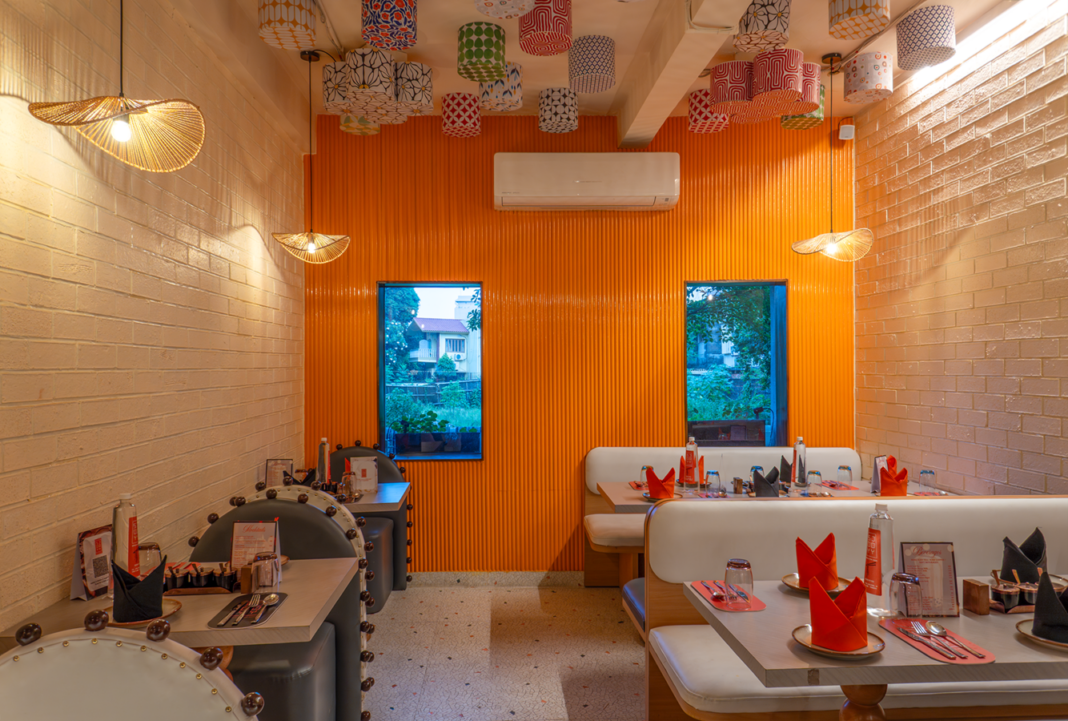
Mumbai-based interior designer Misbah Kapadia of Design Konstruct brings her latest hospitality project to Kolkata with Soy Joy, an Asian dining space designed to feel young, energetic, and immersive. Known for creating spaces that feel intuitive and engaging, Misbah approaches Soy Joy with a clear intent, to translate a simple but strong idea into design: joy.
The vision came from the team behind Babu Culture, a well-known name for Bengali cuisine in the city, who wanted to do something completely different. Moving into Asian cuisine, their brief went beyond food, they wanted the space to feel one-of-a-kind, with a focus on attracting a younger audience through a fun and lively atmosphere.
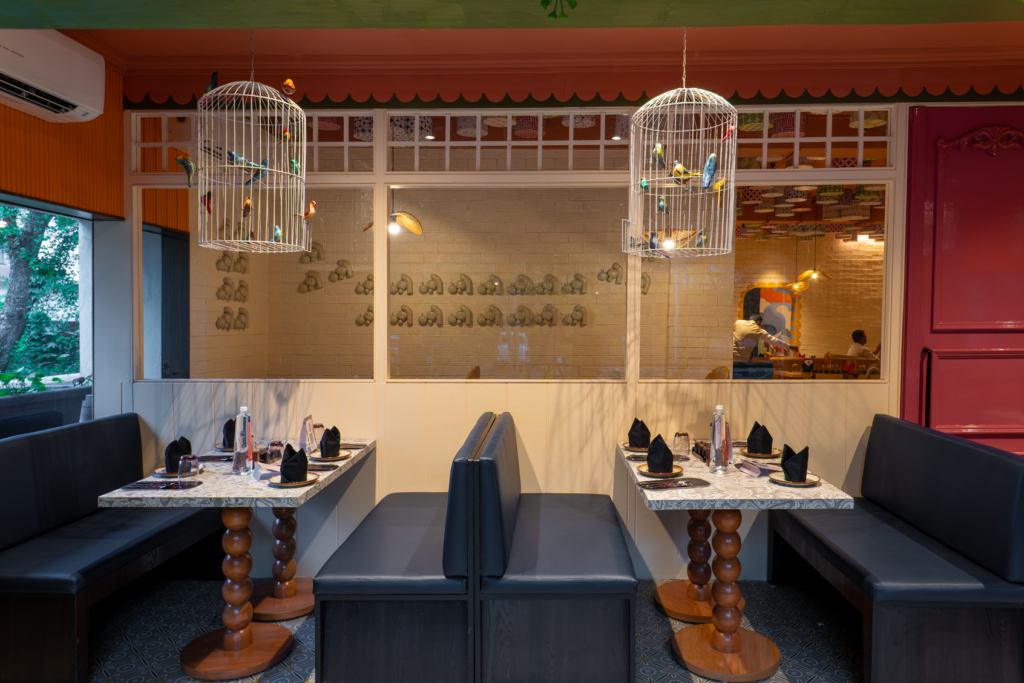
Taking this forward, the design translates into a space that feels both playful and easy, one that doesn’t try too hard, yet leaves a lasting impression. Through the use of bright colours, layered textures, and subtle artistic interventions, the restaurant creates an environment that feels energetic, approachable, and instantly engaging.
Translating Vision into Space
Working within a compact layout, the design approach focused heavily on efficient space planning and the strategic use of colour. Instead of relying on heavy decor or excessive elements, the space is brought to life through playful tones, textures, and a sense of openness.
The original structure, previously divided into small hostel like rooms, was carefully reworked and opened up, while retaining structural integrity. Interventions such as metal reinforcements and selective unblocking of walls helped transform the layout into a cohesive restaurant format with a clear spatial flow.
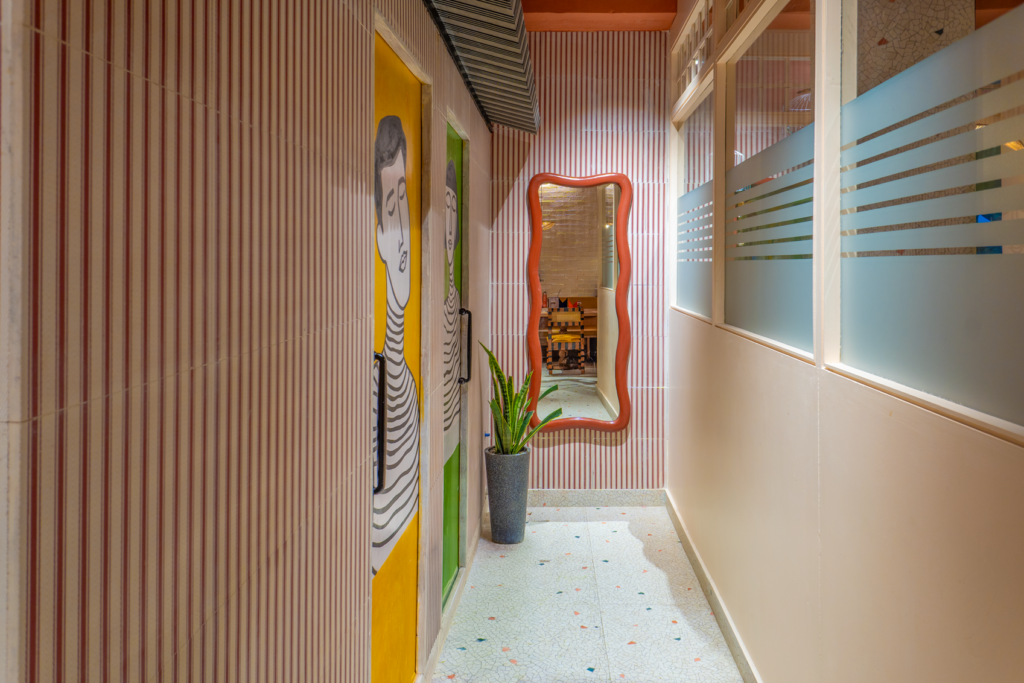
The planning introduces a veranda style entrance, followed by the main dining area, a private dining room (PDR), and service zones including the kitchen and backyard.
An Inviting Arrival Experience
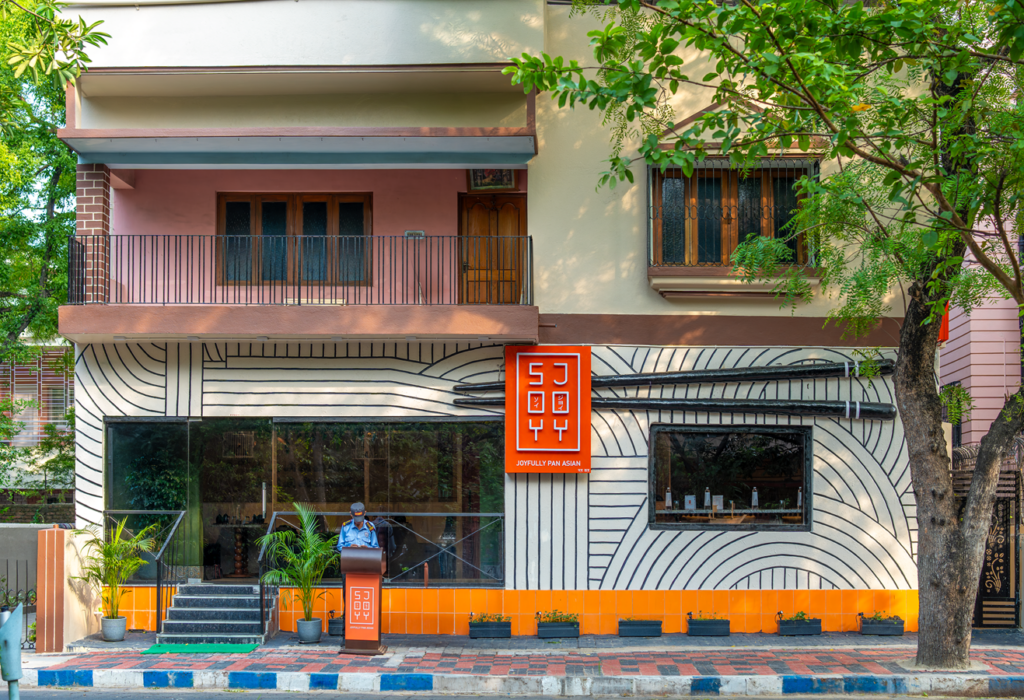
The facade features an abstract interpretation of a noodle bowl, expressed through grooved wall detailing and accented with chopstick elements that visually guide towards the signage.
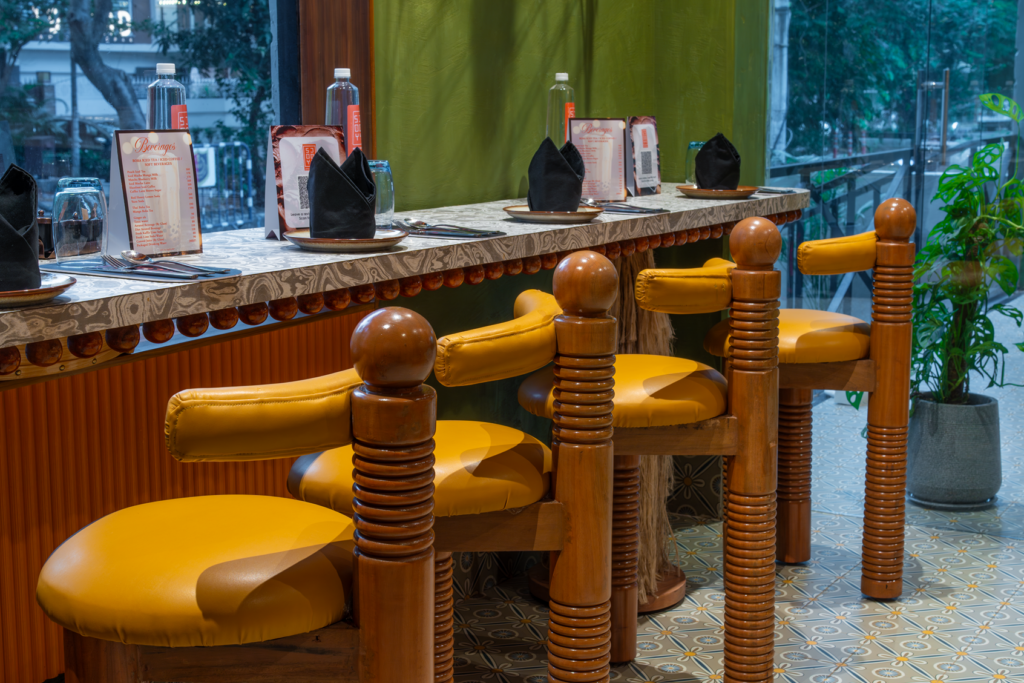
The entrance transitions into a veranda-inspired space, defined by olive-toned walls, printed flooring, and suspended bird cages. This zone subtly introduces a nature-led sensory experience, enhanced by the idea of ambient bird sounds, creating a calm yet engaging first impression.
A Youthful and Dynamic Dining Space
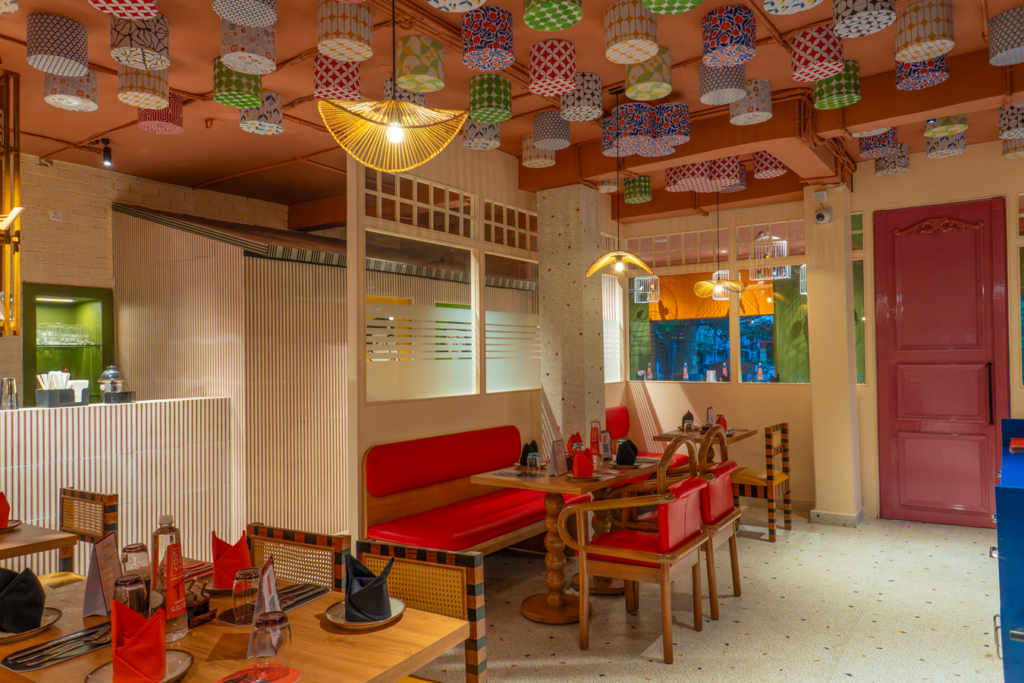
The indoor dining area continues the narrative of youthful energy through colour and lightness. A carved entry doorway in a soft pastel pink tone marks the transition inside.
Given the compact footprint, furniture is intentionally designed to feel light and minimal, with booth seating and benches that maximise capacity without visually crowding the space. The central area also includes a small cocktail and sushi counter, adding movement and interaction within the layout.
Ceiling elements featuring Asian-inspired graphic prints further enhance the visual identity, while exposed brick walls and textured finishes add character without increasing cost.
Materiality, Budget & Approach
Working within a defined budget, the design avoids excessive paneling and heavy detailing. Instead, it relies on colour, wall textures, exposed brick, and graphics to build a strong visual language.
A blue-tinted mirror wall serves both functional and spatial purposes—visually expanding the compact area while also aligning with Vastu considerations, which played an important role in the planning.
The Private Dining Room (PDR)
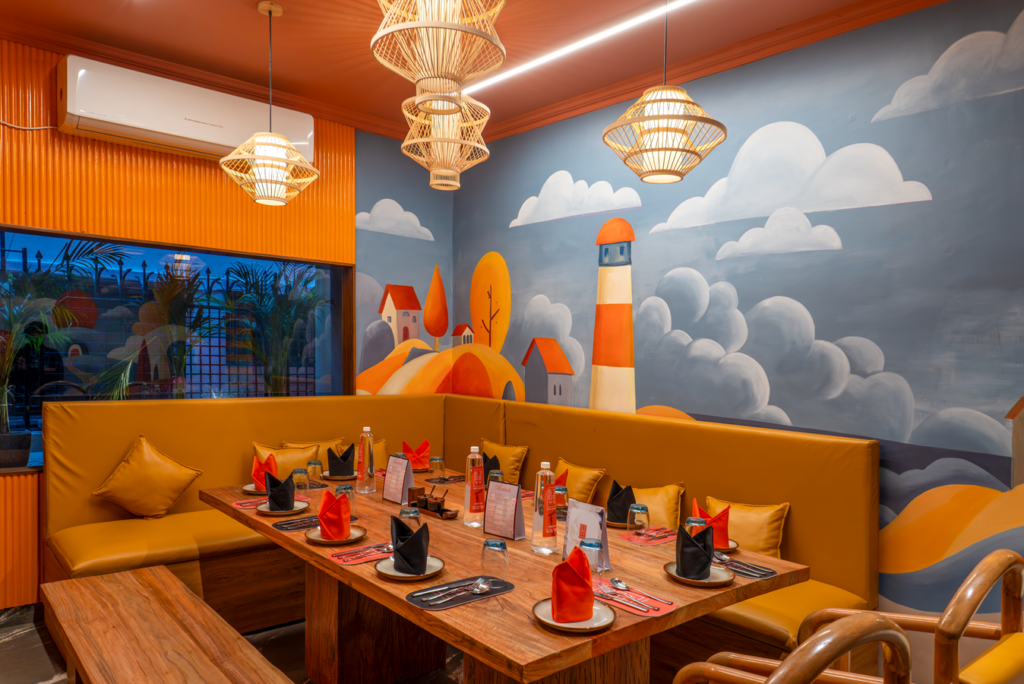
The PDR is conceived as a distinct, immersive environment, defined by surreal, nature-inspired artwork. The space evokes a dreamlike setting through abstract elements such as fluid forms and organic motifs, offering a more intimate and experiential dining zone for groups.
Spatial Highlights & Key Features
Key design highlights include:
- The veranda-inspired entrance with suspended bird cages
- The pastel-toned carved entry door
- Efficient space planning within a compact footprint
- Lightweight furniture and booth seating enhancing openness
- The blue-tinted mirror wall for visual expansion and Vastu alignment
- Graphic ceiling elements and textured surfaces
- A layout that maintains openness without heavy visual blockages
The high ceiling height further supports the design by allowing the space to feel more open and breathable despite its size.
Design Experience & Context
Working in Kolkata, Misbah drew inspiration from the city’s inherent calmness and deep-rooted appreciation for art. While the space remains vibrant and fun, it also carries an underlying sense of ease,balancing energy with comfort.