
The Delhi Development Authority (DDA) has outlined an ambitious eight-point development programme aimed at transforming the national capital into a greener, more sustainable and liveable city. The roadmap focuses on addressing key urban challenges such as affordable housing, mobility, environmental sustainability, heritage conservation, water security and planned urban expansion.
The development strategy was discussed during a recent meeting of the DDA’s Advisory Council, chaired by Lieutenant Governor Taranjit Singh Sandhu. The council reviewed pressing issues including the widening gap between the demand and supply of affordable housing, the proliferation of slums and Jhuggi Jhopri (JJ) clusters, rehabilitation and relocation measures, as well as the long-pending regularisation and redevelopment of unauthorised colonies. Officials emphasised that the initiative seeks to create a balanced urban development model while improving the quality of life for Delhi’s growing population.
The council adopted a four-pillar vision centred on housing, mobility, environment and heritage. Environmental sustainability forms a key component of the roadmap, with plans to enhance Delhi’s per capita green cover, develop vibrant riverfronts and establish an interconnected green and blue infrastructure network across the city. The strategy also prioritises disaster resilience, improved water security and safer roads to ensure a higher quality of urban living.
Another major objective is to strengthen Delhi’s economic and cultural identity. The plan proposes the redevelopment of commercial markets and business centres, creation of modern logistics hubs and conservation of the city’s rich heritage assets to boost tourism and economic activity. Officials also highlighted the need to address critical concerns such as traffic congestion, pollution, urban flooding, heat islands, deterioration of heritage structures and recurring water shortages through integrated planning and infrastructure upgrades.
To implement the vision, the DDA has identified several large-scale development zones across the city. These include 207 sq km under Transit-Oriented Development (TOD), over 200 sq km designated for Land Pooling Areas to facilitate planned urban expansion, and around 700 sq km of developed residential areas.
The authority is also pursuing a 100 sq km riverfront development project in Zone-O, redevelopment of the 24 sq km Old City, improvements across the 31 sq km Bungalow Zone, and the development of a 20 sq km High Density Corridor along major transit routes. Collectively, these initiatives are expected to support long-term, sustainable growth while modernising Delhi’s urban infrastructure and enhancing its resilience against future challenges.
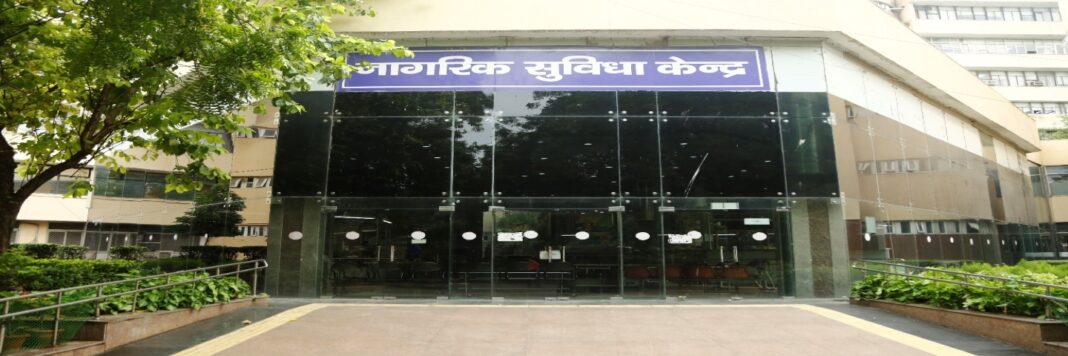
Image- dda.gov.in






