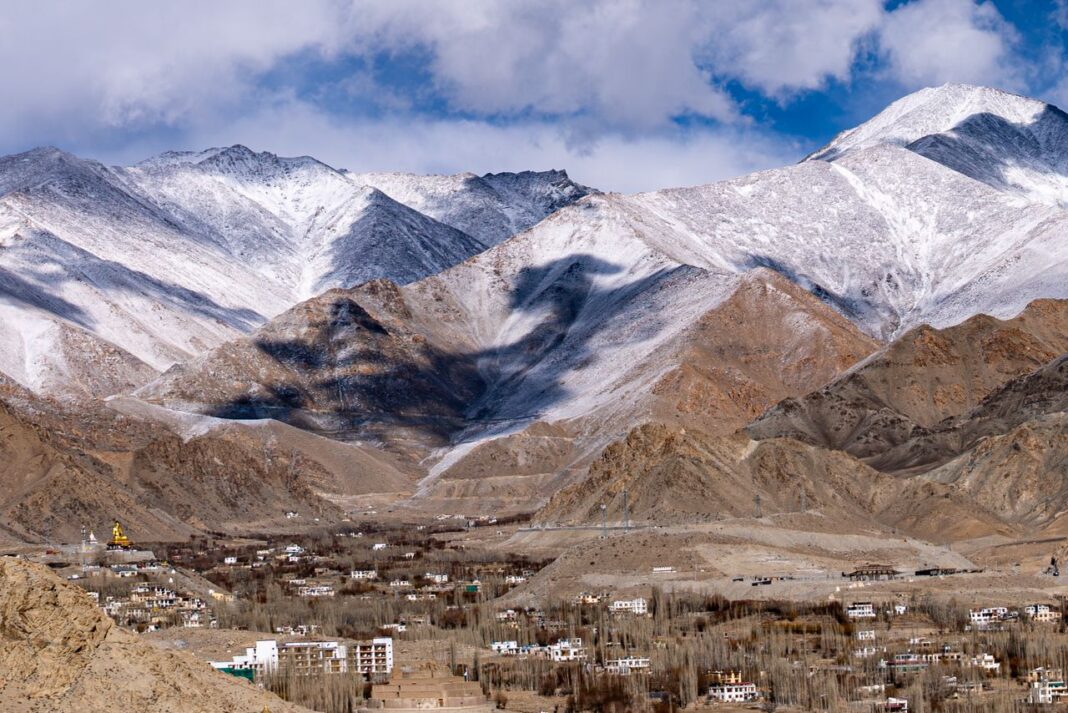
The Central Government has approved the construction of the Leh Bypass (Southern Alignment) in Ladakh at an estimated cost of ₹990.51 crore, providing a major boost to road infrastructure and regional connectivity in the Union Territory.
Union Minister for Road Transport and Highways Nitin Gadkari announced the approval, stating that the project will strengthen connectivity between two key national highways while reducing traffic congestion within Leh city.
The project involves the construction of a two-lane highway with paved shoulders, extending from NH-1 near Phyang village (HPCL Plant) to Upshi on the Leh–Manali Highway (NH-3). The bypass is designed to divert through traffic away from Leh’s urban centre, providing a dedicated corridor for long-distance vehicles and improving travel efficiency.
The new alignment is expected to ease congestion in Leh, particularly during the peak tourist season when vehicle movement increases significantly. It will also improve travel safety and reduce travel time for commuters, commercial vehicles and defence logistics moving through the region.
Welcoming the decision, Lieutenant Governor of Ladakh VK Saxena said the project would provide relief to residents and visitors by reducing traffic pressure within the city while supporting the region’s growing tourism industry.
The Leh Bypass is part of the Central Government’s broader initiative to strengthen road infrastructure in border and high-altitude regions. Improved connectivity is expected to facilitate smoother movement of goods, enhance access to remote areas and support socio-economic development across Ladakh.
The approval follows a recent review by the Ministry of Road Transport and Highways of 804 kilometres of National Highway projects in Ladakh, reflecting the government’s continued focus on expanding strategic transport infrastructure in the region.
Once completed, the Leh Bypass will serve as an important transport corridor linking NH-1 and NH-3, improving regional connectivity, supporting tourism, enhancing logistics, and contributing to faster and safer movement across one of India’s most strategically significant border regions.