
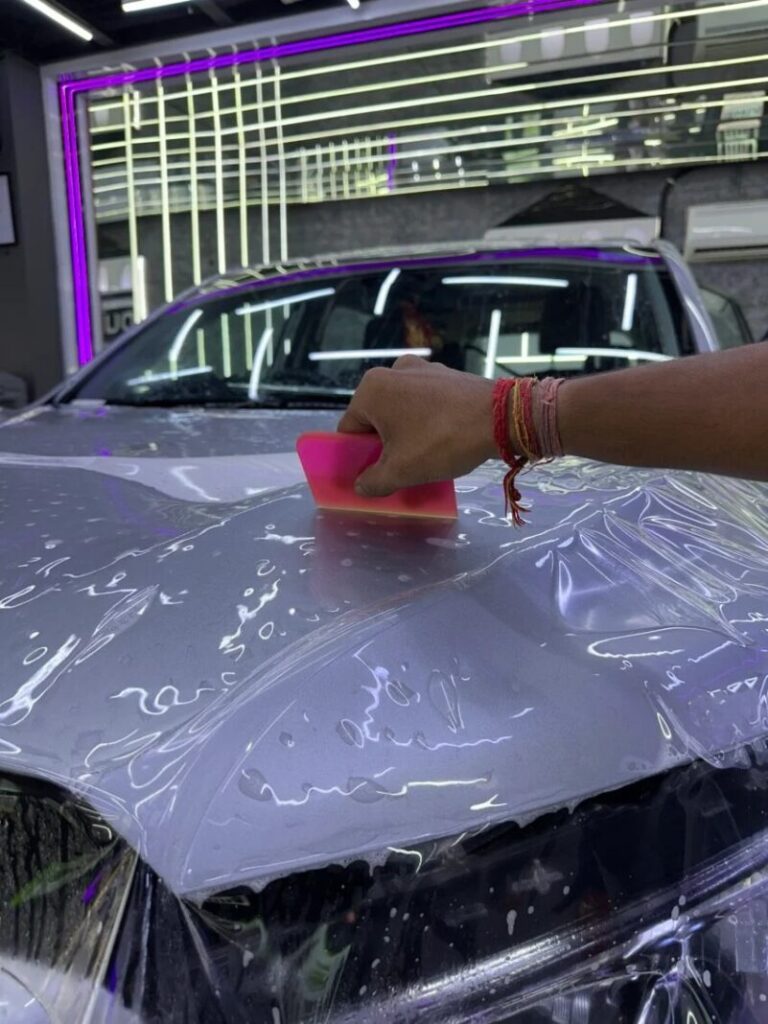
A car’s exterior faces constant challenges from the road, and these become particularly noticeable during winter. Loose gravel, flying stones, road salt, ice, and moisture can gradually damage the paintwork, leaving behind chips, scratches, and stains. Even drivers who regularly wash and maintain their vehicles may find it difficult to prevent this type of wear, especially when travelling on highways or driving through areas with harsh weather conditions.
Paint protection film (PPF) offers a practical way to protect vulnerable painted surfaces from many of these everyday hazards. Made from a transparent, durable material, it creates a protective layer over the vehicle’s original paint. When properly selected and installed, PPF helps preserve the appearance of a car while reducing the risk of damage from road debris and environmental exposure.
Understanding how this technology works, where it provides the most benefit, and how to maintain it can help drivers make informed decisions about protecting their vehicles throughout the year.
Why Road Conditions Can Damage Vehicle Paint
Modern automotive paint systems are designed to withstand everyday use, but they are not completely resistant to physical impact or environmental contamination. Several common driving conditions can gradually affect the finish.
Stone chips are among the most visible problems. When vehicles travel at speed, small stones and gravel can be thrown into the air by tyres, striking the front bumper, bonnet, side mirrors, and lower body panels. Even relatively small particles can leave noticeable marks when they hit the paint with sufficient force.
Winter introduces additional challenges. In colder regions, road authorities often spread salt to reduce ice formation and improve driving safety. Although this helps make roads safer, salt residue can accumulate on body panels, wheel arches, and other exposed areas. Combined with moisture, road contaminants can contribute to corrosion where the paint or protective coatings have already been compromised.
Repeated exposure to freezing temperatures, water, dirt, and abrasive particles can also make exterior maintenance more demanding. Scratches may develop during improper washing, while accumulated grime can make existing imperfections more noticeable.
These risks make preventative paint protection particularly valuable for vehicles regularly driven in demanding conditions.
What Is Paint Protection Film?
Paint protection film is a thin, transparent protective layer applied to selected exterior surfaces of a vehicle. Many modern films use thermoplastic polyurethane (TPU), a flexible material designed to absorb and distribute the energy of minor impacts.
Unlike traditional waxes and sealants, which mainly provide a surface barrier against contamination, PPF adds a physical layer between the vehicle’s paint and the outside environment. This layer can help reduce the likelihood of stone chips, light scratches, and other minor forms of surface damage.
Some premium films also feature self-healing properties. Under suitable conditions, light surface marks may become less visible when the film is exposed to warmth. The exact performance depends on the product’s construction, surface technology, and care requirements.
Drivers researching professional installation can explore options such as paint protection film by Black Diamond to learn more about PPF and its application to vehicle surfaces.
It is important to understand that paint protection film does not make a vehicle completely damage-proof. Severe impacts, deep scratches, and collisions can still damage the film or the paint underneath it. However, the additional layer can help prevent many common forms of cosmetic wear.
How PPF Helps Prevent Stone Chips and Gravel Damage
The front of a vehicle is particularly exposed to flying debris. The bumper, bonnet, front fenders, and side mirrors frequently receive direct impacts from stones kicked up by other vehicles.
PPF helps by providing a sacrificial barrier over these vulnerable areas. Instead of striking the original paint directly, small particles hit the film first. Depending on the impact’s force and the film’s thickness and properties, the material may absorb or distribute some of that energy, reducing the chance of damage to the underlying finish.
This protection can be especially useful for drivers who regularly commute on motorways, travel on gravel roads, or drive behind heavy vehicles that may throw up loose stones.
Coverage can be tailored to a vehicle’s needs. Some drivers choose to protect only the front bumper and bonnet, while others extend the film to the front wings, door edges, rocker panels, and other areas that experience frequent impacts.
Full-body coverage is another option, particularly for owners of high-value vehicles or cars with paint finishes that would be expensive to repair. The most appropriate approach depends on driving habits, budget, and the areas most exposed to damage.
Protecting Your Car During Harsh Winters
Winter driving creates a combination of hazards that can make exterior protection more complicated. Road salt, slush, moisture, and airborne grit repeatedly come into contact with the bodywork, especially around the lower panels and wheel arches.
Although PPF is not a substitute for washing or corrosion prevention, it provides a useful additional barrier against direct contact with road contaminants. Because the film covers the paint, dirt and salt residue can often be removed without exposing the original finish to the same level of direct abrasion.
This can be particularly helpful in regions where roads are salted regularly and temperatures fluctuate around freezing. During these periods, vehicles may encounter wet roads one day and freezing conditions the next, creating repeated opportunities for contaminants to accumulate.
Proper installation is important. Film edges must be applied carefully, and the underlying surface should be clean and in good condition. Poor preparation or installation can leave gaps, trapped contamination, or lifting edges that affect appearance and durability.
Drivers should also remember that exposed metal components, suspension parts, brake components, and untreated areas beneath the vehicle require their own forms of maintenance. PPF primarily protects the surfaces on which it is installed; it is not a comprehensive solution for winter corrosion.
Which Areas of a Car Benefit Most From PPF?
Not every exterior panel faces the same level of risk. Choosing the right coverage can help balance protection and cost.
Front bumper: The bumper often receives direct impacts from gravel and small stones, making it one of the most common locations for paint chips.
Bonnet and front fenders: These panels are exposed to debris thrown up by vehicles ahead. Protection can help maintain their appearance, particularly on cars used frequently on highways.
Side mirrors: Their forward-facing position makes them vulnerable to stones, grit, and minor scratches.
Door edges and handles: These areas can develop chips and scratches through contact with other objects, careless opening, and everyday use.
Lower side panels and rocker panels: These surfaces may receive impacts from road debris, especially when driving on wet or gravel-covered roads.
The ideal coverage depends on how the car is used. A vehicle driven mainly around town may need less extensive protection than one regularly used for long motorway journeys or winter trips through mountainous areas.
PPF Compared With Traditional Paint Protection
Drivers have several options for maintaining automotive paint, including waxes, paint sealants, and ceramic coatings. Each serves a different purpose.
Wax and paint sealants primarily provide a surface layer that can improve gloss and make routine cleaning easier. Ceramic coatings can offer additional resistance to certain contaminants and may improve water repellency. However, neither generally provides the same physical impact protection as a dedicated paint protection film.
PPF is designed primarily to help protect against physical damage, including minor stone impacts and surface abrasion. Some vehicle owners combine PPF with a compatible coating to make the film easier to clean, provided the products are suitable for use together.
The choice depends on the vehicle’s exposure to road hazards and the owner’s priorities. Drivers mainly concerned with shine and easier washing may prefer a coating or sealant, while those who regularly encounter gravel and stone chips may benefit more from film on vulnerable panels.
Maintaining Paint Protection Film in Winter
PPF still requires proper care to maintain its appearance and performance. Regular cleaning is particularly important during winter, when salt and grit can accumulate quickly.
Wash the vehicle when conditions allow, using automotive cleaning products suitable for the film. Avoid scrubbing heavily soiled surfaces before rinsing away loose grit, as doing so can create unnecessary abrasion. A gentle wash method helps remove contamination without damaging the film.
Follow the installer’s guidance on curing times and when the vehicle can first be washed after installation. High-pressure washing should be performed carefully, keeping the nozzle at a suitable distance and avoiding direct pressure on film edges.
Inspect the protected areas periodically for lifting edges, tears, or damage. If a section becomes compromised, professional assessment can help determine whether repair or replacement is appropriate.
It is also worth remembering that PPF cannot eliminate the need for routine vehicle maintenance. Washing away road salt, checking exposed areas for corrosion, and addressing existing paint damage remain important parts of winter car care.
Is Paint Protection Film Worth Considering?
The value of PPF depends on how a vehicle is driven, how long the owner plans to keep it, and how important the original paint finish is to them. Drivers who frequently travel on highways, encounter gravel, or face severe winter conditions may appreciate the additional protection.
Although professional installation requires an upfront investment, preventing some paint chips and scratches may reduce the need for cosmetic repairs later. Keeping the factory finish in better condition can also support a vehicle’s overall presentation when it comes time to sell or trade it in, although resale benefits are not guaranteed.
For many drivers, the most sensible approach is to identify the areas most exposed to damage and select coverage accordingly. A well-maintained vehicle with strategically applied PPF can remain better protected against everyday road hazards without requiring a complete change to normal maintenance routines.
Ultimately, paint protection film is one part of a broader approach to vehicle care. Combined with regular washing, careful driving, and appropriate winter maintenance, it can help preserve the exterior finish against the stones, salt, gravel, and environmental challenges encountered throughout the year.






