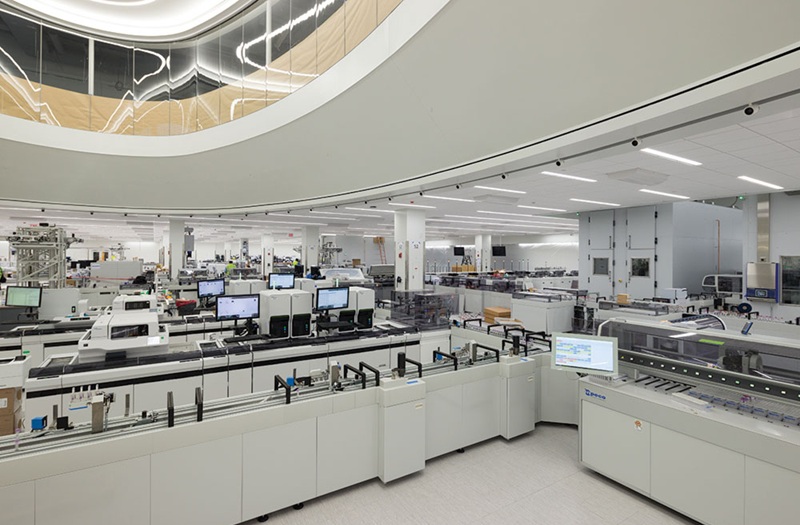
The integration of advanced laboratory testing methodologies in the construction industry is playing a pivotal role in enhancing the safety, efficiency, and sustainability of building projects. These innovations are not only setting new benchmarks but are also reshaping the standards by which construction materials and practices are evaluated.
Advanced Material Testing Techniques
Traditional methods of material testing, while effective, often fell short in providing comprehensive insights into the performance of construction materials under various conditions. Recent advancements have introduced more sophisticated techniques that offer deeper analysis. Large-scale testing laboratories now enable researchers to examine full-sized infrastructure components, such as massive concrete girders. These tests provide invaluable data on how materials behave under extreme stress, leading to more informed decisions in material selection and design.
Integration of Artificial Intelligence and Automation
The incorporation of artificial intelligence (AI) and automation into laboratory testing processes is revolutionizing the construction industry. AI algorithms can analyze vast amounts of data from material tests, identifying patterns and predicting potential failures before they occur. This predictive capability allows for proactive adjustments in design and material selection, significantly reducing the risk of structural failures. Moreover, automation in testing procedures enhances consistency and accuracy, ensuring that results are reliable and reproducible.
Access to Advanced Laboratory Equipment
One of the key enablers of these innovations is access to state-of-the-art laboratory equipment. Modern testing relies on precision instruments capable of measuring even the smallest changes in material performance. Companies and laboratories seeking to adopt these advanced methods can benefit from high-quality resources, such as https://www.oconchemicals.ie/, which provide a wide range of lab equipment tailored for construction testing and research. By leveraging such tools, engineers and researchers can ensure that their testing procedures are both rigorous and cutting-edge.
Enhanced Sustainability through Green Testing Practices
Sustainability has become a cornerstone of modern construction, and laboratory testing is aligning with this ethos. Innovations in testing methods now focus on assessing the environmental impact of materials, including their carbon footprint and recyclability. Laboratories are developing new tests to evaluate the long-term durability of materials in various environmental conditions, ensuring that structures are not only safe but also environmentally responsible. This shift towards green testing practices is driving the adoption of sustainable materials and construction methods across the industry.
Real-Time Data Collection and Analysis
The advent of real-time data collection technologies has transformed laboratory testing in construction. Sensors embedded in materials during testing can transmit data instantaneously, allowing for immediate analysis and feedback. This real-time capability enables engineers and researchers to monitor the performance of materials as tests are conducted, facilitating quicker decision-making and adjustments. The ability to observe material behavior in real-time also enhances the understanding of how materials interact under different conditions, leading to more robust and reliable construction practices.
Conclusion
The innovations in laboratory testing are not merely enhancing existing practices but are fundamentally redefining the standards by which construction materials and methods are evaluated. As the industry continues to embrace these advancements, the result will be safer, more efficient, and sustainable construction practices that meet the demands of a rapidly changing world.