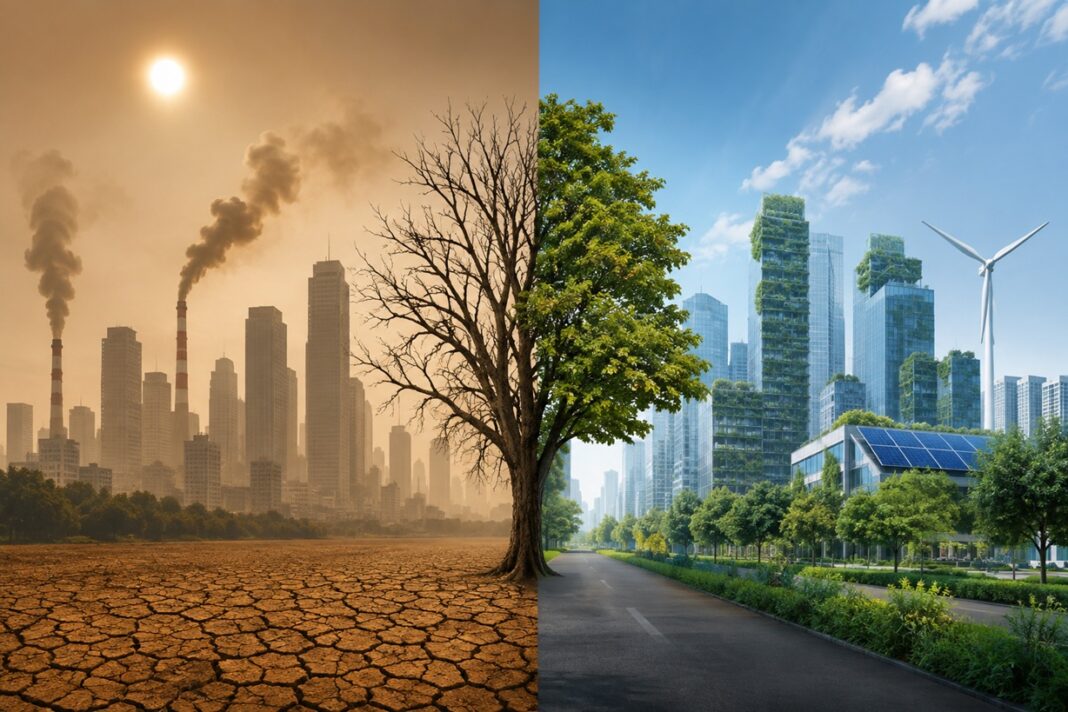
The necessity of climate-conscious urbanism should be self-evident. We are currently witnessing the severe repercussions of historical negligence across the nation. Frequent reports highlight the systematic clearing of vital forest zones for large-scale urban developments that often lack a holistic understanding of the local landscape, its inhabitants, or fundamental ecological requirements.
By dismantling these essential urban “lungs,” we compromise both environmental integrity and the long-term viability of the cities themselves. Cities become what experts call “urban heat islands,” sometimes 2 to 10 degrees hotter than the areas around them. As urban temperatures continue to rise, the discourse surrounding climate-responsive design, sustainable planning, green infrastructure, and water management has shifted from a mere preference to an absolute imperative.
Surprisingly, Bengaluru’s 2026–27 budget caught my attention for exactly this reason. Along with ₹7,000 crore allocated towards urban development, the city has proposed something quite different: a 9-kilometre pedestrian walkway along the Outer Ring Road. Is this really the beginning of a shift—a shift where design decisions are based on people and empathy? We often talk about climate action in terms of electric vehicles, renewable energy, or large-scale infrastructure. But what if something as simple as walking could become part of the solution?
Walkable cities supported by well-designed infrastructure and systems encourage healthier lifestyles, reduce emissions, improve road safety, strengthen public transport, and create public spaces where people actually want to spend time. In many ways, good pedestrian and public infrastructure is about making cities more livable. Of course, the real test is in the performance of these public infrastructure and spaces. Urban Designers and their designs need to respond to ways in which they can make these questions redundant. Will these walkways actually be used? Will they offer shade on hot afternoons, feel safe after sunset, be accessible for children, senior citizens, and people with disabilities, and be maintained well enough to stand the test of time?
Maybe this is the beginning of a larger shift. Maybe it’s a reminder that sustainable cities aren’t just built through grand projects; they’re shaped by the everyday choices we make possible. And perhaps the future of our cities starts with something as simple as taking a walk.
Another thing worth noticing is how thoughtfully our ancient structures were planned. If we truly want to design the cities of tomorrow, perhaps we first need to look back in the past.
Our ancestors’ design decisions were rooted in an understanding of the local ecology, climate, and available resources. Today, as climate change continues to challenge our cities, water is becoming one of our most precious resources. Yet, centuries ago, temple precincts across India were designed as a complete, functioning, interconnected ecosystem. The temple tanks weren’t built only for rituals; they harvested monsoon rain, recharged groundwater, moderated local temperatures, and helped communities withstand droughts and floods.
Today, we describe these ideas as regenerative design, sponge cities, or ecological urbanism. Our ancestors simply called it everyday life.
As we imagine India’s future cities, becoming climate-conscious should also be about rediscovering timeless wisdom. The future of urban design may well lie in blending innovation with the ecological intelligence that has always been part of our heritage.
Ar. Gita Balakrishnan, Founder & Curator, Ethos, Ethos Foundation & ACEDGE
About the Author
The author has been dedicated to bridging the gap between architectural education and professional practice through Ethos. Guided by the belief that architecture extends beyond designing buildings, the author has worked to build knowledge, ideas, and opportunities for students and young professionals in architecture, construction, design, and engineering. Through initiatives such as Acedge, Ideace, and ConnectAID, the author has created platforms for learning, innovation, and career development, helping nurture the next generation of industry professionals while fostering a collaborative community across the built environment.