
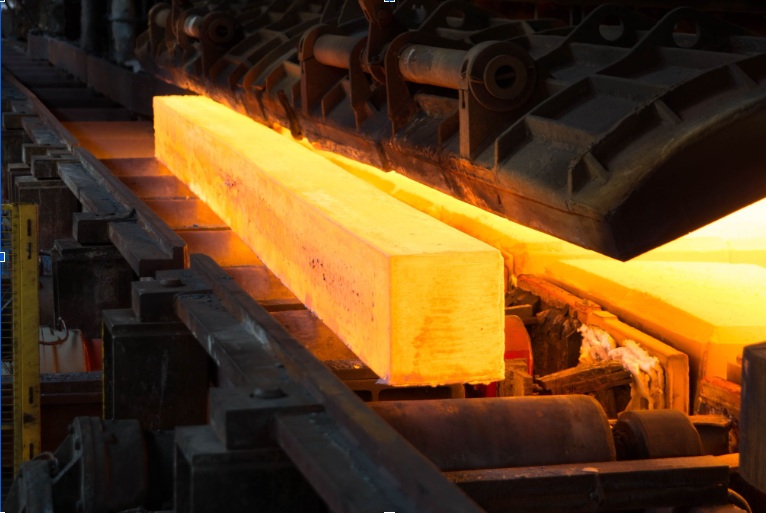
Steel forging technology plays an essential role in construction engineering due to materials’ properties it confers to the workpiece. The forming process creates strong parts with improved fatigue and impact resistance. In construction engineering, it can be used to manufacture excavators and cranes parts, bridge structures, and other equipment and structures featuring complex loading and operating conditions.
For construction engineering, steel forging is applied to create mechanical parts subjected to high pressure, impact, vibrational loads, exposure to the elements, and other challenging environments. Thus, the choice of this technology for manufacturing parts is justified by the opportunity to obtain high-strength material with predictable properties. A reliable forging manufacturer can also offer an extensive range of steel materials with enhanced performance characteristics suited for the service environment.
High Strength for Heavy-Duty Applications
One of the primary reasons why steel forgings are used in the construction industry is their high strength. Many components of excavators, cranes, loaders, rollers, and other construction equipment experience severe cyclic loading that demands excellent material endurance. Such mechanical parts made of forged steel can endure heavy-duty operations due to the high strength-to-weight ratio provided by the forging process.
A reliable Steel forging manufacturer can select suitable carbon steel, alloy steel, stainless steel, or other grades according to the application. Common engineering choices include medium-carbon steels and alloy steels such as AISI 1045, AISI 4140, AISI 4340, 42CrMo4, and 34CrNiMo6, depending on the required mechanical properties and service environment.
Better Resistance to Impact and Fatigue
In addition to the high strength, steel forgings have improved impact resistance and fatigue endurance. Although construction equipment parts are designed to operate under various loading conditions, dynamic and impact loads are often unavoidable. High stresses due to impact loads and cyclic vibrations are destructive to machinery and structures. Therefore, it is required to manufacture mechanical parts of steel forgings that demonstrate improved resistance to impact and fatigue.
Such mechanical parts are commonly fabricated using the forging technology because severe working conditions demand additional attention to material selection and manufacturing process choice. Forged steel parts have a fine-grained structure due to severe plastic deformation during forging. In combination with the proper heat treatments, such a structure provides enhanced material properties including impact resistance and fatigue endurance.
Typical Construction Applications
Steel forgings can be found in a broad range of construction-related systems. Their applications extend beyond heavy machinery to structural and infrastructure projects where dependable mechanical connections are required.
Common applications include:
- Excavators, loaders, bulldozers, and cranes
- Lifting equipment and heavy-duty machinery
- Structural brackets, clevises, lugs, and pins
- Bridge and tunnel construction systems
- Scaffolding and concrete forming equipment
- Anchor components and load-bearing connections
- Couplings, hinges, and support components
KSN’s construction forging applications include machinery, structural and building construction, bridges, tunnels, rail transit, scaffolding, lifting systems, and municipal infrastructure.
Design Flexibility Through Custom Forging
Due to the complexity of geometry and the variety of constructions, it is hardly possible to choose standard detail shapes and sizes for the construction industry. Therefore, steel forgings can be fabricated with any configuration and dimensions suited for their application. For example, construction details made of forged steel include structural clips, heavy-duty pins, lifting lugs, brackets, coupling details, and anchor parts.
Custom construction forgings can be produced in different shapes and sizes, including structural connections, heavy-duty pins, lifting lugs, brackets, coupling components, and anchor parts. Depending on the component, manufacturers may use closed-die forging, open-die forging, or ring rolling before applying processes such as heat treatment and CNC machining.
Why Material Selection Matters
In addition to the forging process, material choice is also important for fabrication of steel parts. The reason why steel forgings are used in the construction industry is due to their reliable performance under severe operating conditions. However, in terms of material selection, there is a range of steels suited for high temperatures, impact resistance, cyclic loading, and other service environments.
Therefore, the selection of a steel grade for forging depends on the operating environment and conditions of the part. For example, carbon content affects a forging’s hardness, strength, and weldability, whereas alloy content improves forging’s strength, hardness, and resistance to oxidation and corrosion.
Supporting Long-Term Construction Performance
The value of steel forgings in construction engineering ultimately comes down to reliability. A component that performs consistently can help reduce unexpected equipment downtime, replacement requirements, and maintenance interruptions. This is particularly important for construction machinery and infrastructure projects where component failures can affect productivity and project schedules.
For this reason, forging remains an important manufacturing method for demanding construction applications. By combining appropriate steel grades with controlled forging, heat treatment, machining, and quality inspection, engineers can obtain components designed for demanding loads and long service life. As construction equipment and infrastructure continue to become more capable, properly engineered steel forgings will remain an important part of their mechanical foundation.






