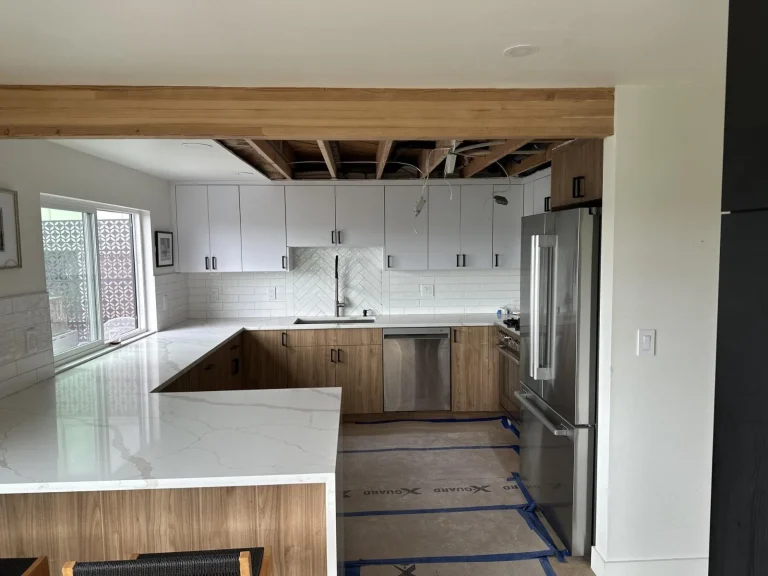
After a leak or indoor flood, the first signs of progress are easy to see. Standing water is removed, the floor no longer feels wet, and the stain on the wall begins to fade. It is tempting to assume the building is ready for repairs as soon as the visible surfaces look dry.
That assumption can create an expensive second problem.
Water does not remain only where it can be seen. It moves through joints, follows gravity, and is absorbed by porous materials. Drywall, insulation, engineered wood, subflooring, trim, and cabinet bases can hold moisture after the room appears normal. If finishes are replaced before those materials reach an appropriate drying condition, moisture may be sealed inside the assembly.
Effective restoration therefore depends on evidence, not appearance. The goal is not simply to remove visible water. It is to understand where the water traveled, determine which materials were affected, and verify that the structure is ready for repair.
Water Follows the Building, Not the Stain
A visible stain shows where water reached a finished surface. It does not define the full boundary of the damage.
Water from an upstairs supply line, for example, may travel along framing before appearing on a ceiling several feet from the source. A dishwasher leak can spread beneath finished flooring while leaving only a small damp area in front of the appliance. Water near a wall can wick upward through drywall or sideways into insulation and base plates.
Different materials also respond at different rates. A hard surface may dry quickly while the material beneath it remains damp. Carpet can feel dry even though the pad below it is wet. Paint may look unchanged while the paper facing of drywall absorbs moisture from the back. Built-in cabinets can hide water at the toe kick or against the wall.
This is why the visible edge of a wet area should be treated as the starting point of an inspection, not its final boundary.
## What Moisture Mapping Adds to the Assessment
Moisture mapping is the process of recording readings across the affected and unaffected parts of a building. Instead of relying on one measurement, a technician compares multiple locations and materials to establish the likely extent of water migration.
The assessment may combine several tools:
– Non-invasive meters help scan a larger area for unusual moisture patterns.
– Pin meters can provide more specific readings in compatible materials.
– Thermal imaging can reveal temperature differences that may guide further inspection, although it does not directly prove the presence of water.
– Hygrometers track temperature and relative humidity in the room and in the air produced by drying equipment.
– Direct inspection of cavities, flooring edges, trim, and other concealed areas confirms what instruments alone cannot show.
No single reading tells the entire story. Metal behind a wall, salts in masonry, reflective insulation, and differences in material density can affect some instruments. Useful moisture mapping combines measurements with knowledge of the building assembly, the water source, and the path the water was likely to take.
Why a Drying Plan Must Match the Materials
Drying is not simply a matter of placing several fans in a room. Air movement, dehumidification, temperature, material permeability, and the size of the affected area all influence the result.
Some materials can often be dried in place when they are reached promptly and remain structurally sound. Others may lose their shape, strength, finish, or sanitary condition. Wet insulation may settle or hold water inside a wall. Laminate and engineered flooring can swell at the edges. Drywall can soften, delaminate, or lose integrity. Contaminated porous materials may require removal rather than drying.
The source and category of water matter as well. Clean water from a supply line calls for a different response than a drain backup or floodwater that may contain contaminants. Running air movers without first understanding the source and conditions can spread particles or contamination beyond the original area. When moisture has entered layered or concealed materials, a professional [water damage assessment and restoration](https://totaldryrestoration.com/services/water-damage-restoration/) process can connect the initial inspection, extraction, drying, and repair decisions instead of treating them as unrelated tasks.
A responsible drying plan is therefore selective. It identifies what can reasonably be restored, what should be removed, and how the remaining structure will be monitored.
Verification Protects the Rebuild
The reconstruction phase should begin only after the affected materials have been checked against a reasonable drying goal. That goal is commonly based on comparable dry materials in an unaffected area of the same building, together with the characteristics of the material being tested.
Documented readings help answer practical questions before new finishes cover the structure:
– Has moisture stopped spreading?
– Are the wall cavities and flooring layers responding to drying?
– Does equipment need to be repositioned?
– Can a material be saved, or is removal now the more reliable option?
– Is the area ready for insulation, drywall, flooring, paint, or cabinetry?
These records also create a clearer handoff between mitigation and reconstruction. The contractor installing new materials does not have to rely on a visual guess, and the property owner has a record of how the decision was made.
Small Leaks Still Deserve a Complete Look
The volume of visible water is not always a good measure of the restoration scope. A slow leak can remain active for weeks, while a larger spill that is discovered immediately may be contained quickly. Duration, location, building materials, airflow, and contamination all affect the outcome.
Property owners can take several useful steps as soon as water damage is discovered:
1. Stop the water source if it can be done safely.
2. Avoid rooms with electrical, ceiling, or structural hazards.
3. Photograph visible damage before moving items.
4. Notify the insurer when the loss may become a claim.
5. Arrange an assessment when water may have entered walls, flooring, insulation, or built-in components.
For property owners in Burien and nearby South King County communities, Total Dry Restoration provides water removal, structural drying, cleanup, documentation, and repair services as part of a coordinated restoration process.
Better Evidence Leads to Better Repairs
The most costly drying mistake is often not a lack of effort. It is stopping when the room looks better instead of when the building has been properly evaluated.
A dry-looking wall can hide a damp cavity. A normal-looking floor can conceal a wet underlayment. A stain can disappear while the original leak remains active. Moisture mapping, material-specific drying, and documented verification reduce those uncertainties before reconstruction begins.
The principle is straightforward: restore what can be restored, remove what cannot be reliably saved, and do not cover the structure until the evidence supports the next step. That approach protects the repair, reduces the likelihood of reopening finished work, and gives property owners a much clearer path from water loss to a usable building.