
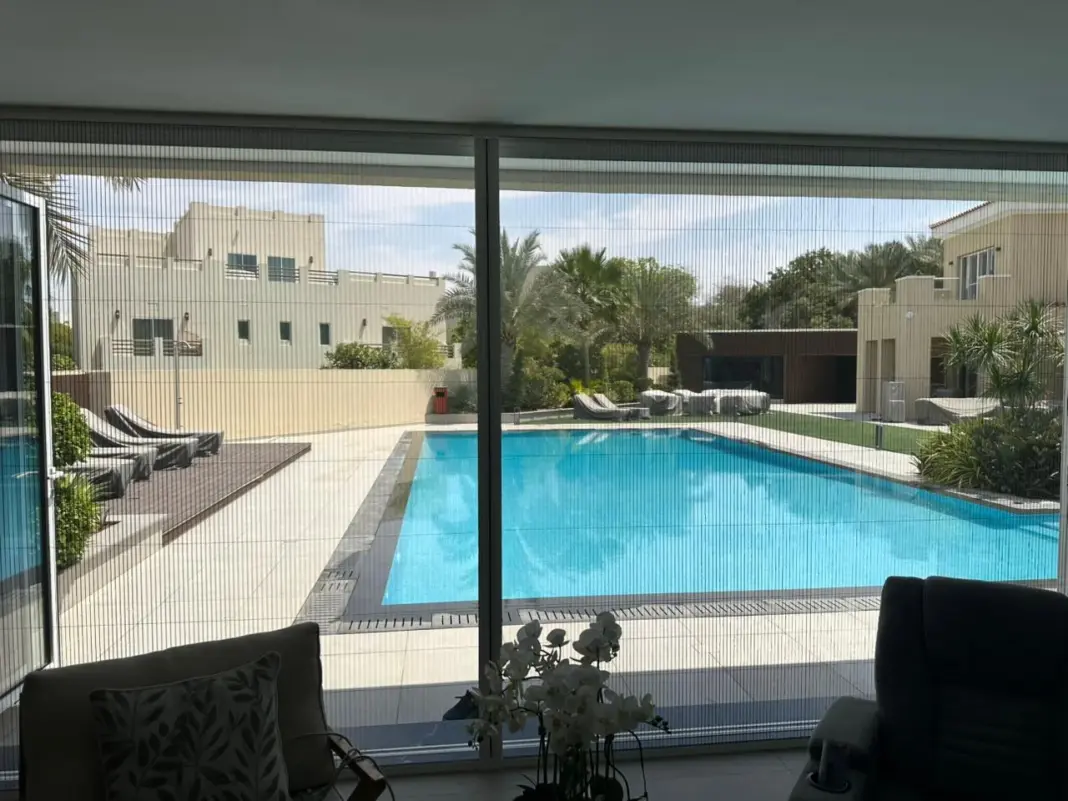
Insect screening is one of the last items specified on a residential project and one of the first to generate a complaint. It is usually treated as a fit-out accessory, priced late, and installed by whoever is still on site. The result is a predictable set of defects that cost more to rectify than the screens cost to supply.
Treated properly, screening is a building component with its own performance criteria, its own tolerances and its own place in the construction sequence.
Mesh selection drives everything else
Mesh is specified by material and by aperture, and the two decisions are independent.
Fibreglass mesh is the default for residential work. It is inexpensive, does not corrode, and has enough elasticity to absorb impact without permanently deforming. It also sags over long spans and discolours under sustained UV.
Aluminium mesh holds its tension across wider openings and lasts longer outdoors, but dents permanently and can corrode in coastal or high-humidity conditions unless coated.
Stainless steel mesh is the specification for security screening or high-durability applications. It costs several times more and is rarely justified on standard residential openings.
Aperture matters as much as material. A standard 18×16 mesh stops mosquitoes and common flies. Finer 20×20 apertures are specified where midges or sandflies are present, at the cost of roughly 15-20% more airflow resistance. On projects where cross-ventilation is part of the cooling strategy, that reduction is not trivial and should be accounted for at design stage rather than discovered after handover.
Frame type follows the opening, not the budget
Fixed clip-in panels suit openings that are never walked through and are the cheapest to produce and to clean. Sliding panels on their own track suit windows and patio doors where the screen must move with the glazing. Pleated and retractable systems suit large openings where the screen must disappear entirely when not in use – they carry the highest hardware cost and the highest failure rate if the track is not installed dead level.
Retractable systems in particular are unforgiving of substrate movement. A track fixed to a partition that later shrinks or deflects will bind, and the callback will be logged against the screen rather than the substrate.
For projects where screening is being specified across a whole development rather than opening by opening, working with a supplier who fabricates to measured site dimensions – Mosquito Net Pro is one example operating across the UAE – removes the tolerance stacking that causes most fit problems on multi-unit work.
Sequencing: the part that goes wrong
The single most common cause of insect screen defects is measuring too early.
Screens are frequently measured off drawings or off structural openings, then fabricated while finishes are still being applied. Plaster thickness, tile build-up and final reveal dimensions all move the actual opening. A screen fabricated to a 1,200mm structural opening does not fit a 1,186mm finished one.
The correct sequence is straightforward: measure after final finishes to the reveal, fabricate, then install after painting and before handover cleaning. On fast-track programmes this window gets compressed, and the compression is where the cost appears.
Defects worth designing out
Sagging mesh on spans over 1.5m – specify a mid-rail or move to aluminium mesh rather than accepting the sag.
Track contamination in dusty or coastal environments – bottom-rolling systems collect grit and bind. Top-hung systems keep the load off the floor track and tolerate site dust considerably better.
Corrosion at fixings – using standard steel screws into an aluminium frame in humid conditions produces galvanic corrosion within two seasons. Specify stainless fixings.
No provision for removal – screens that cannot be taken out for cleaning stop being cleaned, then stop being used, then get removed by the occupant.
Commercial view
On a residential unit, insect screening typically represents a fraction of a percent of build cost. The defect rate, however, is disproportionate, because the component is specified without performance criteria and installed without a defined sequence position.
Bringing it forward – assigning it a mesh specification, a frame type per opening, and a fixed slot in the finishing programme – costs nothing at design stage and removes one of the more avoidable sources of handover snagging.






