
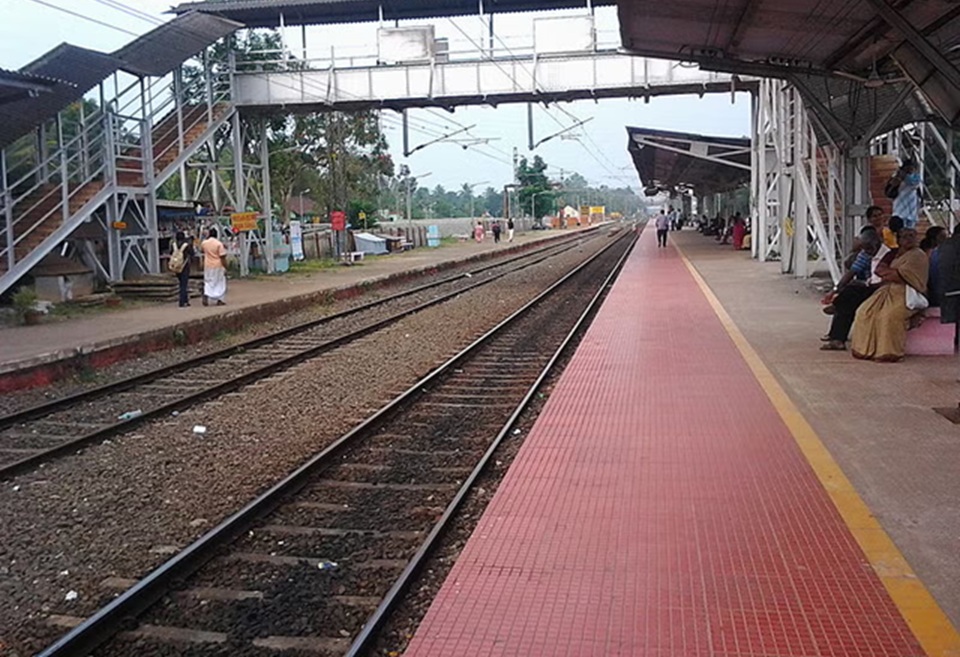
How do we design for spaces that are constantly in motion? How can public infrastructure accommodate not only intended users but also the countless informal interactions that define everyday urban life? These questions formed the foundation of Reimagining the Indian Railway Platform: Informality and Inclusion, a design studio conducted at Anant National University that explored the complex ecosystem of Ahmedabad’s Kalupur Railway Station.
Railway stations are among India’s most democratic public spaces. They function simultaneously as transit hubs, marketplaces, workplaces, shelters, and social spaces, bringing together commuters, migrants, vendors, railway staff, tourists, and local communities. Yet despite their significance, these environments often remain underexplored from the perspective of inclusive design and user experience.
The studio adopted a multidisciplinary research approach, bringing together students from communication design, product design, space design, and architecture. Through structured observations, interviews, focus groups, auto-ethnographic studies, and participatory research, the team sought to understand how people navigate and experience one of Ahmedabad’s busiest transit hubs. Their findings revealed that Kalupur Railway Station operates as a complex ecosystem extending well beyond its formal transportation function. Beneath the visible movement of passengers exists a network of informal economies, support systems, and everyday practices that shape how the station functions.
Among the most significant insights was the role of navigation in shaping passenger experience. Despite the availability of information, many travellers struggled to move confidently through the station. Passengers frequently paused beneath display boards, rechecked platform numbers, or relied on verbal directions from staff and fellow commuters. The challenge was not the absence of information, but the way it was organised, communicated, and integrated within the spatial environment.
Addressing this challenge, Reeva Shah’s intervention focused on redesigning the station’s wayfinding system. Rather than increasing the volume of signage, the proposal introduced a coherent visual framework built around legibility, hierarchy, multilingual accessibility, and cognitive ease. Large, high-contrast typography improved visibility from a distance, while platform numbers and directional information were prioritised through a structured information hierarchy. A consistent multilingual system incorporating Hindi, English, and regional languages ensured accessibility across diverse user groups. The design also introduced a colour-coded navigation framework that assigned distinct visual identities to utilities, services, cautionary information, and station zones, helping users build intuitive spatial awareness while moving through crowded environments.
Complementing this approach, Akshat Alok Malviya examined another overlooked touchpoint within the station: the Automatic Ticket Vending Machine (ATVM). Intended to reduce congestion at ticket counters, these kiosks remained significantly underutilised due to confusing interfaces and limited functionality. Through extensive observation and user interviews, the project identified opportunities to transform the kiosk from a simple ticketing device into a navigation-oriented public service tool.
The resulting concept, SmartScan Hub, integrated ticket booking and wayfinding into a single user experience. Beyond purchasing tickets, passengers could access station maps, receive platform and coach guidance, and identify accessible routes using elevators or escalators. The redesigned interface employed clear information hierarchies, intuitive workflows, and simplified visual communication to support users with varying levels of digital literacy. By combining physical and digital navigation systems, the proposal aimed to reduce travel anxiety while improving independent movement throughout the station.
Together, these interventions demonstrate that meaningful improvements to public infrastructure do not always require large-scale architectural transformations. Often, the greatest impact comes from understanding how people interact with spaces and refining the systems that support those interactions. Through improved wayfinding, accessible information design, and user-centred navigation tools, the projects reveal how design can transform complex transit environments into more intuitive, inclusive, and human-centred public spaces.
As India’s railway infrastructure continues to modernise, the lessons from Kalupur Railway Station highlight an important principle: successful public spaces are not defined solely by their physical construction, but by how effectively they enable people from diverse backgrounds and abilities to navigate, understand, and participate in them.
Instructor
University
Dr Ashima Sood is a researcher and editor interested in urban development. Starting with a PhD at the Cornell University Department of Economics, Dr Sood’s work has combined qualitative and quantitative methods to examine the forms and origins of informality in Indian cities. Her work has received funding and/or fellowships from the Urban Studies Foundation, the India Foundation of the Arts, the Azim Premji University Foundation, the Indian Institute of Advanced Study and the Centre de Sciences Humaines. Her research has been published in avenues ranging from Urban Studies; Cities; Territory, Politics, Governance; Journal of Institutional Economics; Marg, the Economic and Political Weekly; the India International Centre Quarterly, to the Wiley- Blackwell Encyclopaedia of Urban and Regional Research and the World Social Science Report 2013, and others.
Innovators

Akshat Malviya, a Class of 2024 Product Design graduate from Anant National University, is currently working as a UX Designer at Accenture Solutions Pvt Ltd. Born and raised in Mumbai, Akshat chose Product Design as it offered him the flexibility to explore both industrial and digital design. His time at Anant exposed him to diverse domains within design, developing a strong inclination towards visual design, combining aesthetic sensibility with usability in his work.
Reeva Shah, a Class of 2024 Communication Design graduate from Anant National University, is currently pursuing her masters in Strategic Design Management at the National Institute of Design. A trained classical singer and a state-level badminton player, Reeva explored diverse design disciplines at Anant, delving into areas such as visual communication, user experience and product aesthetics.






