

Expressways are high-speed, access-controlled road corridors designed to enable smooth, uninterrupted movement of traffic over long distances. Unlike conventional roads, they eliminate intersections, signals, and direct access points, significantly reducing congestion and travel time. These roads play a crucial role in economic growth by improving logistics, enhancing connectivity between cities, and supporting industrial development.
The construction of expressways is a complex engineering process involving multiple stages, including planning, design, material selection, execution, and maintenance. Each stage requires precision, coordination, and adherence to strict quality standards to ensure durability and safety.
Planning and Feasibility
- Traffic studies are conducted to assess current and projected vehicle flow, helping determine the need for an expressway
- Route alignment is carefully selected to minimize environmental damage, reduce travel distance, and avoid densely populated areas
- Environmental Impact Assessment (EIA) evaluates the potential effects on ecosystems, forests, water bodies, and wildlife
- Land acquisition planning identifies required land parcels and addresses ownership and legal considerations
- Economic feasibility analysis compares project costs with long-term benefits such as reduced travel time and fuel savings
Geometric Design Considerations
- Design speed is typically high, often ranging between 80 km/h and 120 km/h or more, depending on terrain
- Lane widths are standardized to ensure safe movement of vehicles at high speeds
- Medians separate opposing traffic streams, often equipped with barriers for safety
- Shoulders are provided on both sides for emergency stops and breakdowns
- Horizontal curves and vertical gradients are designed to ensure smooth driving conditions and visibility
A well-designed geometry enhances both safety and driving comfort.
Pavement Design
- Pavement acts as the structural component that carries traffic loads and distributes them to the underlying soil
- Flexible pavements consist of multiple layers including subgrade, sub-base, base, and asphalt surface layers
- Rigid pavements are made of cement concrete slabs and are known for their durability and long service life
- Selection of pavement type depends on traffic volume, soil conditions, climate, and budget constraints
- Proper pavement design prevents failures such as cracks, rutting, and deformation
The durability of an expressway largely depends on the strength and design of its pavement.
Earthwork and Subgrade Preparation
- Initial clearing and grubbing remove vegetation, roots, and debris from the construction site
- Excavation and embankment processes help achieve the required road level by cutting high areas and filling low areas
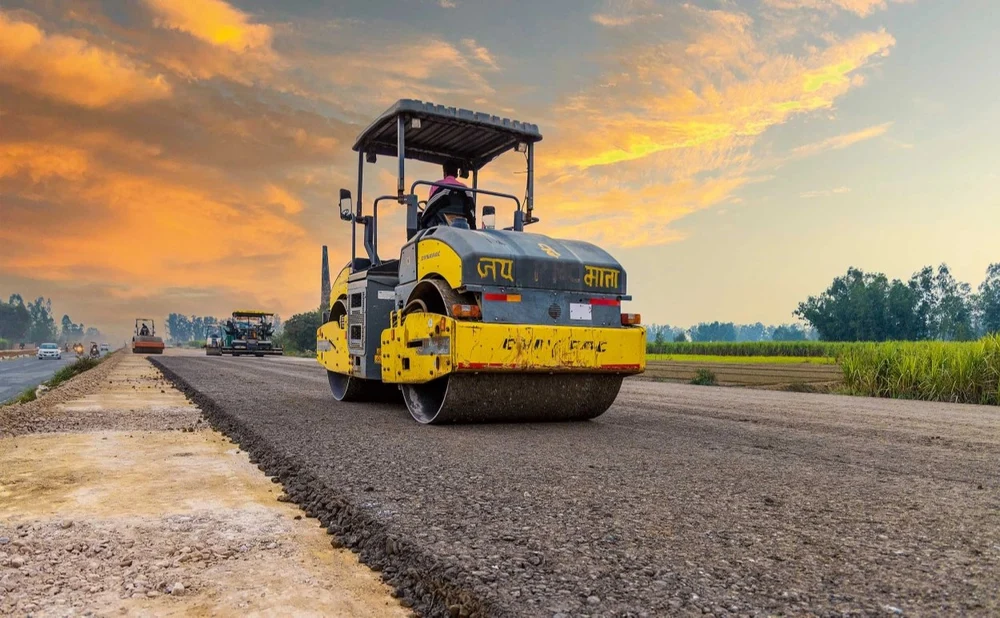
- Soil is compacted using heavy rollers to improve stability and load-bearing capacity
- Subgrade preparation forms the foundation layer and must be strong and uniform
A stable subgrade is essential to prevent settlement and structural damage in the future.

Sub-base and Base Layers
- Sub-base layer is constructed using granular materials such as crushed stone or gravel
- It provides drainage and prevents upward movement of moisture from the soil
- Base course is a stronger layer placed above the sub-base to distribute traffic loads effectively
- Materials like Wet Mix Macadam (WMM) or cement-treated base are commonly used
- Proper compaction and grading ensure structural integrity and longevity
These layers act as the backbone of the pavement system.
Pavement Laying Process
- In flexible pavements, bituminous layers are laid using asphalt pavers to ensure even thickness and smooth finish
- Binder course provides structural strength, while the wearing course offers a smooth driving surface
- In rigid pavements, concrete is laid using slip-form pavers for continuous and uniform construction
- Expansion joints are incorporated in concrete roads to accommodate temperature variations
- Advanced machinery improves precision and reduces construction time
The quality of pavement laying directly affects ride comfort and durability.
Drainage Systems
- Surface drainage systems include side drains that channel rainwater away from the roadway
- Subsurface drainage systems remove water from beneath pavement layers
- Proper slope and grading ensure efficient water flow and prevent stagnation
- Inadequate drainage can lead to pavement damage, potholes, and reduced lifespan
Efficient drainage is critical for maintaining the structural integrity of expressways.
Structures in Expressways
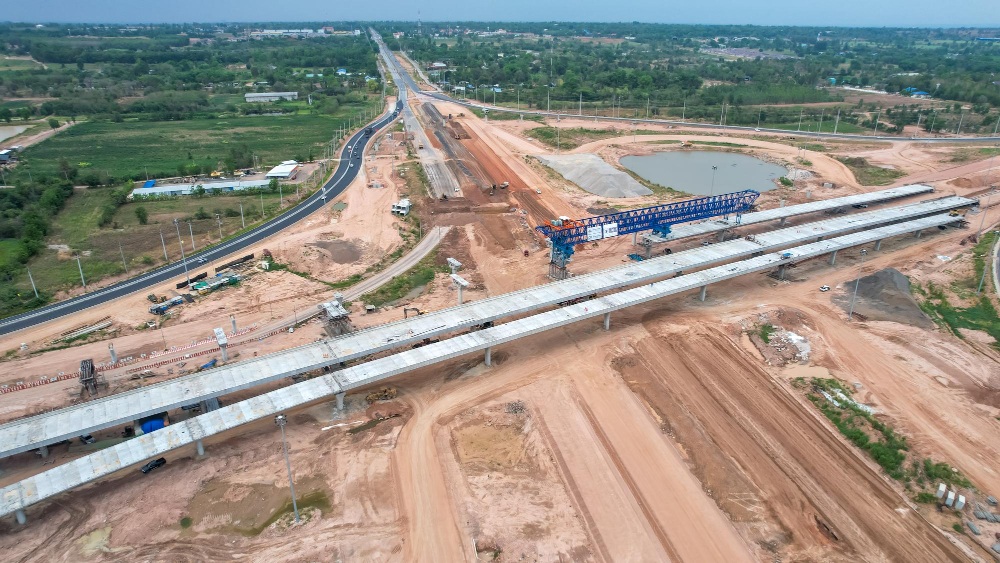
- Bridges and flyovers are constructed to cross rivers, railways, and other obstacles
- Underpasses and overpasses allow local traffic to move without disrupting expressway flow
- Interchanges provide grade-separated junctions for safe entry and exit of vehicles
- Common interchange types include cloverleaf, diamond, and trumpet designs
- Structures are designed to handle heavy loads and ensure uninterrupted traffic
Construction Equipments Used
- Excavators and bulldozers are used for earthmoving and site preparation
- Motor graders help achieve proper surface leveling
- Rollers compact soil and pavement layers to required densities
- Asphalt pavers and concrete pavers ensure uniform surface construction
- Batching plants produce consistent quality materials
Quality Control and Testing
- Soil tests ensure adequate compaction and strength of the subgrade
- Aggregate testing checks durability and suitability of construction materials
- Bitumen and concrete are tested for consistency and performance
- Thickness and surface evenness of pavement are regularly monitored
- Continuous quality checks help identify defects early and maintain standards
Conclusion
Expressway construction is a sophisticated process that integrates engineering expertise, advanced materials, and cutting-edge technology. Every stage, from planning and design to execution and maintenance, plays a vital role in ensuring the efficiency, safety, and durability of the roadway.
As infrastructure development continues to expand, expressways will remain a backbone of economic growth and connectivity. With the adoption of smart technologies and sustainable practices, future expressways will not only improve transportation but also contribute to a more efficient and environmentally responsible world.






