
Every industry has felt the pressure to produce more video. Marketing still needs product clips. Training still needs walkthroughs. Architecture and engineering firms still need something a client can watch when they cannot read a drawing set. Real estate still needs motion around a facade, not another still render in a PDF.
The traditional answer — crew, schedule, post — still works for the high-stakes film. It does not scale to the dozen assets a mid-size firm now owes a quarter: social, a planning-board deck, an internal safety brief, a localized ad test. That math broke years ago.
A second bottleneck showed up after the first wave of web generators. The brief already lives in the tool the team types into all day — a coding agent, a project chat, a spec sitting next to the CAD export. The old “AI video” move was to copy that brief into yet another homepage, lose the context, and hope the prompt survived. That is where a plugin inside the agent is a different object from a standalone generator tab.
A Topview plugin is built for that split: the agent handles intent; a Canvas handles generation, arrangement, and finish — images, video, and campaign pieces — without treating chat history as the studio.
This article is not a claim that plugins replace cinematographers. It is about the gap between “we need a clip of this render” and “we cannot afford a second software island.”

What “AI video generator” meant — and what a plugin adds
The term still covers several jobs, and mixing them is how purchases disappoint.
Text-to-video turns a written scene into a clip. Useful for mood and client-facing atmosphere. Weak when the building in the file is not your building.
Image-to-video is the construction-native path: a daylight facade still, a lobby photo, a product packshot. Clouds, people, a slow push — the still becomes a living beat without a full animation vendor. For AEC and developers, this is usually the honest starting point.
Style and extend tools relight, crop, or lengthen a take you already approved.
A web hub that offers many models in one login solved yesterday’s problem (too many subscriptions). It did not solve today’s: the specification, the product URL, and the “don’t invent a second canopy” note are already in the agent. A plugin lets that agent call a production Canvas — place assets, run skills, keep references attached — instead of handing you a ZIP and a blank prompt box.
On Topview’s plugin path that looks like: install for Codex, Cursor, or Claude Code; authorize; then ask for the job in the same conversation. Ready-made video skills (product ads, try-on, pain-point spots, cinematic kits) exist for teams that sell SKUs. Project teams can still start from stills and a timed brief. Models on the Canvas (including longer multimodal lanes) stay generation engines. The plugin is the handoff, not a fourth model.

Where the value shows up for businesses and makers
The useful cases are still the ones the generic “AI video is changing business” essays named. The plugin only changes where the work starts.
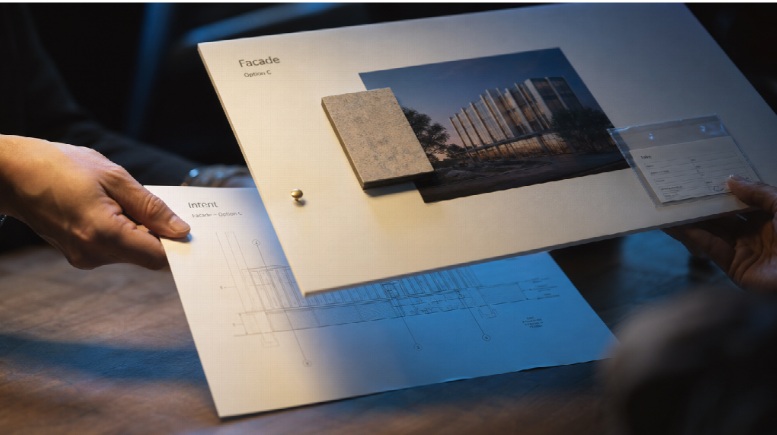
Project visualization. An architecture studio walking a planning board through massing does not need Pixar. It needs spatial intent: glass, dusk interior glow, the paved approach. Hours from existing renders beats weeks of commissioned animation when the threshold is “decision-makers understand the proposal.” Keep the still as ground truth. Write what must not appear (no extra towers, no wrong cladding).
Marketing tests without a second crew. A manufacturer or developer launching across two markets can generate setting and mood variants from one kit. The per-clip cost drops enough that iteration is a real strategy. The agent already knows the SKU names from the thread. Pasting them into a stranger’s text field is how logos drift.
Site-specific explainers. Photos of the actual gate, the actual hoist, the actual show unit — animated as a 15–20 second brief — beat generic stock “construction site” B-roll. Safety and access rules still belong to humans. The clip is orientation, not a substitute for a competent person on site.
Social and listing filler. The demand for motion around a listing or a product card did not slow down. B-roll and hold-frames from approved stills fill the pipe. A plugin that can also look up public ecommerce or platform context is optional for AEC; it matters more for teams whose script should follow what is actually selling.
Getting a professional result (the input is still the job)
The gap between a toy clip and a deck-ready clip is rarely the logo on the generator.
Specificity. “A building” is noise. “Three-story commercial, full-height glass, warm interior at dusk, mature landscape, stone walk to the entrance — same facade as the attached still” is a brief.
Aspect before generate. A 16:9 board clip will not become a Story by cropping off the signage. Set 9:16 when the destination is vertical.
One job per pass. Iterate. First take is a draft. Change one variable (camera, negative, still) rather than a new aesthetic adjective every time.
Finish like an adult. Trim, grade to the brand palette, add audio you own. AI did the heavy lift. The last five percent is still editorial.
Keep the kit in the project. Characters, products, props, and scene stills should stay attached so the next shot does not re-invent the canopy. That is the practical meaning of “Canvas instead of chat history.”
How a team actually starts
You do not need a new department.
- Copy the install prompt from the plugin page into Codex, Cursor, or Claude Code and finish authorization.
- Point the agent at the stills or product photos you have the right to use.
- State the beat in seconds and the “do not invent” list.
- Review identity — cladding, logo, room — before you praise the sunset.
- Export into the deck or the editor you already use.
If your only video is a live testimony or a legal walkthrough of a defect, shoot it. Plugins do not replace evidence.
The trajectory, without waiting for perfection
Longer coherence, better identity lock, less copy-paste between chat and generator: that is the actual curve. Real-time generation will matter for live pitches later. For a firm deciding whether to wait, the pragmatic line is the same as it was for web generators — only the insertion point moved.
The companies compounding skill are the ones whose briefs already live next to the work. An agent-side video plugin is how that brief becomes a clip without a second island. The tools for that handoff are ready. The question is whether the next client video still starts with a blank homepage.






