
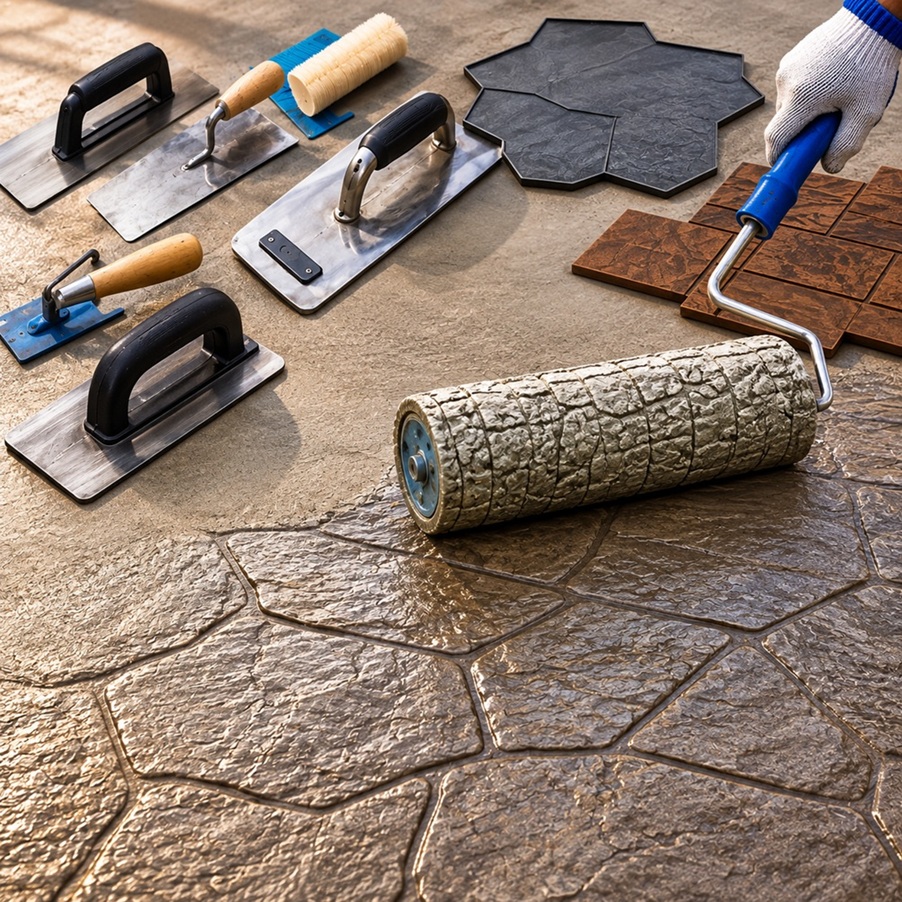
Decorative concrete tools are used for creating textures, patterns, finishes, and surface details in decorative concrete applications. These tools help transform conventional concrete surfaces into visually appealing finishes while maintaining strength, durability, and functional performance.From surface preparation to final sealing, each stage of decorative concrete work depends on specific tools designed for mixing, spreading, levelling, texturing, finishing, and protection.
With increasing use of decorative concrete in residential, commercial, landscape, and architectural projects, these tools support contractors in achieving customised surface appearances with improved workmanship and efficiency.

Requirements of Decorative Concrete Tools
Decorative concrete projects require tools that support different stages of installation, including concrete placement, finishing, texturing, and surface protection.
1. Surface Levelling and Finishing
Tools such as bull floats, magnesium floats, and finishing trowels are required to level fresh concrete surfaces and create smooth finishes before decorative treatments.
2. Texture and Pattern Creation
Stamping tools, texture rollers, and hopper guns are used to create decorative patterns resembling stone, brick, slate, wood, and other finishes.
3. Joint Formation and Detailing
Groovers, edgers, and hand tools help create control joints, borders, and detailed surface designs.
4. Surface Preparation
Brushes, scrapers, grout correction rollers, and grinding tools help prepare surfaces for overlays, coatings, stains, and sealers.
5. Material Application
Sprayers, gauge rakes, squeegees, and applicators support uniform application of sealers, stains, coatings, and decorative materials.
6. Finishing and Protection
Specialised tools assist in applying protective sealers and achieving the required surface appearance and durability.
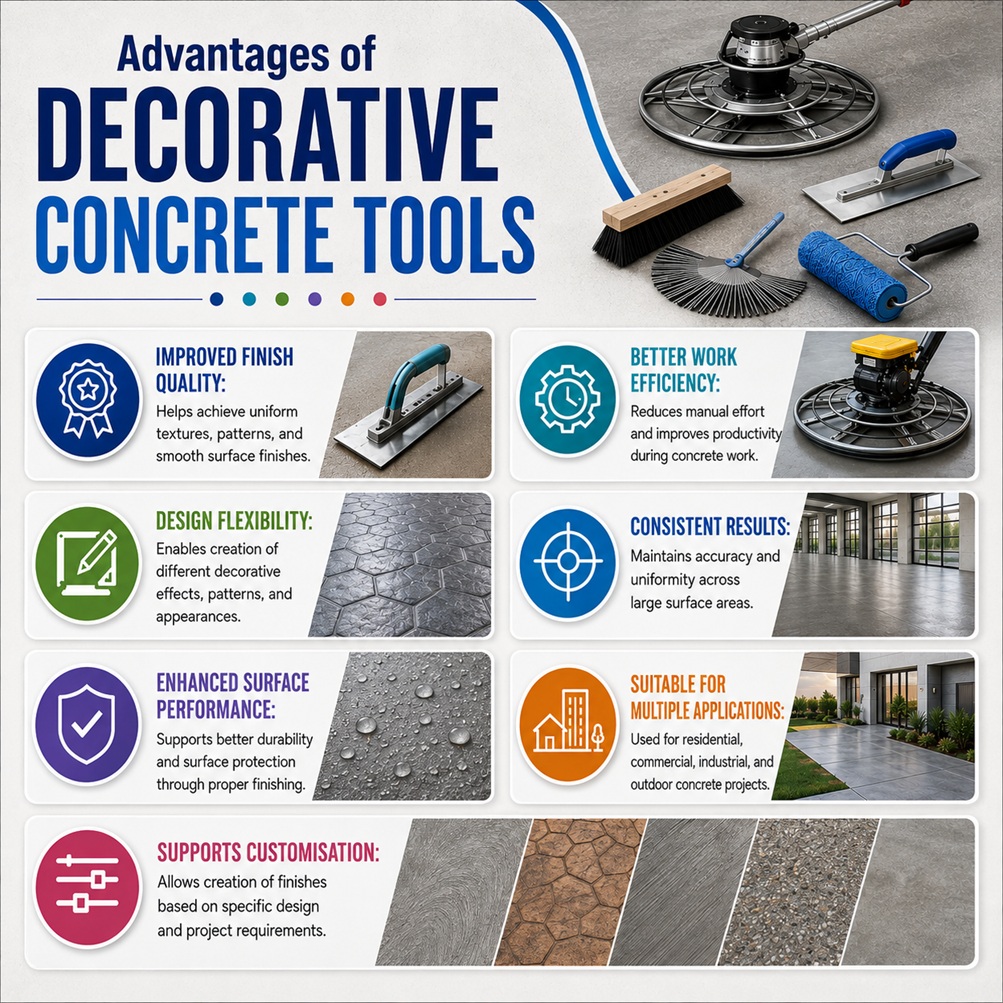
Types of Decorative Concrete Tools
1. Floating and Trowelling Tools
Used for levelling, smoothing, and finishing concrete surfaces to achieve uniform decorative finishes.
Tools:
- Magnesium Floats: Used to smooth concrete surfaces and prepare them for final finishing.
- Bull Floats: Used for levelling large concrete areas and closing surface pores.
- Fresno Trowels: Used for smoothing and refining large concrete slabs.
- Steel Finishing Trowels: Used to create smooth and dense concrete surface finishes.
- Margin Trowels: Used for precise finishing in edges, corners, and narrow areas.
- Round-End Trowels: Used for shaping and finishing concrete surfaces with better control.
2. Concrete Tampers and Texture Tools
Used for compacting concrete and creating decorative textures, patterns, and surface effects.
Tools:
- Cage Roller Tampers: Used for compacting concrete and creating textured surface patterns.
- Impact Tampers: Used for consolidating concrete and improving surface uniformity.
- Texture Rollers: Used for creating decorative patterns and textured finishes on concrete.
- Floor Texture Guns: Used for spraying texture materials to create decorative surface effects.
3. Concrete Grooving and Edging Tools
Used for creating joints, grooves, borders, and decorative detailing on concrete surfaces.
Tools:
- Hand Edgers: Used for creating smooth and rounded edges on concrete slabs.
- Aluminium Groovers: Used for forming control joints and decorative grooves.
- Grout Saws: Used for removing excess material and correcting joint areas.
- Correction Rollers: Used for improving surface consistency and correcting minor imperfections.
4. Gauge Rakes and Spreading Tools
Used for spreading overlays, coatings, and concrete materials at consistent thickness.
Tools:
- Gauge Rakes: Used for controlling the thickness and distribution of overlay materials.
- Magic Trowels: Used for smoothing and spreading decorative coatings, overlays, and self-levelling materials.
- Squeegees: Used for evenly distributing liquid coatings and surface treatments across concrete floors.
5. Concrete Sprayers
Used for applying stains, sealers, acids, and protective treatments evenly on concrete surfaces.
Tools:
- Acid Sprayers: Used for applying acid stains and surface treatment solutions.
- Sealer Sprayers: Used for uniform application of protective concrete sealers.
- Acetone Sprayers: Used for applying solvent-based stains and decorative finishes.
6. Brushes and Cleaning Tools
Used for cleaning, surface preparation, and creating textured finishes before decorative applications.
Tools:
- Tampico Dash Brushes: Used for surface texturing and cleaning decorative concrete.
- Acid Scrub Brushes: Used for cleaning and preparing concrete surfaces before treatments.
7. Handles and Accessories
Used for extending tool reach, supporting attachments, and improving control during concrete finishing.
Tools:
- Aluminium Handles: Used to provide extended reach and support for finishing tools.
- Worm Gear Brackets: Used for attaching and adjusting concrete finishing tools.
- Rock and Roll Brackets: Used for flexible movement and better control of attached tools.
8. Concrete Stamping Tools
Used for imprinting patterns and textures on fresh concrete surfaces to create decorative finishes.
Tools:
- Stamp Mats: Used for applying repeated textures and designs across larger concrete areas.
- Stamp Rollers: Used for quickly creating consistent patterns on decorative concrete surfaces.
9. Concrete Polishing Tools
Used for grinding, smoothing, and polishing concrete surfaces to achieve a refined and glossy finish.
Tools:
- Diamond Grinding Pads: Used for removing surface imperfections and preparing concrete for polishing.
- Polishing Discs: Used for achieving smooth and high-gloss concrete finishes.
10. Concrete Cutting and Engraving Tools
Used for creating decorative lines, patterns, and detailed designs on concrete surfaces.
Tools:
- Diamond Saw Blades: Used for cutting precise grooves and decorative patterns in concrete.
- Concrete Engravers: Used for creating detailed designs and textures on existing concrete surfaces.
- Floor Cutters: Used for surface scoring, joint cutting, and decorative detailing.
11. Concrete Mixing and Preparation Tools
Used for preparing concrete mixes, coatings, and decorative materials before application.
Tools:
- Mixing Paddles: Used for blending concrete coatings, overlays, and additives uniformly.
- Concrete Mixers: Used for preparing consistent concrete mixtures for decorative applications.
- Mixing Buckets: Used for holding and preparing small quantities of decorative materials.
12. Concrete Sealing and Protection Tools
Used for applying protective layers that improve durability and enhance the appearance of decorative concrete surfaces.
Tools:
- Rollers: Used for applying sealers and protective coatings evenly across concrete surfaces.
- Applicator Pads: Used for smooth application of finishing products and sealers.
- Spray Systems: Used for applying protective coatings over large surface areas.
13. Concrete Staining and Colour Application Tools
Used for applying colours, stains, and decorative finishes to enhance concrete appearance.
Tools:
- Paint Rollers: Used for uniform application of concrete stains and coatings.
- Brushes: Used for detailed colouring and edge finishing.
- Spray Applicators: Used for achieving blended and consistent colour effects.
Applications of Decorative Concrete Tools
- Decorative Flooring: Used for creating polished, textured, stained, and patterned finishes in residential, commercial, retail, office, and hospitality floors.
- Outdoor Concrete Surfaces: Used for decorative finishing of driveways, pathways, courtyards, pool decks, and landscape areas.
- Concrete Overlay Systems: Used for surface renovation, resurfacing, patterned overlays, and decorative restoration of existing concrete.
- Commercial and Industrial Areas: Used for finishing showrooms, warehouses, public spaces, and institutional buildings.
- Architectural Concrete Works: Used for creating customised finishes on feature walls, decorative panels, landscape structures, and architectural elements.
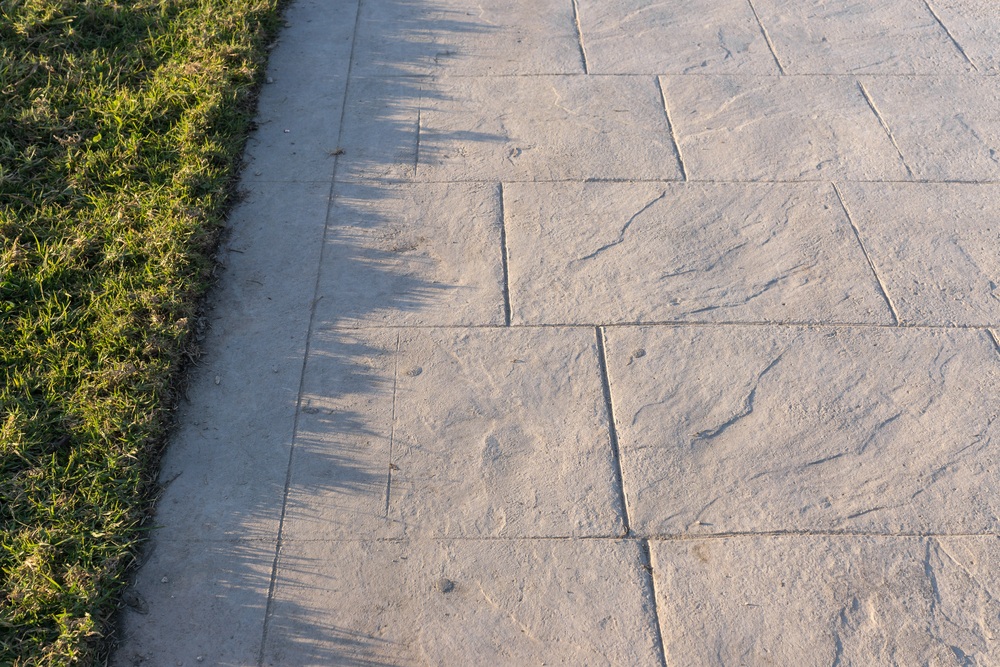
- Stamped Concrete Applications: Used for creating decorative patterns that replicate stone, brick, slate, and wood textures.
- Concrete Restoration Projects: Used for repairing, refinishing, and enhancing the appearance of aged concrete surfaces.
- Parking Areas and Walkways: Used for improving surface appearance, texture, and durability in high-traffic outdoor areas.
- Landscape Concrete Applications: Used for decorative treatment of garden paths, seating areas, terraces, and outdoor structures.
- Interior Design Applications: Used for creating aesthetic concrete finishes in homes, hotels, restaurants, and commercial interiors.
- Public Infrastructure Spaces: Used for decorative and functional finishing of plazas, pedestrian areas, and community spaces.
- Custom Decorative Surfaces: Used for producing unique textures, colours, patterns, and artistic concrete designs.
Prerequisites for Selecting the Right Decorative Concrete Tools
- Application Requirement: Select tools based on the type of decorative concrete work and finishing process.
- Surface Type: Consider the concrete surface condition and project requirements before choosing tools.
- Finish Requirement: Choose tools according to the desired texture, pattern, and appearance.
- Project Scale: Select suitable tools based on the size and complexity of the project.
- Material Compatibility: Ensure tools are suitable for the materials being applied.
- Tool Quality: Prefer durable tools for reliable performance and consistent results.
- Ease of Use: Choose tools that provide better handling and operational efficiency.
- Maintenance Needs: Consider tools that are easy to maintain and suitable for repeated use.
Conclusion
Decorative concrete tools play an important role in achieving accurate finishes, textures, patterns, and surface performance across various concrete applications. From surface preparation and finishing to stamping, polishing, colouring, and sealing, these tools support different stages of decorative concrete work. Selecting the right tools based on project requirements, material compatibility, and desired finish helps improve workmanship, efficiency, and durability. With their ability to create customised and visually appealing surfaces, decorative concrete tools continue to support the growing demand for functional and aesthetic concrete solutions in residential, commercial, industrial, and architectural projects.






