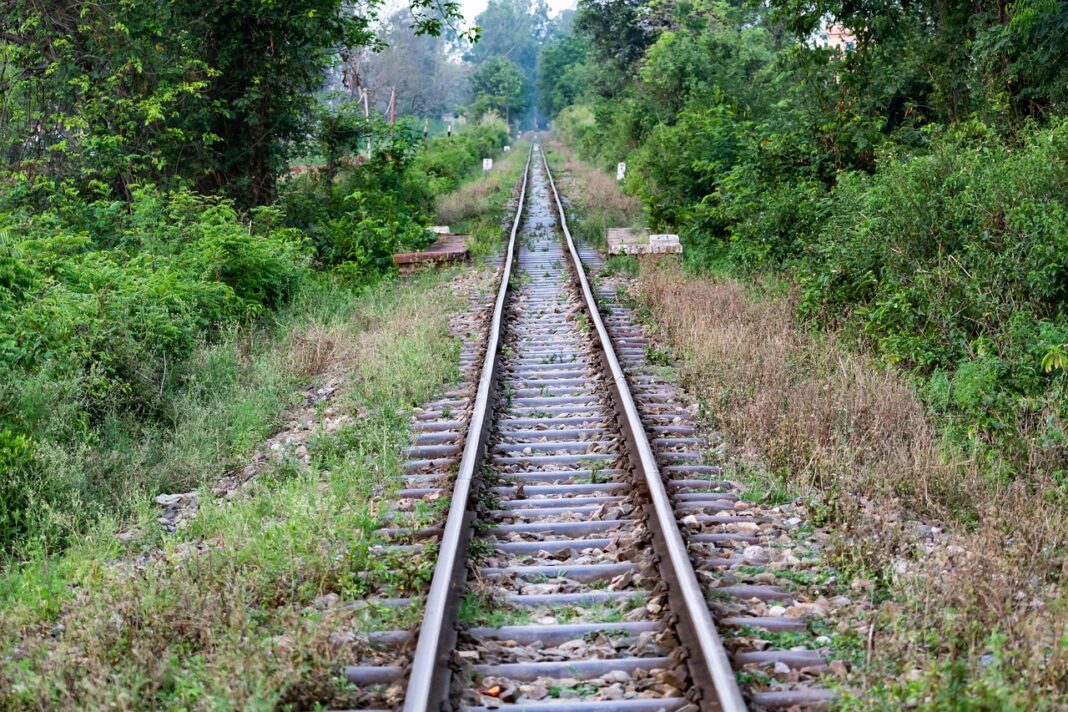
he Centre has approved a detailed estimate of ₹1,419.05 crore for the construction of the 39.68-km Qadian-Beas broad-gauge railway line in Punjab’s Majha region. The development was announced by former Union Minister of State for Railways Ravneet Singh Bittu on August 16.
The railway project will connect Qadian in Gurdaspur district with Beas in Amritsar district, providing rail connectivity to several towns and villages in the region. The project has been pending for decades and is being viewed as an important infrastructure development for the Majha belt.
Railway Project Includes Major Infrastructure
The proposed railway corridor will include two crossing stations at Ghuman and Butala, along with 11 major bridges and 121 minor bridges. The project will also feature 54 Road Under Bridges (RUBs) to improve connectivity between road and rail networks.
Modern signalling and telecommunication infrastructure will be installed along the route. The railway line will also use Kavach, India’s indigenous automatic train protection system designed to help prevent train collisions.
The project will be executed by Northern Railway and will pass through Qadian, Dhapai, Ghuman, Butala, Sathiala and Beas.
Project Has A Long History
The Qadian-Beas railway proposal dates back nearly a century. It was originally approved during 1928–29 by the then North-Western Railway, with construction progressing during the early 1930s. However, the project was later discontinued as priorities changed.
The proposal was subsequently revived because of its development and connectivity potential. It was included under the Socially Desirable Rail Connectivity Programme and featured in the supplementary Railway Budget for 2010–11.
The project was formally revived again in June 2026 with an estimated cost of around ₹1,400 crore. The latest Railway Board sanction has now placed the detailed estimate at ₹1,419.05 crore.
Strategic and Regional Importance
The new railway line is expected to improve connectivity between communities in the Majha region and provide access to the wider railway network. It will also have strategic importance by providing an alternative corridor to the Amritsar–Pathankot railway section.
The project is expected to support movement of passengers and goods while improving access to important towns and rural areas along the proposed alignment.
Mr. Bittu described the approval as a major milestone for Punjab and the Majha region, acknowledging the efforts of the Union government, Railway Ministry and Railway Board in moving the long-pending project forward.