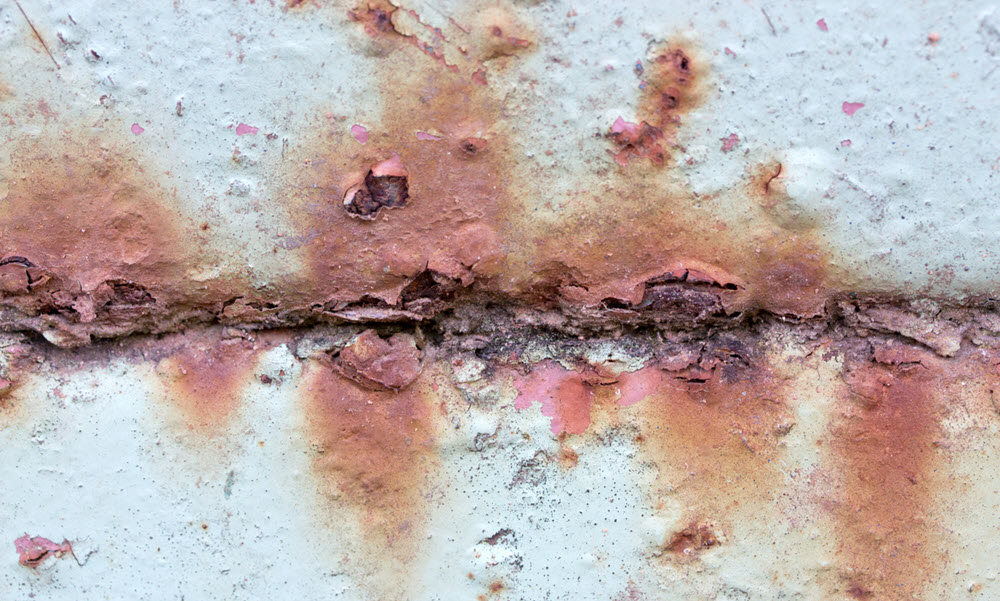
Crevice corrosion is one of the most dangerous and often overlooked forms of corrosion affecting buildings and infrastructure. Unlike general corrosion, which spreads evenly across a metal surface, crevice corrosion occurs in confined spaces where moisture, oxygen, and contaminants become trapped. These hidden areas create ideal conditions for localized metal deterioration, leading to structural weakness, safety concerns, and expensive repairs.
What is Crevice Corrosion?
Crevice corrosion is a localized form of corrosion that occurs in narrow gaps or shielded areas where stagnant moisture accumulates. These confined spaces may exist between metal surfaces, beneath gaskets, under bolt heads, inside joints, behind washers, under deposits, or between structural components.
The corrosion process begins when water enters the crevice and becomes trapped. Oxygen levels inside the crevice gradually decrease because the trapped solution cannot circulate freely. As oxygen depletion occurs, the chemistry inside the crevice changes, creating an acidic and chloride-rich environment that aggressively attacks the metal surface.
Even corrosion-resistant materials such as stainless steel can suffer severe localized attack under these conditions.
How Crevice Corrosion Develops
The development of crevice corrosion usually follows several stages:
1. Formation of a Crevice
A small gap or confined space forms between connected materials or structural elements. These gaps may result from:
- Bolted connections
- Riveted joints
- Weld overlaps
- Gasket interfaces
- Poor fabrication practices
- Surface deposits
- Dirt accumulation
2. Moisture Penetration
Rainwater, condensation, humidity, seawater spray, or industrial chemicals enter the crevice and remain trapped.
3. Oxygen Depletion
Because oxygen inside the crevice cannot be replenished easily, the oxygen concentration becomes lower than the surrounding exposed surface.
4. Electrochemical Reaction
The oxygen-deficient area inside the crevice becomes anodic, while the outer surface acts as the cathode. This electrochemical difference initiates localized corrosion.
5. Accelerated Metal Deterioration
The trapped solution becomes acidic and concentrated with chlorides, accelerating metal loss and deep localized attack.
Over time, the affected area weakens and may eventually crack, perforate, or fail structurally.
Common Locations of Crevice Corrosion in Buildings
Crevice corrosion can occur in many parts of buildings and infrastructure. Some of the most vulnerable areas include:
Structural Steel Connections
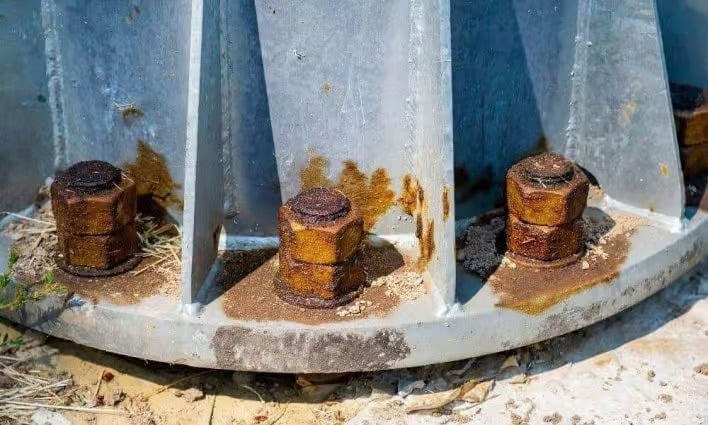
Bolted and riveted joints in steel frames often create narrow gaps where water accumulates. These hidden crevices are highly susceptible to corrosion, especially in humid or coastal environments.
Roofing Systems
Metal roofing sheets overlap at joints and fasteners, creating moisture-retaining crevices. Water penetration beneath roofing panels can gradually corrode the material from within.
Cladding and Curtain Wall Systems
Modern façade systems use metal brackets, anchors, sealants, and fasteners that may trap moisture behind panels. Inadequate drainage and ventilation increase the risk of corrosion.
Bridges and Infrastructure
Bridge decks, bearings, expansion joints, and steel connections are common locations for crevice corrosion due to exposure to rainwater, salts, and pollutants.
Water Storage Tanks
Crevices beneath gaskets, supports, and bolted assemblies in water tanks often experience continuous moisture exposure, making them vulnerable to localized corrosion.
Pipelines and Utility Systems
Crevice corrosion frequently occurs beneath pipe supports, insulation materials, clamps, and deposits inside pipelines.
Marine Structures
Buildings and infrastructure near coastal areas are especially vulnerable because salt-laden moisture accelerates corrosion activity inside crevices.
Factors That Increase Crevice Corrosion
Several environmental and design-related factors influence the severity of crevice corrosion.
Moisture
Continuous moisture exposure is one of the most important requirements for crevice corrosion. Rainwater, humidity, condensation, and leaks all contribute to corrosion development.
Chlorides
Chlorides from seawater, deicing salts, and industrial chemicals significantly accelerate corrosion, particularly in stainless steel components.
Poor Drainage
Water accumulation due to poor drainage design creates long-term wet conditions inside crevices.
Temperature
Higher temperatures increase the rate of electrochemical reactions and accelerate corrosion activity.
Pollution
Industrial pollutants such as sulfur compounds and chemicals can increase the aggressiveness of trapped moisture.
Inadequate Maintenance
Lack of cleaning and inspection allows debris, dirt, and deposits to accumulate, creating additional crevice sites.

Effects of Crevice Corrosion on Structures
Crevice corrosion can have serious consequences for buildings and infrastructure.
Loss of Structural Strength
Localized corrosion reduces the thickness and strength of metal components. Over time, load-bearing capacity may decrease significantly.
Hidden Damage
Because corrosion occurs inside concealed spaces, the damage often remains undetected until severe deterioration has occurred.
Increased Maintenance Costs
Repairing corroded structural members, replacing fasteners, and restoring damaged systems can be extremely expensive.
Water Leakage
Corrosion-induced perforation in roofing systems, pipelines, and tanks can result in water leakage and interior damage.
Safety Risks
Failure of critical structural components may compromise occupant safety and lead to accidents or structural collapse.
Reduced Service Life
Crevice corrosion shortens the lifespan of buildings, bridges, industrial plants, and infrastructure assets.
Materials Susceptible to Crevice Corrosion
Different construction materials respond differently to crevice corrosion.
Stainless Steel
Although stainless steel has excellent corrosion resistance, it is highly vulnerable to crevice corrosion in chloride-rich environments. Grades with low molybdenum content are particularly susceptible.
Carbon Steel
Carbon steel corrodes rapidly when exposed to trapped moisture and oxygen-depleted conditions.
Aluminum
Aluminum forms a protective oxide layer, but localized attack can occur inside crevices, especially in marine environments.
Copper Alloys
Certain copper alloys may experience crevice attack in polluted or stagnant water conditions.
Crevice Corrosion in Reinforced Concrete Structures
Crevice corrosion is not limited to exposed steel structures. Reinforced concrete buildings and bridges can also experience localized corrosion.
In reinforced concrete, crevices may form between steel reinforcement bars and concrete surfaces due to:
- Concrete cracking
- Poor compaction
- Honeycombing
- Delamination
- Construction defects
Moisture and chlorides penetrate these gaps and initiate corrosion of reinforcing steel. As corrosion products expand, concrete cracking and spalling occur, further exposing the reinforcement.
This problem is particularly common in:
- Coastal buildings
- Parking garages
- Marine structures
- Industrial facilities
- Bridges exposed to deicing salts

Detection and Inspection Methods
Early detection of crevice corrosion is critical for preventing structural damage.
Visual Inspection
Engineers inspect joints, fasteners, overlaps, and concealed spaces for rust stains, discoloration, swelling, and leakage.
Ultrasonic Testing
Ultrasonic equipment measures metal thickness and identifies hidden material loss.
Radiographic Inspection
X-ray testing helps detect internal corrosion in pipelines and welded connections.
Moisture Monitoring
Moisture sensors identify areas with trapped water and condensation problems.
Corrosion Monitoring Systems
Advanced buildings and industrial plants may use corrosion sensors for continuous monitoring.
Prevention of Crevice Corrosion
Preventing crevice corrosion requires proper design, material selection, protective systems, and maintenance practices.
Good Structural Design
Design plays a major role in corrosion prevention. Engineers should minimize crevice formation by:
- Avoiding overlapping joints where possible
- Using continuous welding instead of bolted overlaps
- Designing proper drainage systems
- Eliminating water-trapping details
- Allowing adequate ventilation
Material Selection
Using corrosion-resistant materials improves durability. In aggressive environments, higher-grade stainless steels with molybdenum content provide better resistance.
Protective Coatings
Paints, galvanization, epoxy coatings, and protective sealants create barriers that prevent moisture penetration.
Cathodic Protection
Cathodic protection systems help control corrosion in pipelines, tanks, marine structures, and reinforced concrete systems.
Proper Sealing
Sealants and gaskets should be installed correctly to prevent moisture ingress into joints and crevices.
Regular Cleaning
Removing dirt, debris, salts, and deposits reduces moisture retention and minimizes corrosion risks.
Routine Inspection and Maintenance
Periodic inspections help identify early corrosion signs before major structural damage occurs.
Importance of Crevice Corrosion Management in Modern Construction
Modern architecture increasingly uses lightweight steel systems, curtain walls, exposed metal finishes, and complex façade assemblies. While these systems improve aesthetics and efficiency, they also introduce numerous joints and concealed spaces where moisture can accumulate.
In large infrastructure projects such as airports, metro stations, stadiums, industrial plants, and high-rise buildings, even minor corrosion problems can lead to substantial maintenance costs and operational disruptions.
Sustainable construction also depends heavily on durability and lifecycle performance. Preventing crevice corrosion reduces material waste, extends service life, and lowers the environmental impact associated with repairs and replacement.
As climate conditions become more aggressive due to rising humidity, pollution, and coastal exposure, corrosion management is becoming an essential part of structural engineering and facility maintenance.
Conclusion
Crevice corrosion is a serious and highly localized form of metal deterioration that affects buildings, bridges, industrial facilities, and infrastructure systems. It develops in confined spaces where moisture becomes trapped and oxygen levels decrease, creating aggressive electrochemical conditions that attack metal surfaces.
Although often hidden from view, crevice corrosion can lead to severe structural weakening, leakage, expensive repairs, and safety hazards. Structural steel connections, roofing systems, cladding assemblies, pipelines, tanks, and reinforced concrete structures are all vulnerable to this type of corrosion.
Effective prevention requires a combination of proper design, corrosion-resistant materials, protective coatings, drainage systems, inspection programs, and regular maintenance. Early detection and proactive management are essential for ensuring long-term structural durability and safety.
As the construction industry continues to develop more advanced and complex structures, understanding and controlling crevice corrosion will remain a critical responsibility for engineers, architects, contractors, and building owners.