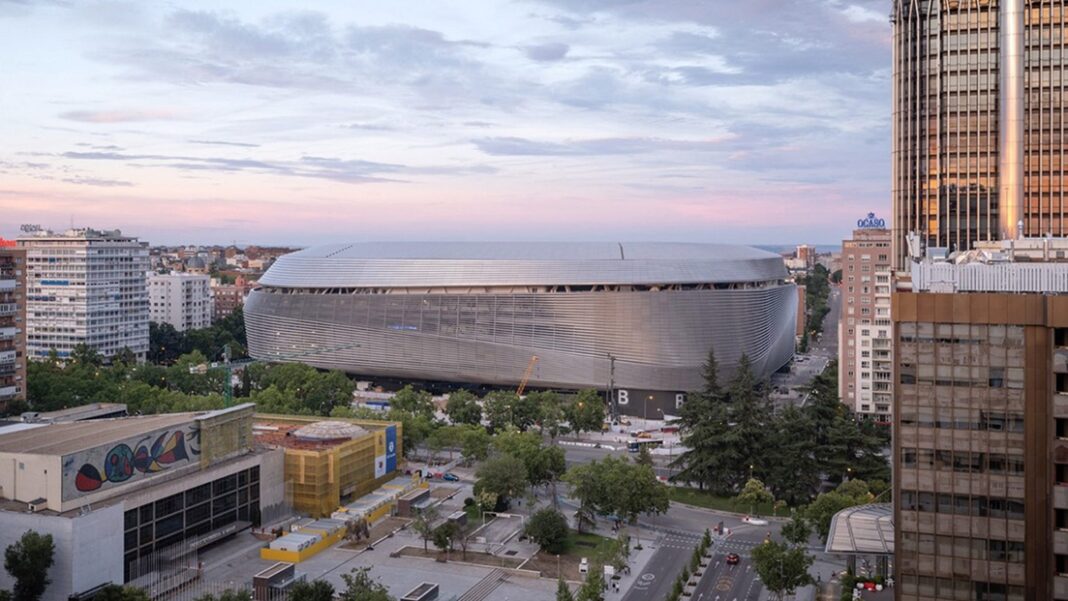
The renovation of Estadio Santiago Bernabéu in Madrid highlights how existing stadiums can be transformed to meet modern commercial, operational, and sustainability requirements without replacing the original structure. Led by GMP Architekten in collaboration with L35 and Ribas & Ribas, the project involved an investment of more than €1 billion, making it the most extensive redevelopment in the history of Real Madrid’s home ground.
Originally opened in 1947, the Bernabéu has undergone several upgrades over the decades. However, the latest redevelopment focused on extending the stadium’s lifespan while enabling year-round use. Rather than constructing a new venue, the project preserved the existing structure and introduced new technologies and facilities that allow the stadium to function as a multi-purpose destination.
Transforming an Existing Stadium
Modern stadiums represent significant investments in materials, energy, and construction. Renovating them instead of demolishing and rebuilding can reduce environmental impacts while preserving architectural identity.
The Bernabéu renovation retained much of the original structural framework while introducing new architectural features that support present-day operational requirements. The project demonstrates how aging sports infrastructure can remain relevant through strategic upgrades.
New Architectural Identity
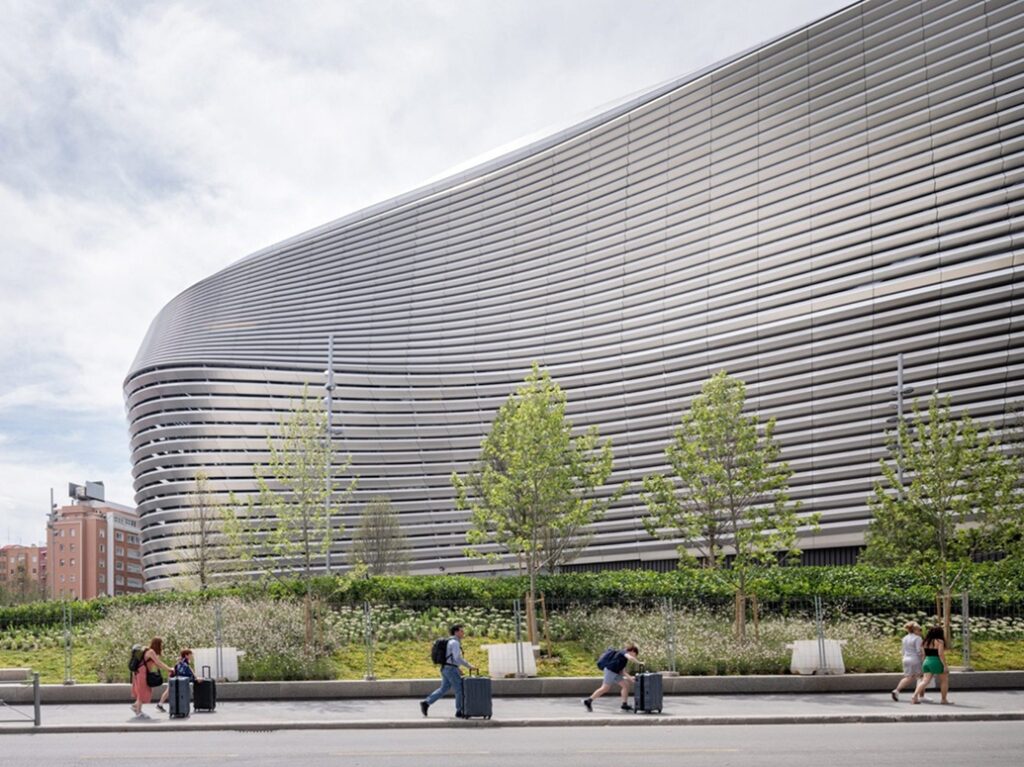
One of the most visible changes is the stadium’s new exterior.
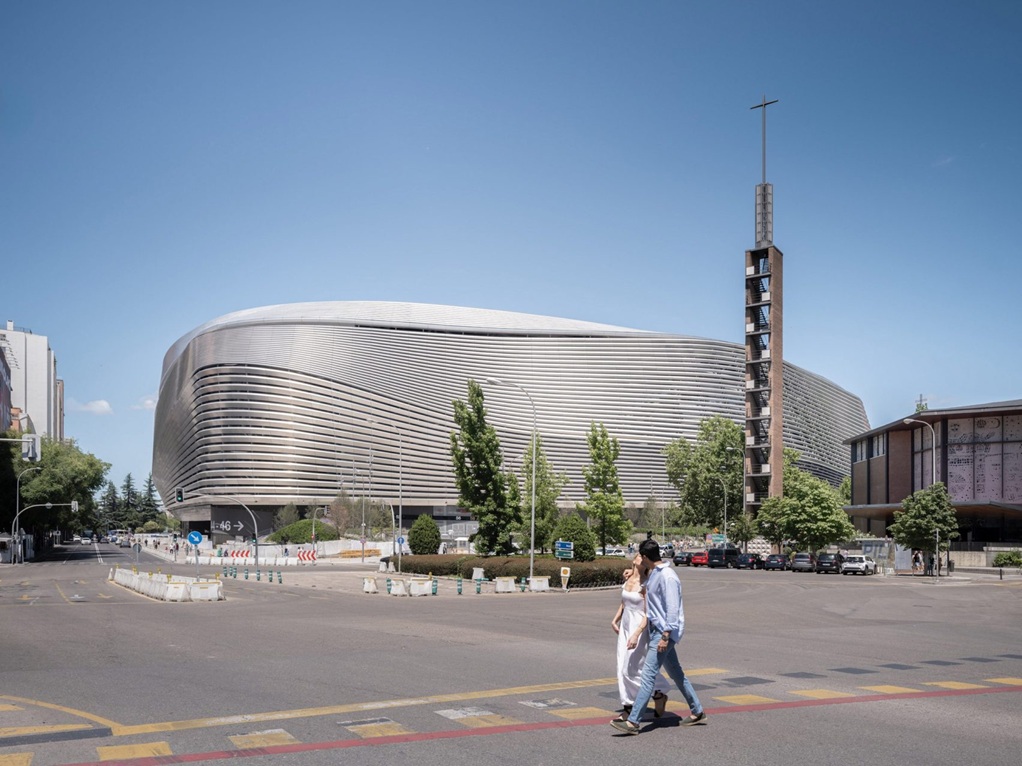
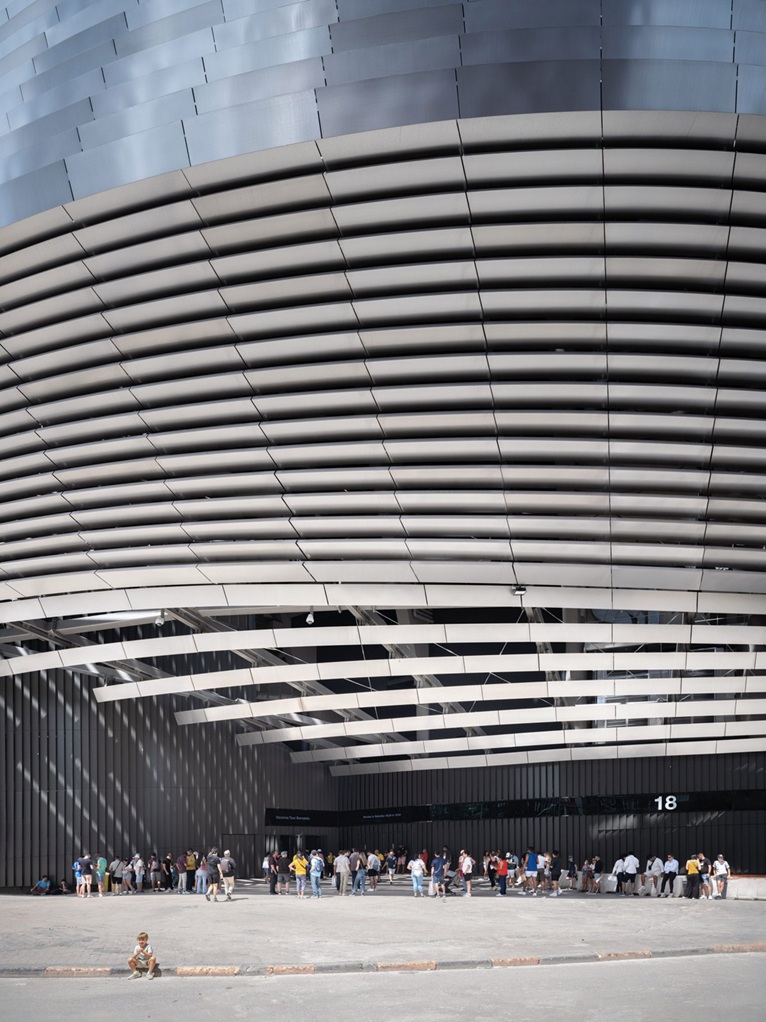
The original concrete façade has been enclosed with a skin of stainless-steel louvres, creating a modern appearance while giving the stadium a recognizable identity. The redevelopment also included a new retractable roof that allows events to continue regardless of weather conditions.
Exterior Improvements
- Stainless-steel louvre façade
- New retractable roof
- Modern lighting integration
- Updated public entrances
- Improved visual identity
Designed for Year-Round Use
A key objective of the renovation was to ensure the stadium generates revenue beyond football matches.
Instead of operating only during sporting events, the venue now accommodates concerts, exhibitions, corporate events, tourism, dining, and retail activities throughout the year. This approach maximizes the use of a high-value asset while increasing commercial opportunities.
Commercial Features
- Multi-purpose event spaces
- Restaurants and cafés
- Bernabéu Market
- Brewery and retail outlets
- Expanded Real Madrid Museum
- Visitor attractions
Innovative Retractable Pitch
One of the most technically significant additions is the retractable playing surface.
Unlike stadiums where the pitch slides outside the building, the Bernabéu’s urban location made that solution impossible because roads and surrounding developments leave no available space. Engineers instead developed an underground storage system where the natural grass pitch is divided into sections and lowered into a climate-controlled greenhouse beneath the stadium.
This system protects the playing surface while allowing the main arena to host concerts and other large-scale events without damaging the turf.
Benefits of the Retractable Pitch
- Protects the natural grass surface
- Enables non-sporting events
- Maximizes stadium utilization
- Supports faster venue conversion
- Maintains playing quality
Enhanced Visitor Experience
The redevelopment also focused on improving the visitor experience beyond match days.
A new museum has been created using a 150-metre bridge structure connecting existing stair towers. The stadium now includes enhanced hospitality facilities, upgraded food and beverage offerings, and improved circulation throughout the venue.
These additions encourage daily visitor activity and strengthen the stadium’s role as a tourist destination.
Preparing for Future Events
The renovated Bernabéu has been designed to host a wide range of international events, including matches during the 2030 FIFA World Cup.
Its flexible infrastructure enables rapid conversion between football, concerts, entertainment events, and corporate functions while maintaining operational efficiency.
Key Features of the Redevelopment
- Preservation of the original structural framework
- Investment exceeding €1 billion
- Stainless-steel exterior façade
- Retractable roof
- Underground retractable pitch
- Expanded museum
- Restaurants, retail, and hospitality spaces
- Multi-purpose event capability
- Improved fan experience
- Enhanced commercial operations
A Model for Stadium Renovation
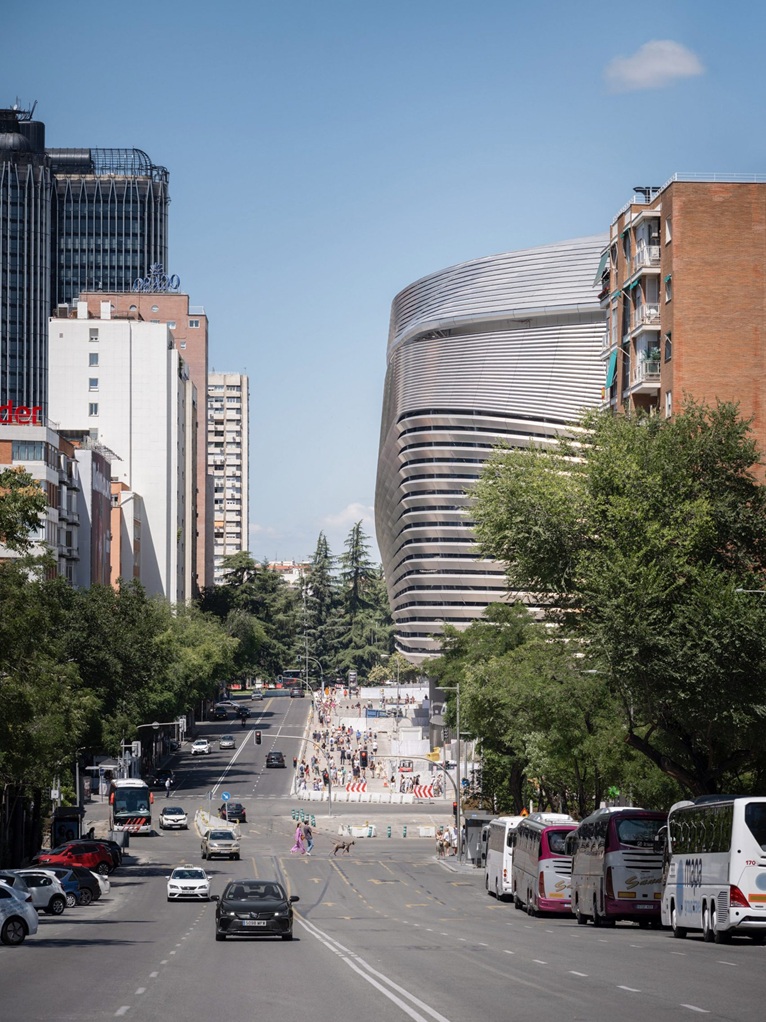
The Santiago Bernabéu redevelopment illustrates how existing stadiums can be adapted to meet changing operational and commercial requirements without replacing the original structure. By combining structural preservation with advanced engineering solutions, the project extends the life of an 80-year-old stadium while supporting continuous use throughout the year.
As cities increasingly prioritize sustainable development and efficient use of existing infrastructure, projects like the Bernabéu demonstrate that renovation can provide long-term value, improve functionality, and create venues capable of serving sports, entertainment, tourism, and community activities well into the future.
Images: www.dezeen.com