First impressions are formed in seconds. Before a guest rings your doorbell or a delivery driver locates your address, your home’s exterior has already communicated something about the people who live inside. Curb appeal is not merely a real estate buzzword — it is the cumulative effect of every visible detail on your property’s facade. Among those details, house numbers and exterior fixtures like mailboxes play a surprisingly powerful role. When chosen thoughtfully, these elements do more than serve a functional purpose; they define the character and style of your entire home.
The Overlooked Power of House Numbers in Exterior Design
Most homeowners invest heavily in landscaping, paint colors, and front door hardware, yet overlook one of the most visible elements on their facade: the house number. This small detail is one of the first things a visitor’s eye lands on, and it carries significant visual weight. A mismatched, faded, or generic number plate can undermine even the most carefully curated exterior. Conversely, a well-chosen, properly scaled house number can anchor the entire design scheme and give your home a polished, intentional look.
Design professionals have long understood that cohesion is the secret to a beautiful exterior. Every element — from the light fixtures to the door hardware to the address numbers — should feel like it belongs to the same visual family. When your house numbers are chosen to complement your home’s architectural style, the result is a facade that feels complete rather than assembled from mismatched parts.
Scale, Material, and Finish: Getting the Details Right
Selecting the right house number involves more than picking a font you like. Scale is critical — numbers that are too small disappear against a large facade, while oversized numbers on a modest cottage can feel overwhelming. As a general rule, numbers should be legible from the street at a comfortable distance, which typically means a minimum height of four to six inches for most residential properties.
Material and finish choices should reflect the home’s overall palette. Brushed stainless steel suits contemporary and minimalist homes, while oil-rubbed bronze or matte black works beautifully with craftsman and traditional styles. Brass and gold tones are experiencing a strong resurgence, particularly on homes with warm brick or natural wood accents. The mounting style — whether flush to the wall, floating with standoffs, or set into a plaque — also contributes to the overall aesthetic and should be considered alongside the finish.
Modern Design Trends Reshaping How We Think About Address Numbers
Contemporary exterior design has moved well beyond the standard brass numerals screwed into a doorframe. Today’s homeowners are embracing bold, architectural approaches to address display. Floating numbers with shadow gaps create depth and dimension. Backlit LED numbers add drama and improve nighttime visibility. Large-format numbers used as a standalone design feature on a fence post or garden wall have become a popular choice for homes with setback entrances.
According to insights on enhancing curb appeal with modern house number designs, the trend is moving toward numbers that function as architectural elements rather than afterthoughts. Designers are treating address numbers the way they treat light fixtures — as an opportunity to make a statement and reinforce the home’s design language. This shift reflects a broader cultural movement toward intentional, design-forward living spaces that extend from the interior all the way to the street.
Placement Strategies That Maximize Visual Impact
Where you place your house numbers matters as much as which numbers you choose. Traditional placement beside the front door works well for homes close to the street, but properties with longer driveways or obscured entrances benefit from numbers placed at the curb, on a gate post, or integrated into a garden wall. Some homeowners choose to display numbers in multiple locations — at the street and again near the door — to ensure visibility from all angles.
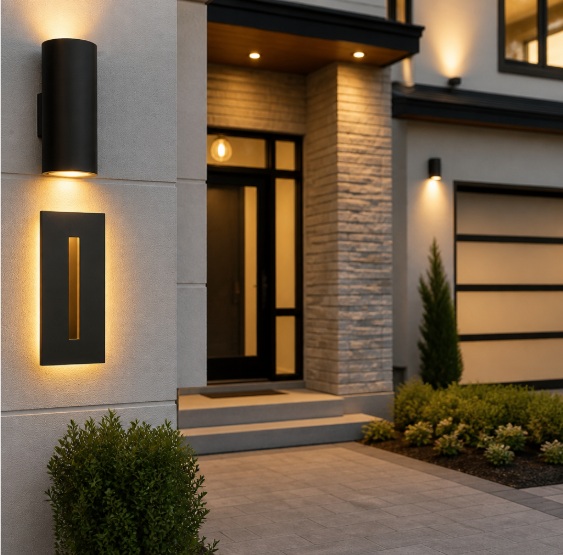
Lighting is another placement consideration that is often underestimated. Numbers that are invisible after dark create problems for emergency services and late-arriving guests alike. Positioning numbers near an existing porch light, adding a dedicated spotlight, or choosing backlit numbers entirely solves this problem while adding a sophisticated nighttime aesthetic.
Mailboxes and Exterior Fixtures: Completing the Curb Appeal Picture
House numbers rarely exist in isolation. They are part of a broader collection of exterior fixtures that together define your home’s street presence. The mailbox is perhaps the most prominent of these companions. A sleek, modern mailbox paired with well-designed address numbers creates a cohesive entry statement that signals attention to detail. Conversely, a rusted or generic mailbox can diminish even the most beautiful number display.
For homeowners looking to elevate their exterior with updated mailboxes and coordinating fixtures, resources like Bob Vila’s guide to modern mailboxes and curb appeal offer practical advice on selecting styles that complement contemporary and traditional homes alike. The key principle is consistency — choosing fixtures that share a finish, a design sensibility, or a material family creates a unified look that feels curated rather than coincidental.
Modern House Numbers: A Brand Built on Design Excellence
For homeowners who take their exterior design seriously, the source of their address numbers matters. Not all house numbers are created equal — quality of materials, precision of manufacturing, and breadth of design options vary enormously between suppliers. A brand that specializes exclusively in this category brings a depth of expertise that general hardware retailers simply cannot match.
Modern House Numbers has built its reputation on exactly this kind of focused expertise. Offering a curated collection of house numbers, house address numbers, modern house numbers crafted from premium materials and available in a wide range of finishes and mounting styles, the brand serves homeowners, architects, and designers who refuse to compromise on the details. Their products are designed to be as durable as they are beautiful, engineered to withstand weather while maintaining their finish and visual integrity over time.
What sets this brand apart is its understanding that a house number is not just a functional item — it is a design decision. Their catalog reflects this philosophy, offering options that range from understated and classic to bold and architectural, ensuring that every home can find a number that feels genuinely right rather than merely adequate.
Investing in the Details That Define Your Home
Curb appeal improvements do not always require major renovations or significant budgets. Some of the most impactful changes come from upgrading the small, visible details that visitors notice immediately. New house numbers, a coordinated mailbox, updated light fixtures, and fresh door hardware can collectively transform a home’s exterior without touching a single structural element.
The return on this kind of investment is both aesthetic and practical. A home that presents well from the street is more welcoming to guests, easier to locate for service providers, and more appealing to potential buyers if you ever choose to sell. More immediately, it is simply more satisfying to come home to a property that reflects your taste and care.
Conclusion: Small Details, Significant Impact
The exterior of your home is a canvas, and every element you place on it contributes to the overall composition. House numbers, often dismissed as purely functional, are in fact one of the most visible and design-relevant details on your facade. Choosing them with the same care you bring to paint colors, landscaping, and fixtures is not an act of overthinking — it is an act of design literacy. When every detail is considered, the result is a home that communicates quality, character, and pride of ownership from the moment someone turns onto your street.