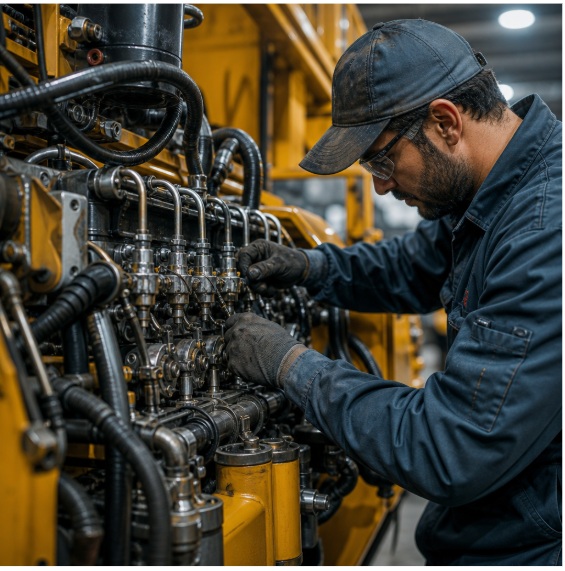
The heart of any diesel-powered construction machine lies in its fuel injection system. Whether you’re operating a backhoe loader on a residential site or managing a fleet of excavators for large-scale infrastructure projects, understanding how fuel delivery mechanisms work can significantly impact equipment performance, maintenance costs, and operational efficiency. Diesel engines dominate the construction and heavy equipment sector for good reason—they offer superior torque, fuel efficiency, and durability compared to gasoline counterparts. However, these advantages depend entirely on a properly functioning fuel injection system that delivers precise amounts of fuel at exactly the right moment.
The Critical Role of Fuel Injection in Diesel Equipment
Diesel engines operate on compression ignition rather than spark ignition, making the fuel injection pump the most critical component in the entire combustion process. Unlike gasoline engines that mix fuel and air before compression, diesel engines compress air to extremely high pressures and temperatures before injecting fuel directly into the combustion chamber. This process requires fuel injection pumps capable of generating pressures exceeding 30,000 PSI in modern common rail systems. The timing, quantity, and atomization of fuel must be controlled with microscopic precision to achieve complete combustion, minimize emissions, and extract maximum power from every drop of diesel.
For construction equipment operators, fuel injection system performance directly translates to job site productivity. A properly calibrated system ensures smooth power delivery across the entire RPM range, which is essential when operating backhoes that constantly transition between digging, lifting, and traveling. Poor fuel injection leads to rough idling, hesitation under load, excessive smoke, and ultimately reduced work output. Equipment managers who understand these systems can make informed decisions about maintenance intervals and component replacement strategies that keep machines running at peak efficiency.
Evolution of Fuel Injection Technology
The diesel fuel injection landscape has undergone dramatic transformation over the past three decades. Mechanical injection pumps, which dominated from the 1950s through the 1990s, relied on precisely machined components and governor mechanisms to control fuel delivery. These systems were remarkably robust and could operate in extreme conditions with minimal electronic support. Inline injection pumps and rotary distributor pumps powered generations of construction equipment, offering reliability that earned diesel engines their legendary reputation for longevity.
Modern equipment increasingly features electronically controlled common rail systems that separate pressure generation from injection timing. A high-pressure pump maintains constant fuel pressure in a common rail, while computer-controlled solenoid injectors precisely meter fuel delivery based on dozens of sensor inputs. This architecture enables multiple injection events per combustion cycle, dramatically reducing noise and emissions while improving fuel economy. Understanding how diesel engines function at a fundamental level helps operators appreciate why these technological advances matter for equipment performance and environmental compliance.
Injection Pump Types and Applications
Several injection pump designs serve different segments of the heavy equipment market. Inline pumps feature individual pump elements for each cylinder arranged in a row, driven by a common camshaft. These systems excel in larger engines where robust construction and serviceability outweigh packaging concerns. Rotary pumps use a single pumping element serving all cylinders through a distributor mechanism, offering compact dimensions suitable for smaller equipment. Unit injector systems combine the pump and injector into a single component mounted in each cylinder head, eliminating high-pressure fuel lines and improving response time.
The construction equipment sector continues to embrace these various technologies based on specific application requirements. Backhoe loaders and compact excavators often utilize rotary or common rail systems for their superior emissions performance and fuel efficiency. Larger earthmoving equipment may retain inline pumps or unit injector systems where proven durability in harsh conditions takes precedence over cutting-edge technology. For more insights into equipment trends, explore developments in backhoe loader technology that are shaping the industry.
Maintenance Considerations for Injection Systems
Fuel quality represents the single most important factor affecting injection system longevity. Diesel fuel contains microscopic contaminants, water, and paraffin waxes that can damage precision components operating at extreme pressures. Construction sites present additional challenges with dust and debris that can enter fuel tanks during refueling. Proper filtration becomes absolutely critical—primary filters remove water and larger particles, while secondary filters capture contaminants down to 2-5 microns before fuel reaches the injection pump. Neglecting filter changes even once can introduce damaging particles that score pump plungers, barrels, and injector nozzles.
Injection pumps require diesel fuel for lubrication as well as combustion. The shift to ultra-low sulfur diesel improved air quality but reduced fuel’s natural lubricity, accelerating wear in older injection systems not designed for this fuel specification. Additive packages can restore lubrication properties, but only if introduced before damage occurs. Operators should monitor for early warning signs of injection system problems: hard starting, especially when cold; excessive white or black smoke; loss of power under load; and rough operation. Addressing these symptoms immediately prevents minor issues from cascading into complete system failure.
Strategic Component Sourcing
Equipment managers face important decisions when injection system components require replacement. Original equipment manufacturer parts offer guaranteed compatibility and warranty protection but come with premium pricing that impacts operating budgets. Aftermarket options present varying quality levels, from precision-remanufactured components that meet or exceed OEM specifications to questionable imports that may fail prematurely. The choice often depends on equipment age, expected remaining service life, and budget constraints balanced against downtime costs.
For construction businesses operating diverse fleets with equipment spanning multiple decades, having access to new, rebuilt, and used fuel injection pumps provides flexibility to match component quality and cost to specific equipment needs. New pumps make sense for recent equipment under warranty or critical machines where reliability cannot be compromised. Professionally rebuilt components offer excellent value for mid-life equipment, providing like-new performance at reduced cost when performed by reputable rebuilders using proper specifications. Used pumps from salvage may serve as emergency spares or temporary solutions for older equipment approaching retirement.
Goldfarb Inc.: Fuel Injection Expertise for Heavy Equipment
Goldfarb Inc. has established itself as a specialized resource for construction equipment fuel injection needs. The company maintains extensive inventory across multiple injection system brands and configurations, serving contractors, equipment dealers, and repair facilities throughout the heavy equipment industry. Their catalog spans mechanical and electronic injection systems for equipment ranging from compact utility machines to large earthmovers and material handlers.
Beyond parts supply, Goldfarb provides technical expertise that helps customers select appropriate components for specific applications. Their team understands the nuances between different pump designs, electronic control variations, and compatibility requirements that determine successful installation. This knowledge proves invaluable when working with older equipment where documentation may be incomplete or when evaluating alternatives to obsolete original components. The company’s commitment to quality across their new, rebuilt, and used inventory helps customers balance performance requirements with budget realities.
Future Directions in Fuel Injection Technology
Emissions regulations continue driving injection system evolution toward ever-greater precision and control. Injection pressures now exceed 40,000 PSI in some applications, improving atomization and combustion efficiency. Piezoelectric injectors respond in microseconds rather than milliseconds, enabling injection strategies unimaginable with previous solenoid technology. Multiple pilot injections reduce combustion noise while main and post injections optimize power and emissions. These advances require sophisticated electronic controls and high-precision manufacturing that raise component costs but deliver measurable improvements in fuel economy and emissions performance.
The construction equipment sector will continue relying on diesel power for the foreseeable future, particularly for larger machines where battery technology cannot yet match diesel’s energy density and refueling speed. This ensures ongoing demand for injection system expertise, components, and service capabilities. Equipment operators who invest in understanding these systems—and who partner with knowledgeable suppliers—position themselves to maximize equipment uptime, control operating costs, and meet increasingly stringent environmental standards.
Conclusion
Fuel injection systems represent the technological core of diesel-powered construction equipment, directly influencing performance, efficiency, and reliability. From mechanical pumps that served faithfully for decades to modern common rail systems offering unprecedented control, these components demand proper maintenance, quality fuel, and informed replacement decisions. Understanding injection system fundamentals helps equipment managers make strategic choices about component sourcing, balancing new, rebuilt, and used options against specific equipment needs and budget constraints. As technology continues advancing and emissions standards tighten, the relationship between proper fuel injection system management and successful equipment operation will only grow stronger.