
The success of any large-scale construction project depends on far more than engineering drawings and site management. Behind every completed building — whether a commercial tower, an industrial facility, or a logistics warehouse — lies a complex procurement process that determines whether the finished structure meets its performance, safety, and durability requirements. Two procurement categories that are often undervalued relative to their actual importance are fire protection systems and industrial material inputs. Getting these right, from specification through supplier selection to installation, separates projects that deliver genuine long-term value from those that create ongoing maintenance challenges and safety liabilities.
Fire Safety Systems: Why Specification Quality Determines Building Performance
In the construction industry, fire protection is frequently treated as a compliance exercise rather than an engineering discipline. Project teams identify the minimum code requirements, specify systems that technically satisfy those requirements at the lowest cost, and move on. This approach consistently produces buildings whose fire protection infrastructure performs adequately under ideal conditions but fails to deliver the genuine safety performance that more carefully specified systems would achieve.
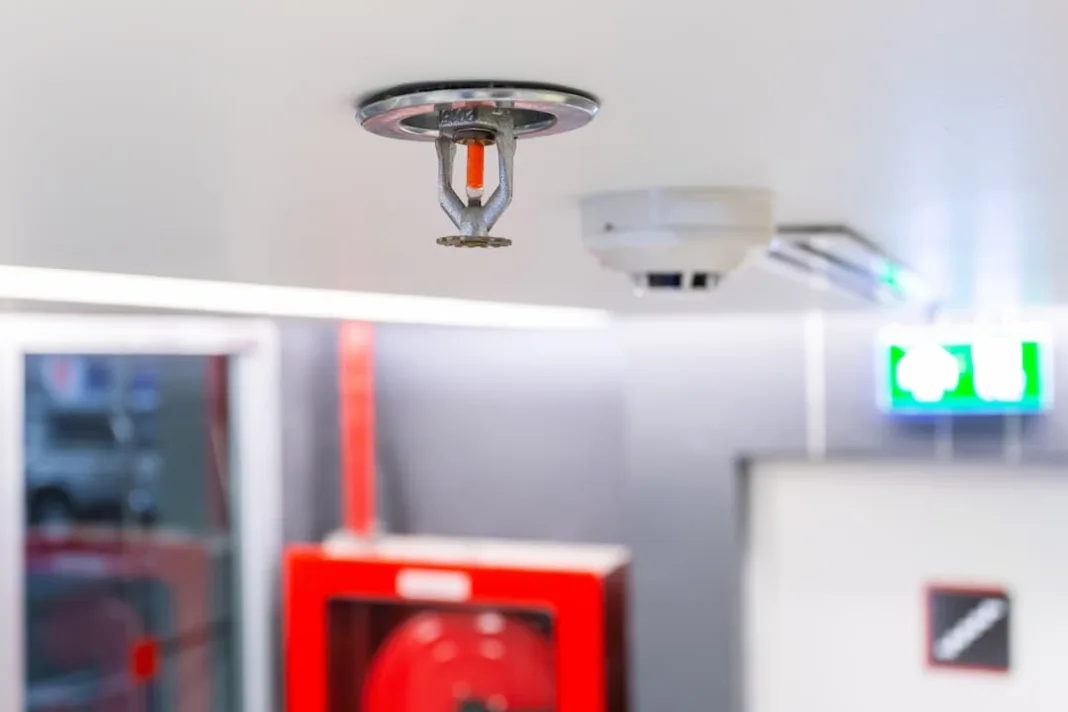
The starting point for better fire protection procurement is understanding the range of technology available and the performance differences between options at different points in the specification range. Modern fire sprinkler systems, for example, span a wide range of system types — from standard wet-pipe systems appropriate for the majority of commercial occupancies to Early Suppression Fast Response systems designed for high-bay warehouse and industrial applications, dry-pipe systems for unheated spaces, and pre-action systems for environments where accidental discharge would cause serious damage to sensitive equipment or materials.
Selecting the right system type for a specific occupancy and hazard profile is the first and most important specification decision. Installing a standard commercial sprinkler system in a high-bay logistics facility, for example, produces a system that may satisfy code requirements while being fundamentally inadequate for the fire challenge it could face in service. The incremental cost of specifying the appropriate system type is almost always small relative to the project value — and infinitely small relative to the cost of a suppression failure during a fire event.
Component quality is the second critical specification decision. The alarm check valves, control valves, pipe fittings, and sprinkler heads that make up a fire suppression system must meet recognized certification standards to perform reliably when called upon. FM Approval and UL Listing are the most widely recognized independent certification programs in international markets. Products carrying these certifications have been independently tested to verify real-world performance under fire conditions — not simply assessed against a paper specification. For construction project procurement teams sourcing fire protection components internationally, verifying certification status directly through the FM Approvals or UL product directories — rather than relying solely on supplier-provided documentation — is an essential due diligence step.
The third specification decision is installation quality. A correctly specified system built from certified components can still fail if installed incorrectly. Pipe sizing errors, incorrect sprinkler head placement, inadequate hydraulic calculations, and commissioning failures are all documented causes of sprinkler system underperformance. Engaging qualified fire protection contractors and conducting independent commissioning verification are investments that pay for themselves many times over in the life of the building.
Industrial Material Sourcing: The Supply Chain Behind Construction Quality
Beyond fire protection systems, construction projects depend on a broad range of industrial materials — from structural steel and concrete admixtures to textile products used in filtration, insulation, geotechnical applications, and finishing systems. The quality and reliability of these material inputs directly affects the performance of the finished structure, and the procurement decisions that determine which suppliers are used for these materials deserve the same rigor as any other major project decision.
Polyester fiber products — including nonwoven geotextiles used in drainage and soil stabilization applications, synthetic fiber reinforcement for concrete and shotcrete, and textile materials for building envelope applications — are a category where Chinese manufacturers have developed significant capability and international market presence. Yaakan Chemical Fiber, based in Xiamen, is a well-established exporter of polyester yarn and fiber products serving buyers across more than 50 countries. Their product range includes DTY, FDY, and POY polyester yarns alongside polyester staple fiber and poly-cotton blended yarns — materials that find application in a range of construction-adjacent industrial textile applications.
For construction project procurement managers sourcing industrial textile materials internationally, the evaluation criteria that matter most are quality consistency, export documentation capability, logistics reliability from the point of origin, and the supplier’s experience with international trade requirements. Chinese fiber manufacturers and exporters who have built their business on international markets — rather than those primarily serving domestic demand — bring a different level of export documentation, quality verification, and logistics sophistication to the relationship.
Integrating Procurement Excellence Across the Project
The common thread running through both fire protection system procurement and industrial material sourcing is the same: decisions made early in the specification and procurement process have consequences that extend across the entire life of the building. A fire protection system specified correctly and built from certified components performs reliably for decades with predictable maintenance costs. One that was specified to a minimum standard and built from uncertified components creates ongoing uncertainty and escalating maintenance demands.
Similarly, industrial materials that meet their specifications consistently enable predictable construction quality and performance. Materials from suppliers with inadequate quality management create field problems — failed inspections, remediation work, and schedule delays — that consume far more resources than any procurement cost saving achieved at the purchase stage.
Construction project procurement teams that apply consistent rigor across all major material and system categories — treating fire protection and industrial materials with the same analytical discipline as structural and mechanical systems — consistently deliver better buildings at lower total lifecycle cost.






