In today’s homes, where every square foot counts, the difference between a cluttered, stressful environment and a serene, functional sanctuary often comes down to one critical factor: storage. The challenge isn’t always about having too little space—it’s about using the space you have intelligently. Whether you’re living in a compact apartment or a sprawling house, implementing thoughtful storage strategies can dramatically improve your daily life, reduce stress, and create a home environment that truly works for you.
The modern approach to home organization goes beyond simply buying more bins and baskets. It requires a systematic evaluation of how you live, what you own, and what you actually need within arm’s reach. When you take the time to assess your belongings and storage needs holistically, you’ll discover opportunities to reclaim valuable space while making your home more livable and enjoyable.
Understanding Your Storage Challenges
Before implementing any storage solution, it’s essential to conduct an honest assessment of your current situation. Walk through each room and identify the pain points—those areas where clutter accumulates, where you can never find what you need, or where items lack a designated home. These trouble spots reveal exactly where your storage system is failing you.
Common storage challenges include insufficient closet space, awkward corners that go unused, limited kitchen cabinet capacity, and a lack of dedicated spaces for seasonal items. By cataloging these specific issues, you can prioritize which areas need attention first and avoid wasting money on solutions that don’t address your actual needs.
Maximizing Vertical Space
One of the most underutilized resources in any home is vertical space. While we naturally focus on floor space and horizontal surfaces, the walls stretching from waist-height to ceiling represent a massive storage opportunity. Installing floating shelves, wall-mounted cabinets, and tall bookcases allows you to store items without sacrificing precious floor area.
In kitchens, vertical storage can include hanging pot racks, magnetic knife strips, and tiered shelf organizers that make use of the full height of your cabinets. In bedrooms, tall dressers and armoires provide substantial storage in a small footprint. Even bathrooms benefit from vertical thinking through over-toilet shelving units and tall, narrow cabinets that fit into tight spaces.
The Power of Wall-Mounted Solutions
Wall-mounted storage systems offer flexibility that freestanding furniture simply cannot match. Pegboards in workshops or craft rooms can be reconfigured as needs change. Track systems with adjustable shelves adapt to different item sizes. These solutions keep items visible and accessible while maintaining a clean, organized appearance that makes spaces feel larger rather than cramped.
Closet Optimization Strategies
Closets represent one of the highest-value opportunities for improving home storage. Most standard closets come with a single rod and perhaps one shelf—a woefully inadequate setup for modern storage needs. Transforming these spaces with custom or modular systems can double or even triple your usable storage capacity without expanding the physical footprint.
Strategic improvements make an immediate impact on daily routines. When you implement solutions from Organized Living, you create dedicated zones for different types of clothing, accessories, and personal items, ensuring everything has its proper place and remains easily accessible when needed. The right system eliminates the morning frustration of digging through piles to find what you need.
Double hanging rods work beautifully for shirts, blouses, and folded pants, effectively doubling your hanging capacity. Drawer systems within closets keep smaller items like socks, underwear, and accessories organized and visible. Specialized organizers for shoes, belts, and ties prevent these items from creating clutter on closet floors and shelves. For additional inspiration on optimizing tight spaces, resources like this guide on maximizing closet space offer practical strategies that work in homes of any size.
Multi-Functional Furniture Solutions
In space-constrained homes, furniture that serves dual purposes becomes invaluable. Storage ottomans provide both seating and hidden storage for blankets, magazines, or toys. Bed frames with built-in drawers eliminate the need for separate dressers. Dining tables with extension leaves and internal storage compartments adapt to both daily use and entertaining.
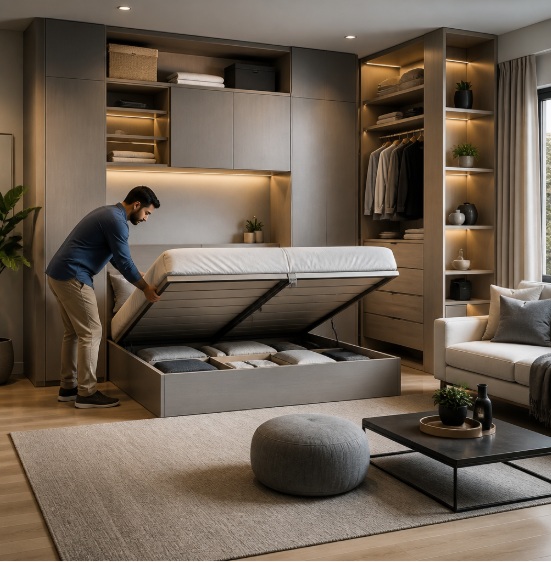
Coffee tables with lift-tops reveal storage compartments while creating a convenient surface for laptop work or dining. Murphy beds fold away to transform bedrooms into home offices or exercise spaces. These multi-functional pieces prove particularly valuable in apartments, guest rooms, and homes where space must serve multiple purposes throughout the day.
Kitchen and Pantry Organization
The kitchen often presents the most complex storage challenges in the home due to the sheer variety of items it must accommodate—from small appliances and cookware to dry goods and cleaning supplies. Deep cabinets become black holes where items disappear, and corner spaces go unused because they’re difficult to access.
Pull-out shelves and lazy Susans bring items from the back of cabinets within easy reach. Drawer dividers keep utensils organized and prevent the dreaded junk drawer syndrome. Vertical dividers allow you to store baking sheets, cutting boards, and pot lids on edge rather than stacked, making them far more accessible. Clear containers in the pantry not only keep food fresh but also make inventory visible at a glance, reducing waste and duplicate purchases.
Garage and Basement Storage Systems
Garages and basements often become dumping grounds for everything that doesn’t fit elsewhere in the home. Without proper systems, these spaces quickly devolve into chaotic collections of seasonal decorations, sporting equipment, tools, and forgotten purchases. Reclaiming these areas requires sturdy shelving, clearly labeled bins, and often overhead storage racks that utilize ceiling space.
Heavy-duty wall systems with hooks, baskets, and panels keep tools and equipment organized and easily accessible. For homeowners tackling broader upgrades, exploring comprehensive home improvement strategies ensures storage solutions integrate seamlessly with other enhancements. Seasonal items stored in clear, labeled bins on high shelves remain protected but accessible when needed. Zone-based organization—creating distinct areas for automotive supplies, holiday decorations, sports gear, and tools—prevents the cross-contamination that makes finding anything impossible.
Creating Systems That Last
The best storage solutions aren’t just about the initial organization—they’re about creating sustainable systems that work long-term. This means establishing routines for returning items to their designated places, conducting regular decluttering sessions, and being honest about what you actually use and need. A storage system that looks perfect on day one but proves too complicated for daily life will inevitably fail.
Labeling everything creates accountability and makes it easier for all household members to maintain the system. Taking before-and-after photos reminds you of the progress you’ve made and motivates continued maintenance. Setting calendar reminders for seasonal closet swaps, pantry purges, and garage cleanouts prevents backsliding into old habits.
The Role of Professional Storage Systems
While DIY solutions work well for many storage challenges, professionally designed systems offer advantages that generic solutions cannot match. Custom systems are engineered to fit your exact space dimensions, eliminating the gaps and awkward fits that plague off-the-shelf products. They use premium materials designed for longevity rather than the particleboard that dominates budget options.
Professional systems also provide extensive configuration options, allowing you to create storage that precisely matches your needs rather than forcing your belongings into predetermined categories. The investment in quality storage solutions pays dividends through increased home value, reduced stress, and the daily pleasure of living in an organized, functional space where everything has its place and can be found when needed.
Conclusion
Transforming your home through improved storage isn’t about achieving magazine-perfect aesthetics or buying the latest organizational gadgets. It’s about creating functional systems that reduce daily friction, protect your belongings, and give you more time and mental energy for the things that truly matter. Whether you start with a single problematic closet or undertake a whole-home organization project, each improvement compounds, gradually transforming your living space into a more peaceful, efficient, and enjoyable environment. The key lies not in perfection but in progress—in taking deliberate steps to create storage solutions that work with your lifestyle rather than against it.