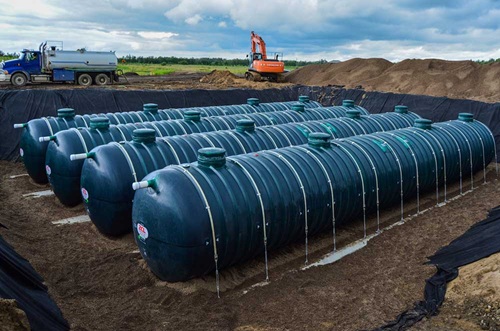
Underground storage tanks are commonly found at gas stations, industrial facilities, commercial properties, fleet operations, and older sites that historically stored fuel or other regulated liquids. When one of these tanks reaches the end of its service life, becomes damaged, or needs to be removed as part of a redevelopment project, the work can involve much more than simply excavating the tank and hauling it away.
A successful removal project requires careful planning, coordination, and awareness of both construction and environmental conditions. For property owners, contractors, and developers, addressing these factors early can help reduce delays and prevent unexpected issues from affecting the broader project schedule.
Start With Site and Tank Information
Before excavation begins, the project team should identify the tank’s location, approximate size, age, construction material, and previous use. It is also important to determine whether the tank still contains fuel, sludge, water, or other residual material.
Older commercial and industrial sites can be especially challenging because drawings may be incomplete or outdated. Utility locating and site investigation are therefore important before any excavation equipment is brought in.
Contractors may also need to identify nearby underground utilities, building foundations, drainage systems, pavement, and other infrastructure that could affect access to the tank.
Plan for Safe Excavation
Excavating around an underground tank requires more care than many standard earthwork operations. Tanks can be located close to buildings, driveways, fueling equipment, underground piping, or active business operations.
The excavation plan should account for equipment access, soil removal, worker safety, and temporary disruption to the site. Depending on the location, contractors may need to establish traffic-control measures, restrict access to certain areas, or coordinate work around normal business hours.
Before the tank is removed, any remaining product generally needs to be pumped out and the tank prepared so that it can be handled safely. The exact process depends on the tank’s previous contents and applicable regulations.
Consider Environmental Conditions
One of the biggest uncertainties associated with older underground tanks is the possibility of leakage.
Steel tanks and piping can corrode over time, allowing petroleum products or other liquids to escape into surrounding soil. In some cases, contamination may not become obvious until excavation begins.
Professional underground storage tank removal therefore often involves evaluating the soil surrounding the tank after it has been exposed. Contractors and environmental professionals may look for staining, odors, damaged piping, corrosion, or other evidence that a release may have occurred.
If contamination is discovered, additional soil testing, excavation, disposal, remediation, or regulatory reporting may be necessary. Discovering these conditions early is important because environmental work can significantly affect both project cost and schedule.
Coordinate Removal With the Larger Construction Project
Tank removal is frequently just one part of a broader redevelopment or renovation project.
A former gas station may be converted to another commercial use. An industrial property may be undergoing an expansion. A facility may be replacing older fuel-storage infrastructure with a modern aboveground system.
In these situations, tank removal should be coordinated with demolition, grading, utility work, paving, drainage, and new construction. Removing tanks early in the project can help contractors identify hidden conditions before other work begins.
This is particularly important when new foundations, parking areas, underground utilities, or structures are planned in the same location as the former tank.
Proper Backfilling and Site Restoration
After the tank is removed and the excavation has been evaluated, the site must be restored properly.
Suitable backfill material is generally placed and compacted to reduce the risk of settlement. Poor compaction can create problems later if the area will support pavement, equipment, landscaping, or new construction.
The final restoration may include asphalt, concrete, landscaping, grading, or preparation for a future building pad. Contractors should consider the intended future use of the area when determining how the excavation is filled and restored.
Planning Helps Avoid Expensive Delays
Underground tank removal combines excavation, environmental awareness, safety planning, and construction coordination. Problems are most likely to occur when a tank is treated as a minor demolition item rather than a potential site-development issue.
By identifying tank conditions, utilities, access limitations, environmental risks, and restoration requirements before work begins, contractors and property owners can reduce uncertainty and improve project efficiency.
For commercial and industrial sites, the best approach is to integrate tank removal into the overall construction plan. Proper preparation can help minimize disruption, address environmental concerns early, and make it easier for the project to move forward once the tank is removed.