Why rework and defects hurt fit-out projects
Rework is any work that has to be done twice, and on a commercial fit-out it usually shows up as defects. These defects need to be rectified before the space can be handed over. Each one necessitates a trade going back into an area that should already be finished, at a cost nobody planned for. That’s what makes rework one of the biggest hidden costs on a job.
Wall and ceiling panels are a common source of these defects. They go in late in the project, once framing, services and lighting are in place, and they’re the first thing anyone notices when they walk into the space. A gap that isn’t even, a joint that steps out of line or a chipped edge is obvious straight away.
Where panel defects usually come from
Most panel defects start behind the panel. Framing and substrates are often slightly out of level or out of plumb, panels can move or swell before they are fitted, and fixing positions don’t always land where the drawings say they should. The real issue is how little room a traditional fixing leaves to deal with it.
Once a panel is glued or face screwed to the wall, it stays where it was put. If it’s out by a few millimetres, there’s no way to nudge it into line. The only fix is to take it off and start again.
Taking it off is rarely clean. Prying away a glued panel or backing out screws usually damages the panel, the substrate or both, so the panel has to be remade rather than reused. That means new material and more workshop time, plus more time on site.
Then there are the tidy-up repairs. Visible screws need filling, filler needs sanding and the finish needs touching up. These fixes are meant to hide a poor fit, but they often end up on the defect list themselves.
How adjustable panel fixings prevent rework
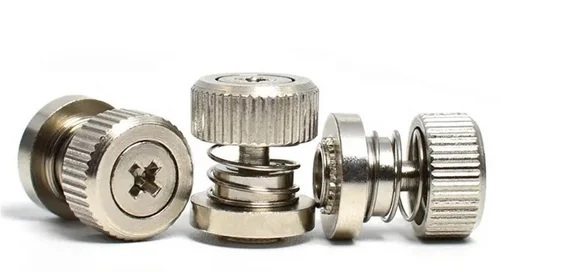
With a concealed clip system, a female clip is fixed into the frame or substrate, and a matching male clip is fixed to the back of the panel. When the two halves connect, the panel is held securely with nothing showing on its face. When the panel is pulled away, the clips disengage.
Some clip ranges go a step further and allow a small amount of movement once the panel is on. Fastmount’s SLX Range, for example, uses a two-stage engagement that gives 6mm of adjustment in any direction before the panel locks in place, while Stratlock® clips allow 360-degree adjustment before locking. Installers can line panels up and keep joints and shadow lines even, without redrilling anything.
Since the clips release cleanly, a panel can be taken off and refitted as many times as needed during the build. If a trade needs one more look behind a wall, or a joint needs a final tweak before inspection, the panel comes off and goes back on without damage. Panels can also come off in any sequence, so reaching one doesn’t mean taking down adjacent ones.
With no visible screws or fixings, there’s nothing to fill, sand or touch up. A whole category of defect items is eliminated.
On commercial fit-outs, this matters most in areas such as:
- Office feature walls and partitions, where long runs of panels require joints in clean, straight lines
- Acoustic panels in meeting rooms, which may need to come down for replacement or a change of layout
- Reception linings, where an uneven finish is the first thing visitors see
- Ceiling panels that need to be opened to reach lighting, ducting and other services
Fastmount’s flexible panel installation system
Fastmount’s architectural panel systems offer different clip options depending on panel weight, material and how much depth is available behind the panel, so there’s a solution for most situations on a job.
- Standard Range: self-tapping, screw and adhesive fix options for wall and ceiling panels, acoustic panels and prefabricated panels, with pull-out loads of 5–15kg depending on the male clip used.
- Low Profile Range: for wall panels that need less space between panel and substrate, with female clips designed to self-tap into curved substrates, drywall and MDF.
- Very Low Profile Range: the least space between panel and substrate, suited to thin panels, signage and decorative walls where depth is tight. A fire-rated version is available.
- SLX Range: designed for mounting wall and ceiling panels into drywall, plasterboard and plywood, with 6mm of adjustment and fire-rated options. Well suited to large panels, feature ceilings and complex walls.
- Stratlock® Range: Fastmount’s strongest range, built for heavy-duty mounting in hotels, hospitals and retail projects.
- Metal Range: a robust hidden fixing for heavyweight wall panels, metal panels and fire-rated panels.
- Textile Range: for securing upholstered panels and cushions to hard surfaces.
Within the Standard Range, male and female clips are interchangeable, which makes it easier to standardize across a project instead of juggling different fixings from one area to the next.
For ceilings, Fastmount’s PanelSafe holds a panel suspended below the ceiling while it is being removed. The panel can then be opened safely for servicing, without being dropped or damaged. Fastmount recommends PanelSafe when installing ceiling panels.
Fewer defects at handover and easier maintenance in the future
Fewer panel defects at handover mean a shorter defect list and faster sign-off. It also means less of the budget goes on fixing work that was already paid for once.
Panels that come off cleanly make maintenance much easier as well, because wiring, ducting and fittings behind a panel can be reached without cutting into the lining. Once the work is done, the panel goes back on and the finish is exactly as it was.
If a panel is damaged, it can be taken off and replaced on its own using the clips already in place. The surrounding wall or ceiling doesn’t need to be reworked.
Over the life of a building, a fit-out built this way can be repaired and updated as the space changes, rather than stripped out and rebuilt each time.
Why contractors and specifiers choose Fastmount
Contractors and specifiers choose Fastmount for panel installations that go in accurately and stay serviceable, for a few key reasons:
- Hidden fixings, with no screws or filler on the face of the panel
- Built-in adjustment in selected ranges, to deal with framing that is not quite true
- Panels that can be removed and refitted in any order, without damage
- Clip options to suit most panel weights, materials and depths on a job
- Specification assistance, design guidance, installation training and a global consultant network
The right panel mounting system is best chosen at the design stage, not on site once problems start to show. Specify adjustable, removable panel mounting clips early, and the job is far more likely to finish on time, on budget and looking the way it was meant to.