Every few years, a building material earns a reputation it cannot shake, and fiberglass has quietly built one of the best in the door category. What started as a budget stand-in for wood has matured into a premium option in its own right, prized by builders and homeowners who want the look of timber without the maintenance bill that comes with it. For anyone weighing an entrance upgrade this year, fiberglass exterior doors deserve a serious look before the decision is made.
Below is a practical breakdown of where fiberglass excels, how it stacks up against the alternatives, and what to check before you buy.
Why Fiberglass Has Become the Go-To Entry Material
The headline advantage is durability that does not demand attention. Fiberglass does not warp in heat, swell in humidity, or rot when rain finds its way past worn weatherstripping. It shrugs off the daily abuse an entrance takes, from slammed closings to seasonal temperature swings, and it does it without the annual upkeep timber requires. For busy households, that hands-off longevity is the entire pitch.
Then there is the energy story. A quality fiberglass slab is built around an insulating foam core, which gives it far better thermal performance than a hollow or thinly built door. That core keeps conditioned air inside where it belongs, takes pressure off the HVAC system, and shows up as a modest but real saving on utility bills over the life of the door. In climates that punish a home with extremes at both ends of the year, that insulation is not a luxury; it is the point. Pair that core with a tight seal, and the entrance stops being the weak spot in the building envelope that older doors so often become.
The look has caught up, too. Modern fiberglass is molded from real wood to capture authentic grain texture, so a stained finish reads as genuine timber from the curb. Buyers who assume fiberglass means a flat, plasticky panel are usually surprised when they see a well-made one in person.
Resale value rounds out the case. An entry door upgrade reliably ranks among the better returns in home improvement, and fiberglass lands in a sweet spot that appraisers and buyers both appreciate: premium appearance, low maintenance, and proven longevity. A prospective buyer walking up to the home sees a handsome, well-kept entrance and reads it, correctly, as a sign that the rest of the property has been cared for. That first impression does quite work long before anyone steps inside.
Fiberglass vs. Wood vs. Steel
Every entry material has a trade-off, and choosing well means being honest about which one you can live with. Wood delivers unmatched character and a heft you feel in your hand, but it asks for regular sealing and refinishing to stay that way. Homeowners who love that ritual rarely regret it, while those who skip it end up with a tired-looking entrance fast.
Steel is tough and affordable, but it dents under impact, the dents are hard to fix, and it conducts temperature in a way that can leave the surface cold or hot to the touch. It also has a harder time mimicking a natural finish convincingly. Fiberglass threads the needle between the two. It resists dents and rot the way steel resists break-ins, insulates better than either competitor, and carries a wood-grain finish that holds up to close inspection. For most homeowners, that combination is the whole reason the material has moved from budget alternative to first choice.
None of this makes wood the wrong choice for every project. For buyers who specifically want solid timber, it helps to compare the full range side by side, and browsing the broader front door collection makes the differences between materials obvious once you see them next to each other. The right answer depends on the home, the climate, and how much maintenance you are willing to sign up for.
Style Options That Match Any Facade
A common misconception is that choosing fiberglass means giving up design flexibility. The opposite is true. The material molds into nearly any profile, which means the style range is as wide as it is with timber.
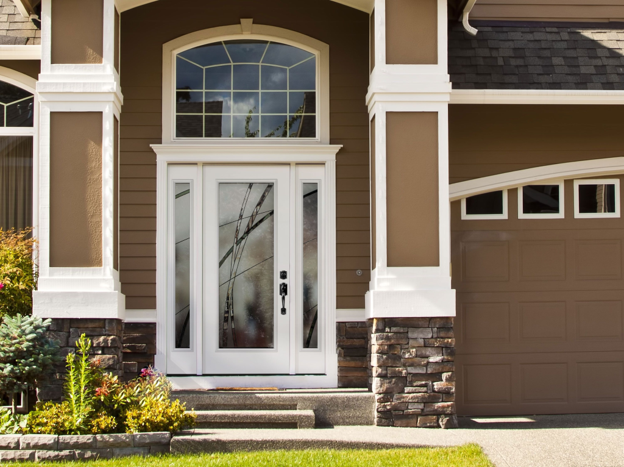
Craftsmen build with substantial stiles and rails that suit bungalows and modern farmhouses. Divided-lite designs bring daylight into the entry without sacrificing privacy, ideal for doors that open onto a porch or courtyard. Contemporary flush profiles with narrow glass deliver the clean, minimal look that newer builds favor. And for buyers chasing drama, wrought-iron detailing set into a fiberglass slab gives the old-world weight of ironwork without the rust or the price tag.
Glass options widen the field further. Clear, obscured, textured, and patterned inserts each affect how much light enters and how much privacy you maintain, so the same door silhouette can read completely differently depending on the glazing you choose. That flexibility is exactly why fiberglass keeps showing up in projects where the entrance has to carry the whole facade. For larger openings, a single slab flanked by sidelites and topped with a transom turns the entry into a genuine focal point, and fiberglass handles scale without the weight and cost concerns associated with oversized timber units.
What to Check Before You Buy
Not all fiberglass doors are built to the same standard, and the gap between a cheap one and a quality one is wide. A few things separate the two:
Look at the core. A dense, fully insulated foam core is what delivers the thermal performance fiberglass is known for, so a hollow or thinly filled slab undercuts the main reason to buy the material. Check the skin thickness as well, since a heavier skin resists impact and holds a finish better over time. Hardware matters more than buyers expect too. A handsome slab paired with thin, builder-grade levers always looks half finished, so match the door with substantial handlesets that suit its weight.
Finally, factor in installation and sealing. Even the best door underperforms if it is hung in a poorly prepped opening with cheap weatherstripping. Treat the entrance as a system, with a properly fitted threshold and quality seals, and the fiberglass advantage shows up exactly where you want it.
Final Thoughts
Fiberglass has earned its spot at the top of the entry-door conversation by solving the problems that frustrate buyers about the alternatives. It delivers the warmth and grain of timber without the maintenance, the toughness of steel without the dents and cold transfer, and an insulating core that quietly pays for itself in comfort and energy savings. For most homes, it is the option that asks the least and gives back the most.
Homeowners ready to upgrade can explore Knockety’s curated collection of premium fiberglass exterior doors to find a style that perfectly complements their home’s architecture. With Knockety, you get a combination of lasting durability, energy efficiency, and timeless curb appeal. Choose the right door today, and enjoy decades of reliable performance with minimal maintenance.