
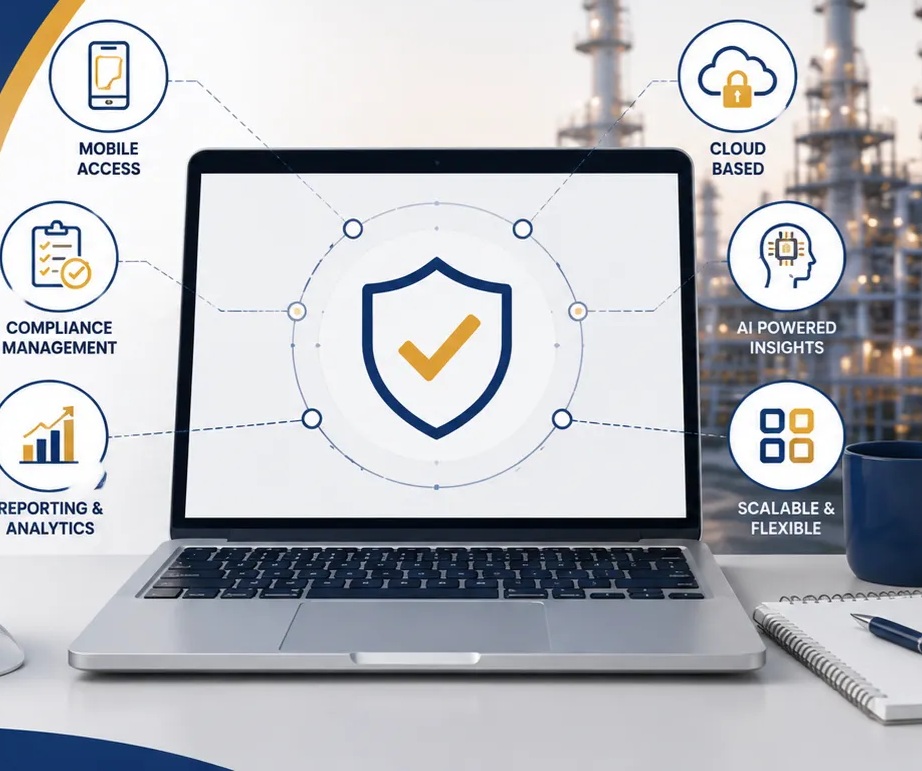
Industrial construction sites change faster than most paper-based safety systems can keep up with. Crews move between work areas, temporary access routes change, and equipment arrives or leaves as the project advances. A safety plan written at the start of the week may already need revision by Friday.
Modern EHS software gives site teams a way to keep those changes visible as work happens. Instead of waiting for inspection notes or permit records to reach an office, supervisors can review current field information and follow up on unresolved issues before another crew enters the same area.
Systems like UpKeep CMMS software can add another useful connection when a safety issue is tied to equipment condition. A failed inspection can move directly into maintenance work, which keeps the corrective action attached to the asset instead of leaving it inside a separate safety report.
Industrial Construction Creates Moving Safety Boundaries
A commercial building project often becomes safer as permanent systems are completed. Industrial construction can move in the opposite direction for periods of time. Mechanical installation may overlap with electrical work, while another area begins testing equipment that was still under construction days earlier.
A permit that was appropriate during installation may no longer be sufficient once equipment is energized. An access route may become unsuitable after lifting work begins nearby. Safety information must follow the project’s actual state rather than the original plan.
Digital EHS systems help because permits and inspections can be connected to a location or active job. Supervisors can see what work is authorized in an area before another activity starts there. The software does not remove the need for field judgment, but it gives that judgment better information.
Permit-to-Work Systems Become More Valuable Near Commissioning
Permit control becomes especially sensitive when an industrial project approaches commissioning. Construction teams are still present, but parts of the facility may already contain live electrical systems or pressurized equipment.
A digital permit-to-work process can show whether an activity has been approved before crews enter the area. It can also keep the supporting control measures attached to that permit rather than relying on a separate paper trail.
The real advantage appears when conditions change. If a system’s status changes during the shift, supervisors can see that the original permit no longer reflects the work environment. The permit can then be revised or closed before work continues.
This is more reliable than treating the permit as proof that a task was safe at some earlier point in the day. Industrial construction needs permit control that reflects current conditions, particularly during the transition from construction to operations.
Contractor Records Need to Follow the Worker Onto the Site
Large industrial projects often involve several employers working under the same principal contractor or owner. Each company may have its own training records, certifications, and internal procedures.
The difficulty appears at the project boundary. Site management needs to know whether the person arriving for a specialized task is actually cleared to perform it. A certificate stored inside a subcontractor’s office system is not very useful to the supervisor standing at the access point.
EHS software can keep contractor status connected to site access and work authorization. Expired training becomes visible before the worker begins the task. Project-specific inductions can also be recorded alongside the contractor profile.
This becomes more useful as the workforce changes. Industrial projects can bring in specialists for only a few days during installation or commissioning. A central record reduces the chance that short-term work bypasses the same verification applied to the permanent project team.
Equipment Safety and Maintenance Need the Same Evidence
Industrial construction depends heavily on temporary and mobile equipment. Cranes and generators may move between areas as the project develops. Tools can also pass through several crews before returning to a central store.
A safety inspection can therefore reveal a maintenance problem rather than a procedural one. If an operator finds damaged equipment during a pre-use check, the issue should not end with a failed inspection record. Someone needs to remove the equipment from service and arrange the repair.
Connecting EHS and maintenance systems makes that handoff clearer. The failed condition can create a maintenance action against the asset while the safety record shows why it was removed from use. Once repairs are complete, the same history can support a controlled return to service.
This link also improves repeat-failure analysis. If the same asset keeps generating safety defects, the project team can see that pattern in its maintenance history instead of treating each failed inspection as an unrelated event.
Incident Reporting Is Only Useful If Corrective Work Closes
Fast reporting is valuable after an incident or near miss, but speed at the first step is not enough.
A mobile EHS platform lets workers record an event while the details are still fresh. Photos can preserve site conditions before the area changes. The investigation can then remain connected to the original report rather than beginning again in another file.
The stronger benefit comes later. Corrective actions can be assigned and tracked until someone verifies completion. A recurring site hazard is therefore less likely to disappear once the initial report has been reviewed.
Near-miss reporting benefits from the same discipline. Many events do not produce an injury but still expose a weakness in access control or work planning. Closing those findings before the same conditions return is where the reporting process begins to influence site safety.
Compliance Records Should Be Created During the Work
Industrial construction can produce a large volume of safety documentation. The problem is not always lack of records. It is being able to show what happened when an auditor or client asks months later.
Digital systems create a stronger trail because inspections and corrective actions are recorded as part of normal site activity. The record can show when the inspection occurred and who completed it. Supporting evidence stays with the event instead of being reconstructed later.
For U.S. projects, this does not replace OSHA recordkeeping obligations. Employers still need to determine which injuries and illnesses are recordable and maintain the required forms where applicable. The software is useful because incident information can move into that compliance process without requiring the safety team to rebuild the history from scattered reports. OSHA requires many covered employers to maintain Forms 300, 300A, and 301, while severe events have separate reporting deadlines.
The broader benefit is operational. A site with reliable records can see overdue inspections before they become an audit problem. Supervisors can also see which corrective actions remain open while the work is still underway.
That is the point where EHS software becomes more than a document repository. Industrial construction needs safety information that stays connected to changing site conditions. When permits, contractor status, equipment defects, and corrective work remain visible throughout the project, compliance becomes part of daily control rather than a separate exercise carried out after the work is complete.






