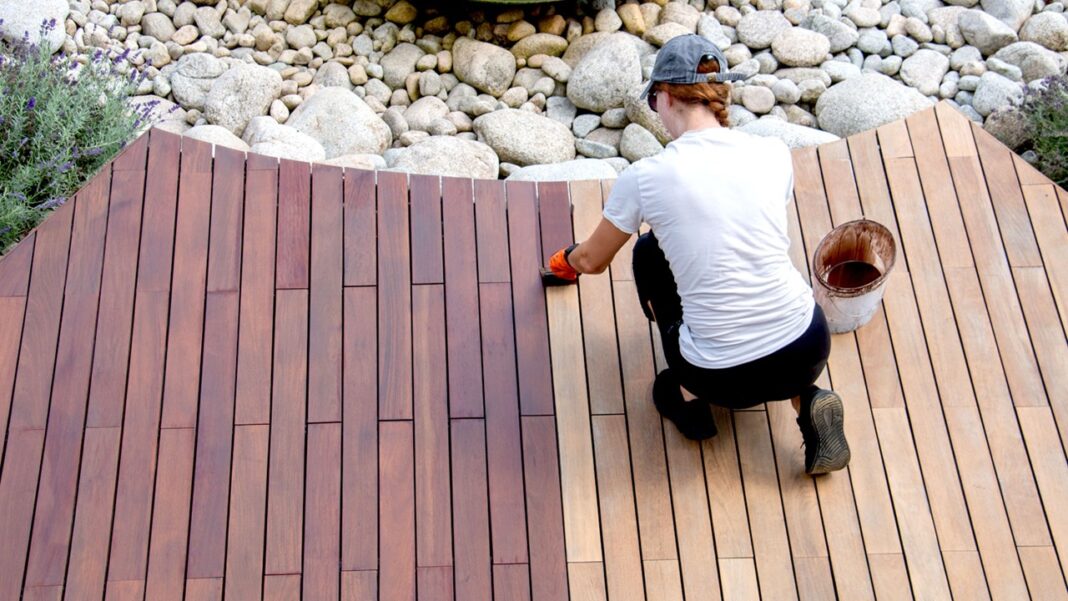
The question of whether to oil or stain a deck comes up every season, and the honest answer is that most homeowners do not have enough information to make the decision confidently before they have already made it. They go to a hardware store, pick a product that looks right, apply it without adequate preparation, and wonder why the deck looks great for one season and then starts failing in year two. The product is not usually the problem. The understanding of what each product does, and whether it is matched to the specific wood and condition of the deck, is where things go wrong.
Getting this decision right before you apply anything is genuinely important, because some products are extremely difficult to remove once they are on the wood. Choosing the wrong product and applying it is not just a cosmetic issue; it can lock you into a maintenance path that is either expensive or results in a permanent change to the character of the wood that you did not intend. The Deck People see the consequences of these decisions constantly, and our entire practice is built around getting homeowners the right result from the start.
If you are ready to do it properly and want a product that protects your wood for the long haul rather than requiring a full redo in two years, our Toronto deck staining experts, will assess your deck’s specific wood type, current condition, and history before recommending any product. That assessment, done before anything is applied, is how we protect your investment and deliver results that last.
What Deck Oil Actually Does
Deck oils are penetrating products that soak into the wood fibres rather than forming a film on the surface. Because the product lives inside the wood rather than on top of it, it cannot peel. This is the core advantage of a quality penetrating oil: when it starts to break down, it fades gradually and evenly rather than developing the bubbling, flaking, and peeling that gives a poorly maintained deck such a bad look.
Oils also nourish the wood itself, restoring moisture and flexibility to fibres that have dried out from UV exposure and seasonal temperature swings. Wood that is regularly oiled maintains its structural integrity, resists cracking and splitting better, and simply lasts longer than wood that is left unprotected or coated with a film-forming product that eventually fails. The trade-off is that oil does not deliver as bold a colour statement as a stain in the first application, though it deepens with successive coats over time.
What Deck Stain Does
Stains come in a range of opacities: transparent, semi-transparent, semi-solid, and solid. Transparent stains offer minimal colour change and UV protection. Semi-transparent stains tint the wood while still allowing the grain to show through and penetrate the surface similarly to oils, making them a popular choice for decks where the wood quality and character are worth showing. Semi-solid and solid stains provide more complete coverage, hiding grain and significant discolouration.
The critical thing to understand about semi-transparent stains is that they sit partially on the surface as well as penetrating it, which means they can peel over time if the surface is not properly prepared or if the product is applied to wood that is too wet, too old, or that has incompatible residue from a previous treatment. Once a semi-transparent stain starts to peel, the surface needs to be stripped before any new product can be applied cleanly. That stripping process is time-consuming and adds significantly to the cost of the next maintenance cycle.
The Condition of Your Wood Changes Everything
The current condition of the wood on your deck is the most important factor in determining which product is appropriate. New, unfinished wood has open pores that absorb penetrating products readily and represents the ideal starting point for either oil or semi-transparent stain. Wood that has been previously oiled can typically accept oil again directly after cleaning and brightening. Wood that has previously been painted or stained with a solid stain must be assessed carefully because applying a penetrating product over a solid coating is ineffective.
Wood that has greyed significantly from UV exposure needs brightening before any product is applied. Brightening opens the wood fibres, restores the pH balance of the surface, and allows the new product to penetrate evenly. Applying oil or stain to grey, oxidized wood without brightening results in uneven colour take-up and reduced longevity of the treatment. This is one of the most commonly skipped preparation steps and one of the most consequential for the end result.
Semi-Transparent Stain vs Oil: The Practical Comparison
For a well-maintained deck with sound wood that has been treated before and is being refreshed on a regular cycle, a quality semi-transparent stain is a legitimate choice. It delivers more immediate colour impact than oil, is available in a wider range of tones, and performs well when applied correctly to properly prepared wood. The maintenance commitment is to catch the recoat before peeling starts, typically every two to three years depending on the product, the wood species, and the exposure.
For a deck that has not been treated in several years, wood that is significantly weathered, or a homeowner who wants to minimize future maintenance complexity, a premium penetrating oil is often the better long-term strategy. The first application may not look as immediately vibrant as a stain, but the non-peeling characteristic and the genuine wood nourishment it provides create a maintenance cycle that is both simpler and more forgiving over the long term. The Deck People recommend this path regularly precisely because we see what happens to stained decks that miss a maintenance cycle.
The Solid Stain and Paint Question
Solid stains and paints are the right choice in specific situations: when the wood has significant surface damage, staining, or discolouration that cannot be addressed with a transparent product, when the homeowner wants a specific painted look for architectural consistency with the house, or when the deck surface is not wood at all but a composite, fibreglass, or PVC material that cannot accept penetrating products.
The commitment with solid stains and paints is to the maintenance cycle that goes with them. Once you have applied a solid-coverage product, subsequent maintenance requires the same or compatible product. Going back to a transparent or semi-transparent stain after a solid product has been applied is not possible without full stripping. Understanding this commitment before making the initial product selection avoids the situation where a homeowner wants to change direction in year three and discovers that the path back is significantly more work and cost than they anticipated.
Book Early for the Best Seasonal Results
Timing matters for deck treatments. Product application requires wood surface temperatures within a specific range, typically between 10 and 30 degrees Celsius, with no rain forecast for at least 24 to 48 hours after application. In Toronto’s climate, the practical windows for exterior wood treatment are spring from late April through June and fall in September and October, with summer in between for larger projects.
Booking early in the season guarantees access to the best scheduling windows and prevents the situation where a homeowner is ready to go but the calendar is fully booked until the season is nearly over. The Deck People recommend reaching out in late winter or early spring to secure your spot and ensure the project happens during optimal conditions. Your deck is an investment worth protecting correctly. Getting the product and the timing right from the start is how that protection actually works.