
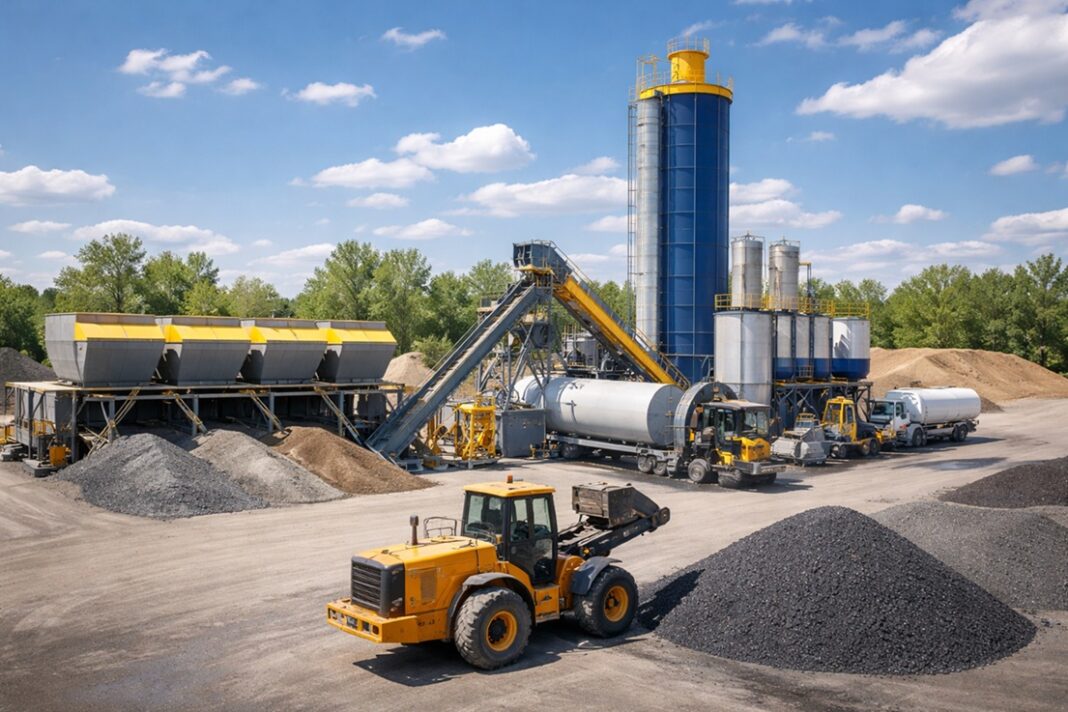
Road construction and maintenance require different types of plants and technologies depending on climate, location, project urgency, and material availability. One such important system is the Cold Mix Plant, widely used for road repair works, rural roads, and areas where heating of bitumen is not practical.
What is a Cold Mix Plant?
A Cold Mix Plant is a construction facility used to prepare cold asphalt mix by blending aggregates, bitumen emulsion, and sometimes additives at ambient temperature.
Unlike hot mix plants, which require heating materials above 150°C, cold mix plants operate without high-temperature processing. Instead, they use bitumen emulsion or foamed bitumen, which allows mixing at normal temperatures.
The final product, known as cold mix asphalt, is suitable for patch repairs, low-traffic roads, and emergency maintenance work.
Working Principle of Cold Mix Plant
The working of a cold mix plant is based on simple mechanical blending rather than thermal processing.
Step-by-step process:
- Aggregate Feeding
Different sizes of aggregates are fed into the plant through feeders or conveyor belts. - Screening and Proportioning
Aggregates are screened and separated according to size. Proper grading is essential for mix quality. - Binder Addition (Bitumen Emulsion)
Bitumen emulsion is added to aggregates at ambient temperature. This acts as the binding agent. - Mixing Process
All materials are mixed thoroughly in a pugmill or continuous mixer to ensure uniform coating. - Storage or Direct Dispatch
The finished cold mix is either stored temporarily or directly transported to the construction site. - Laying and Compaction
At the site, the mix is laid manually or using small equipment and compacted using rollers.
Main Components of a Cold Mix Plant
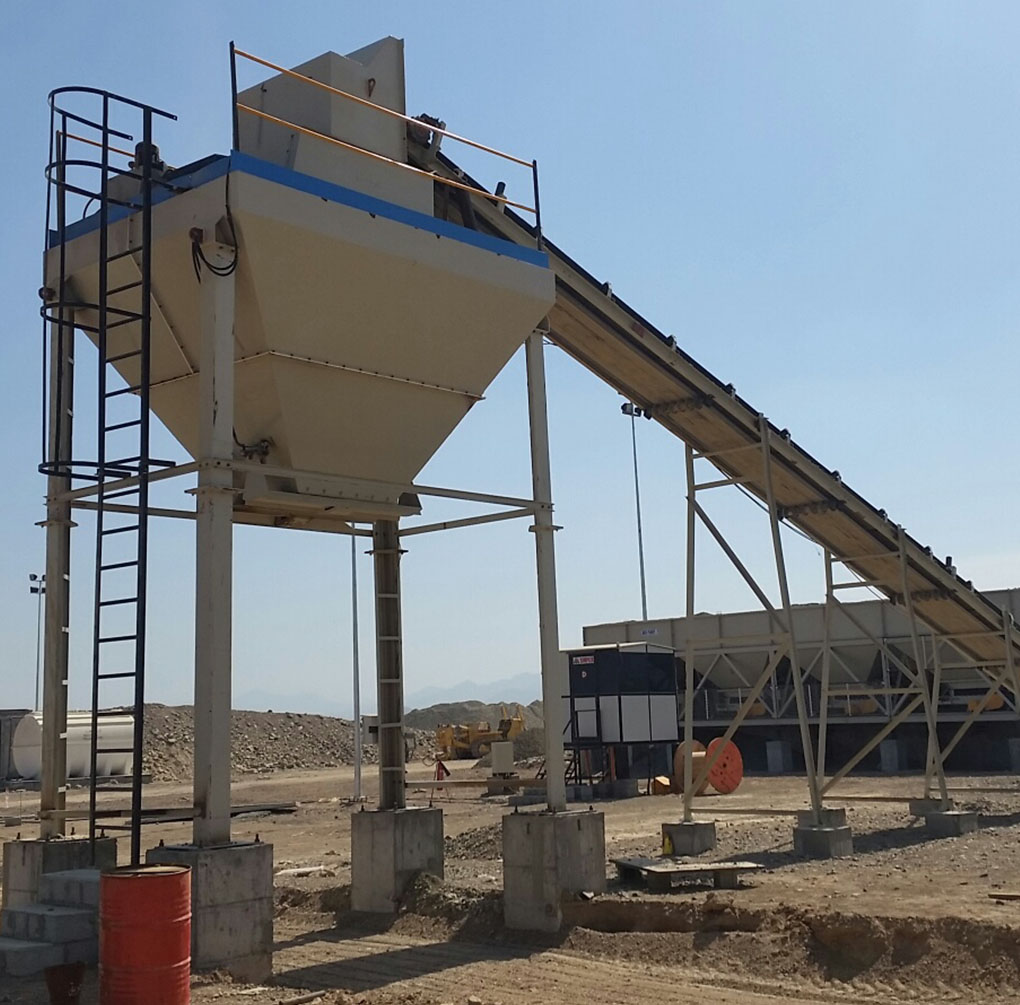
1. Aggregate Feed System
This includes bins or hoppers that store different sizes of aggregates before mixing.
2. Conveyor System
Transfers materials from one section of the plant to another in a controlled manner.
3. Screening Unit
Ensures proper grading of aggregates for achieving required mix design.
4. Mixing Unit (Pugmill Mixer)
The core component where aggregates and bitumen emulsion are blended.
5. Bitumen Emulsion Tank
Stores liquid bitumen emulsion used as a binder.
6. Control Panel
Used for monitoring material flow, mix proportions, and plant operation.
7. Output Conveyor
Transfers finished mix to trucks for transportation.
Advantages of Cold Mix Plant
- No heating is required, which reduces fuel consumption significantly.
- Lower emissions of CO₂ and harmful gases compared to hot mix plants.
- Reduces fuel, maintenance, and operational costs.
- Can be used in locations where fuel supply or heating systems are limited.
- Perfect for pothole filling and emergency maintenance.
- Less complex than hot mix plants, requiring fewer technical resources.
Applications of Cold Mix Plant
Cold mix plants are widely used in:
- Pothole repairs
- Rural road construction
- Temporary roads
- Low-traffic roads
- Shoulder maintenance
- Emergency road restoration
- Rain-affected road repairs
They are especially useful where hot mix asphalt is not feasible due to weather or logistics.
Types of Cold Mix Plants
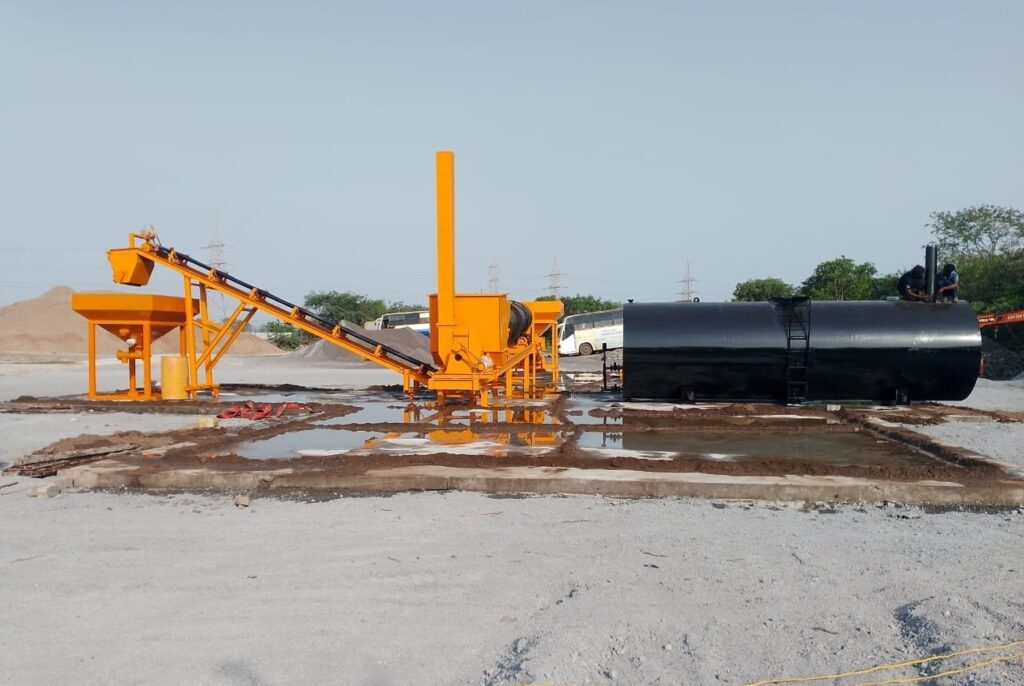
1. Mobile Cold Mix Plant
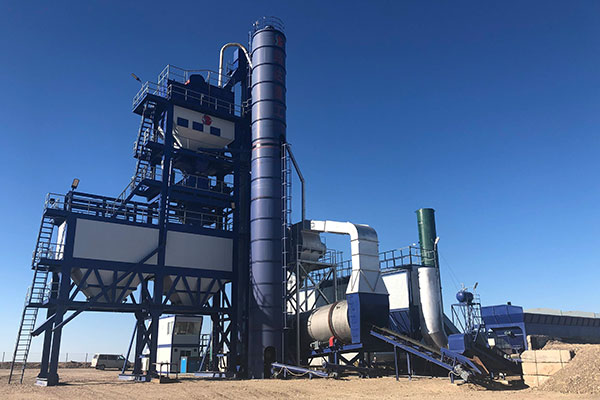
A Mobile Cold Mix Plant is a portable and compact asphalt mixing system designed for easy transportation and quick setup at different project sites. It is especially useful for remote locations, rural road works, and small repair projects where permanent plant installation is not practical. Its flexibility, fast commissioning, and mobility make it ideal for emergency road maintenance and short-duration construction works.
2. Stationary Cold Mix Plant
A Stationary Cold Mix Plant is a fixed asphalt production facility installed at a specific location for long-term and large-scale projects. It is used for continuous and consistent production of cold mix asphalt, ensuring stable quality and higher output capacity. This type of plant is preferred by contractors handling major infrastructure works that require uninterrupted material supply and efficient batch management.
3. Continuous Cold Mix Plant
A Continuous Cold Mix Plant is designed to produce cold mix asphalt in a nonstop, uninterrupted process, ensuring maximum productivity and operational efficiency. It is suitable for large highway and infrastructure projects where high-volume output is required. By eliminating batch-wise delays, this system improves production speed, reduces downtime, and ensures a steady flow of material for large-scale construction activities.
Cold Mix vs Hot Mix Plant
| Feature | Cold Mix Plant | Hot Mix Plant |
| Temperature | Ambient | High (140–180°C) |
| Fuel Usage | Very Low | High |
| Emissions | Low | High |
| Strength | Moderate | High |
| Use Case | Repairs, rural roads | Highways, expressways |
Importance in Modern Road Construction
With increasing focus on sustainability, cold mix plants are becoming more important in infrastructure development. Governments and contractors are adopting them for:
- Reducing carbon footprint
- Improving rural connectivity
- Faster maintenance operations
- Cost-effective road management
They are also aligned with green construction practices, making them a valuable part of modern engineering solutions.
Future of Cold Mix Technology
The future of cold mix plants is expected to improve with:
- Advanced bitumen emulsions
- Polymer-modified cold mixes
- Automation in mixing systems
- Better durability formulations
- Integration with recycled asphalt materials
These improvements will make cold mix technology more reliable and widely usable even in medium-traffic roads.
Conclusion
A Cold Mix Plant is an important part of modern road maintenance and low-cost construction strategies. While it cannot fully replace hot mix asphalt in heavy-duty applications, it plays a vital role in repairs, rural connectivity, and sustainable infrastructure development. Its low energy consumption, eco-friendly nature, and ease of use make it an essential solution for efficient road management, especially in developing regions and remote areas.
Image Credit: ammann.com, roadskymaintenance.com






