The rating on the label is not the force reaching the ground
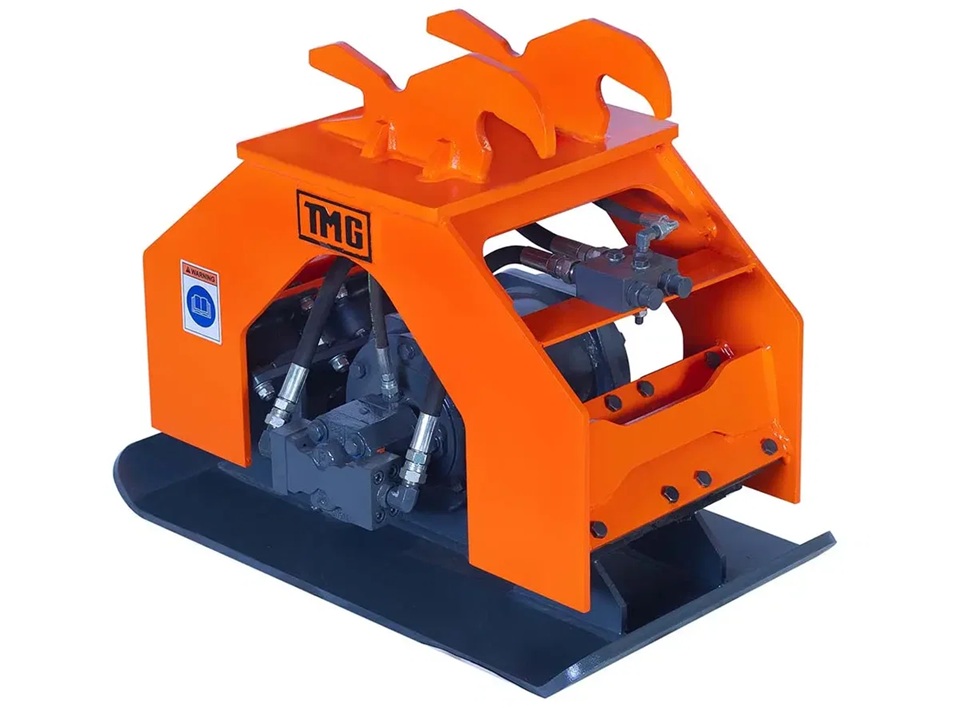
American trenching and backfill work runs until the ground hardens, and the compaction at the end of it decides whether any of it stays level. Anexcavator plate compactor produces a force that has very little to do with what the attachment itself weighs.
A walk behind machine has exactly two sources of force. Its own mass pressing down and the vibration its exciter generates, and neither can be increased once the excavator plate compactor has been bought.
How much force does a plate compactor apply once it is on an arm
An arm mounted unit adds a third source, which is the excavator pushing down on it. The boom can apply a substantial share of the machine’s own weight through the plate, and that force is added to the vibration rather than replacing it.
An 8800 pound excavator plate compactor is describing centrifugal force
The figure quoted is the force the exciter generates, not the weight of the attachment or what it delivers into the soil. Reading it as a mass is the commonest misunderstanding, and it makes two attachments look comparable when they are not.
Excavator plate compactor down pressure is a control, not a fixed value
The operator decides how hard the plate is pressed. That is genuinely useful, since a light touch suits a thin lift near a pipe and a heavier one suits deep fill, and no walk behind machine offers anything equivalent.
More pressure is not always more compaction
Pushing too hard stops the plate vibrating freely against the soil and starts displacing material sideways instead. The surface bulges, the machine lifts on its tracks, and the layer underneath ends up less dense than a lighter pass would have produced.
The carrier weight range is a structural limit
A two to four ton machine has enough weight to load the plate and not so much that the mounting takes more than it was designed for. A larger excavator can apply force the attachment housing was never engineered to absorb.
Quick change fittings decide whether it gets used at all
An attachment that takes twenty minutes to fit stays on the truck for short jobs. Swapping between a bucket and a plate in a couple of minutes is what makes it practical to compact each layer as backfilling proceeds rather than all at the end.
Compaction equipment divides by where the force comes from
• Walk behind: own weight plus vibration
• Arm mounted: vibration plus machine down pressure
• Roller: static weight, wide surfaces
Where borrowed down pressure pays and where it does not
• Strength: force the operator can vary by layer
• Strength: reaches trench bottoms and batters
• Limit: needs a carrier in the stated weight range
• Limit: too much pressure displaces rather than compacts
Weighed against a walk behind machine, an arm mounted plate costs a carrier standing by and returns compaction the operator can adjust as the fill changes. A contractor in Ohio compacts every lift as it goes and has stopped being called back to trench lines.
Attachments are being compared on delivered force
Contractors increasingly ask what reaches the ground rather than reading a single headline figure, having found that centrifugal force, plate area, and carrier weight together decide a result that no one number describes.
That closer reading of specifications is why the machinery attachmentsTMG Industrial supplies state a carrier weight range alongside the force they generate.