Modern construction and infrastructure projects rely on a wide range of advanced materials and technologies. From steel frameworks and composite panels to insulation boards and lightweight structural elements, today’s building projects require bonding solutions that are both efficient and reliable. While traditional fastening methods such as screws, bolts, and welding remain essential, adhesive technologies have become increasingly important in modern construction.
Adhesives allow contractors and engineers to bond different materials quickly and efficiently without damaging the surfaces involved. They also help distribute stress evenly across bonded areas, reducing the risk of structural damage. In many industrial applications, industrial spray adhesive solutions are used to hold materials temporarily in place during installation, improving productivity and simplifying complex assembly processes.
The Growing Role of Adhesives in Construction
Over the past decade, the role of adhesives in the construction industry has expanded significantly. Several factors are driving this shift. First, modern buildings often incorporate a variety of materials such as metals, plastics, insulation foams, and composite panels. Mechanical fasteners alone cannot always provide the flexibility needed to connect these materials effectively.
Second, construction projects today require faster installation and reduced labor costs. Adhesives provide a practical solution by allowing materials to be bonded quickly without drilling, welding, or additional hardware. This reduces both installation time and overall project costs.
Another reason for the growing adoption of adhesives is the need for improved structural performance. Adhesives distribute loads evenly across bonding surfaces, unlike mechanical fasteners that concentrate stress at specific points. This can improve durability and reduce the likelihood of material fatigue over time.
Common Types of Adhesives Used in Infrastructure Projects
Various types of adhesives are used across different construction and infrastructure applications. Each type offers specific performance characteristics suited for particular tasks.
Epoxy Adhesives
Epoxy adhesives are widely used for structural bonding due to their exceptional strength and durability. They are often used in bridge construction, concrete repairs, and heavy structural components where high bonding strength is required.
Polyurethane Adhesives
Polyurethane adhesives are known for their flexibility and resistance to environmental conditions. These adhesives are commonly used in sealing applications, flooring installations, and exterior construction projects where weather resistance is essential.
Acrylic Adhesives
Acrylic adhesives provide strong bonding performance and fast curing times. They are often used in applications involving plastics, metals, and composite materials.
Spray Adhesives
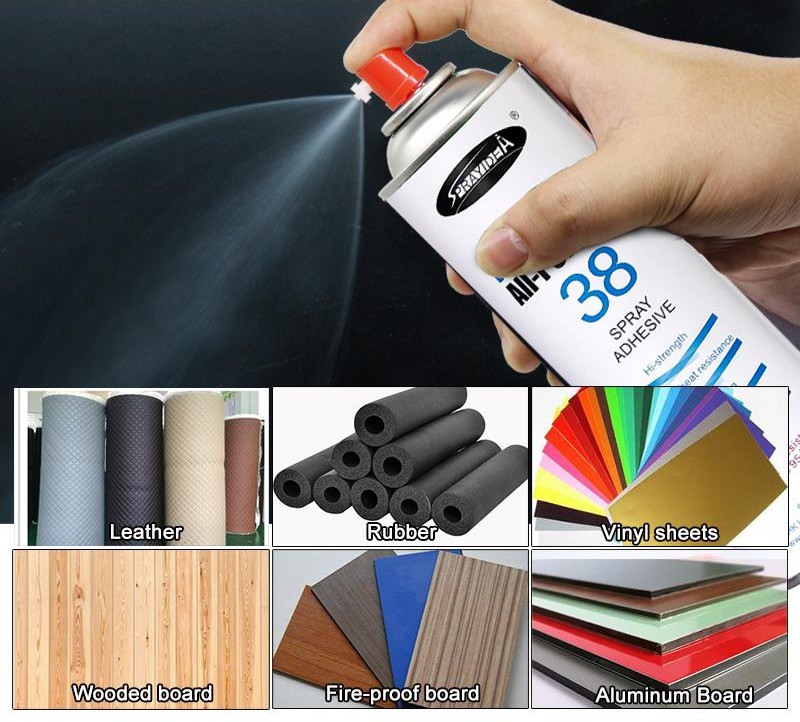
Spray adhesives are particularly useful in situations where materials need to be positioned quickly before permanent bonding or mechanical fastening. Their ability to cover large surfaces evenly makes them ideal for insulation installation, panel positioning, and other construction tasks.
Applications of Spray Adhesives in Construction
Spray adhesives have become increasingly popular in modern construction due to their ease of use and versatility. These adhesives can be applied quickly across large surfaces, allowing installers to secure materials temporarily while making adjustments.
Insulation Installation
One of the most common applications of spray adhesives is the installation of insulation materials. Insulation boards and thermal panels often require temporary positioning before final fastening. Spray adhesives allow installers to hold these materials in place efficiently during the installation process.
HVAC System Installation
Spray adhesives are also used in HVAC system installation. Duct insulation, acoustic panels, and sealing materials often require quick and reliable bonding. Spray adhesive technology allows technicians to secure these components without complicated fastening systems.
Composite Material Assembly
Composite materials are increasingly used in modern buildings due to their strength and lightweight properties. During assembly, components often need to be temporarily secured before permanent bonding or structural installation. In these situations, contractors frequently rely on heavy duty spray adhesive products that provide strong initial tack and dependable bonding performance.
Temporary Bonding During Construction
Large construction projects often involve complex assembly steps. Spray adhesives can hold materials temporarily while other structural components are installed. This temporary bonding capability helps maintain alignment and positioning during construction.
Advantages of Adhesive Technology in Modern Infrastructure
The use of adhesives in construction offers several key advantages that make them an essential part of modern infrastructure development.
Faster Installation
Adhesives eliminate the need for drilling, welding, or installing mechanical fasteners in many situations. This significantly speeds up installation processes and reduces labor requirements.
Reduced Material Damage
Mechanical fasteners can weaken materials by creating holes or stress points. Adhesives avoid this issue by bonding surfaces without altering the structural integrity of the materials involved.
Improved Structural Performance
By distributing loads across the entire bonding surface, adhesives reduce stress concentration. This improves long-term durability and reduces the likelihood of cracks or structural failure.
Compatibility with Multiple Materials
Modern buildings often combine metals, plastics, composites, and insulation materials. Adhesives can bond these different materials effectively, providing flexibility that mechanical fasteners cannot always achieve.
Cost Efficiency
Adhesive solutions can reduce both labor and material costs. Faster installation times and simplified assembly processes contribute to overall project efficiency.
The Future of Adhesives in Construction
As construction technology continues to evolve, adhesives will play an even more important role in infrastructure development. Innovations in adhesive chemistry are leading to products that are stronger, more durable, and more environmentally friendly.
Low-VOC formulations are becoming increasingly important as the construction industry focuses on sustainability and environmental safety. At the same time, advanced adhesive technologies are enabling new building methods that rely on lightweight materials and modular construction techniques.
Automation and prefabrication are also influencing the use of adhesives. In modern manufacturing-based construction systems, adhesives help streamline assembly and ensure consistent bonding performance across large-scale projects.
Conclusion
Adhesives have become a vital component of modern construction and infrastructure projects. From insulation installation and HVAC systems to composite material assembly and temporary positioning, adhesive technologies offer practical solutions that improve efficiency and structural performance.
As construction methods continue to advance, reliable adhesive suppliers will play a critical role in supporting these innovations. Manufacturers such as Sprayidea continue to develop specialized spray adhesive products designed for industrial and construction applications, helping contractors and engineers achieve more efficient and reliable project outcomes.