
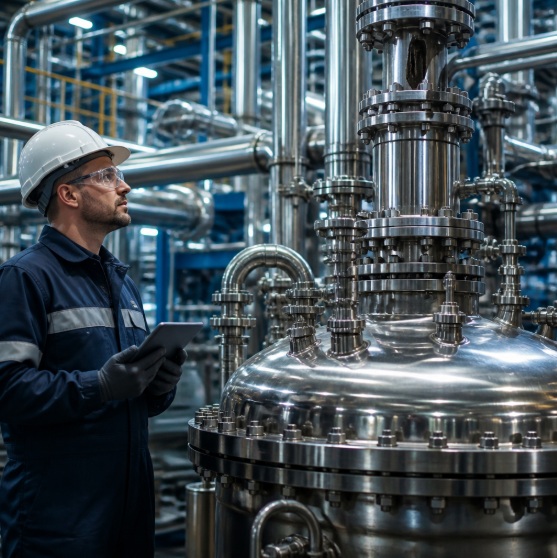
In the world of industrial chemical processing, the materials used to construct reactors are not a secondary consideration — they are central to safety, efficiency, and long-term operational success. Among the many alloys available to process engineers, Hastelloy stands apart as a benchmark material for demanding environments. Understanding what makes Hastelloy reactors uniquely suited to corrosive, high-temperature, and high-pressure applications is essential for any facility manager, chemical engineer, or procurement specialist working in sectors such as pharmaceuticals, petrochemicals, or specialty chemical manufacturing.
What Makes Hastelloy a Superior Reactor Material?
Hastelloy is a family of nickel-based superalloys developed specifically to withstand extreme chemical and thermal environments. Unlike standard stainless steel, which can succumb to pitting, crevice corrosion, or stress corrosion cracking under aggressive conditions, Hastelloy alloys maintain structural integrity even when exposed to strong acids, oxidizing agents, and chloride-rich environments. The most commonly used grades in reactor construction include Hastelloy C-276, C-22, and B-3, each offering a distinct balance of corrosion resistance and mechanical strength.
The core composition of these alloys — typically featuring nickel, molybdenum, chromium, and tungsten — creates a passive oxide layer that resists chemical attack far more effectively than iron-based alloys. This passive layer regenerates rapidly even after mechanical damage, making Hastelloy reactors particularly resilient in dynamic processing environments where temperature cycling and pressure fluctuations are routine.
Corrosion Resistance Across a Wide Chemical Spectrum
One of the defining advantages of Hastelloy in reactor applications is its broad-spectrum corrosion resistance. While many alloys perform well against specific chemicals, Hastelloy C-276, for instance, resists attack from hydrochloric acid, sulfuric acid, phosphoric acid, and even wet chlorine gas. This versatility allows process plants to use a single reactor material across multiple production campaigns without the risk of material degradation compromising product purity or structural safety.
In pharmaceutical manufacturing, where cross-contamination and material leaching are critical concerns, this chemical inertness is invaluable. Similarly, in petrochemical refining, where reactors are exposed to sulfur compounds and acidic byproducts at elevated temperatures, Hastelloy’s resistance to sulfidation and oxidation makes it the preferred choice over conventional carbon steel or even duplex stainless steel.
Thermal and Mechanical Performance Under Pressure
Beyond corrosion resistance, Hastelloy reactors are engineered to perform reliably under significant thermal and mechanical stress. The alloys retain their tensile strength and creep resistance at temperatures exceeding 1,000°C in some grades, making them suitable for high-temperature catalytic reactions and thermal cracking processes. This thermal stability also reduces the risk of reactor wall thinning over time — a failure mode that can have catastrophic consequences in pressurized systems.
The mechanical toughness of Hastelloy also contributes to its longevity. Reactors fabricated from these alloys typically exhibit excellent fatigue resistance, meaning they can withstand repeated pressure cycles without developing micro-cracks that could propagate into structural failures. For facilities operating continuous processes with frequent startup and shutdown cycles, this fatigue resistance translates directly into reduced maintenance costs and extended service intervals.
Weldability and Fabrication Considerations
A common concern with high-performance alloys is their machinability and weldability. Hastelloy alloys, while more challenging to work with than mild steel, are considered among the more weldable nickel superalloys. Proper welding procedures — including the use of matching filler metals and controlled heat input — are essential to preserve the alloy’s corrosion resistance in the heat-affected zone. Experienced fabricators with expertise in nickel alloy welding can produce reactor vessels that meet stringent ASME pressure vessel codes while maintaining the full corrosion-resistant properties of the base material.
Applications Across Process Industries
The versatility of Hastelloy reactors extends across a remarkably broad range of industries. In the chemical industry, they are used for the production of acetic acid, vinyl acetate, and various chlorinated compounds. In the nuclear sector, Hastelloy’s resistance to radiation-induced corrosion makes it a candidate material for certain reactor components. The food and beverage industry, while less commonly associated with exotic alloys, also benefits from Hastelloy in applications involving aggressive cleaning agents and sterilization processes — much like how a double boiler setup relies on controlled indirect heat to protect sensitive materials from direct thermal stress, Hastelloy reactors protect process streams from direct chemical attack through material integrity.
About International Process Plants
When sourcing Hastelloy reactors for industrial applications, working with a knowledgeable supplier is as important as selecting the right alloy grade. Understanding the full scope of Hastelloy reactor properties — including alloy composition, pressure ratings, jacket configurations, and agitation systems — is critical to matching the right equipment to the specific demands of your process. International Process Plants specializes in providing used and refurbished process equipment, including Hastelloy reactors, to facilities seeking high-quality assets at competitive price points without compromising on material standards or operational reliability.
Evaluating Used Hastelloy Reactors for Procurement
Purchasing used Hastelloy reactors requires careful evaluation of the vessel’s service history, wall thickness measurements, weld integrity, and any previous exposure to chemicals that may have caused localized corrosion. Reputable suppliers conduct thorough inspections and provide documentation that allows buyers to make informed decisions. When properly refurbished, used Hastelloy reactors can deliver decades of additional service life, making them an economically attractive option for both established facilities and new process plants looking to minimize capital expenditure.
The Broader Context of Industrial Equipment Innovation
The selection of reactor materials does not occur in isolation — it is part of a broader conversation about industrial infrastructure, equipment reliability, and process efficiency. Across the construction and industrial sectors, innovation in equipment design continues to drive performance improvements. For example, Putzmeister’s latest BSA 1405 D Classic concrete pump represents the kind of engineering advancement that parallels developments in chemical process equipment — both sectors are pushing the boundaries of material science and mechanical design to deliver greater output with improved reliability and reduced operational risk.
Conclusion
Hastelloy reactors represent one of the most reliable and chemically versatile solutions available to process engineers working in demanding industrial environments. Their exceptional corrosion resistance, thermal stability, mechanical toughness, and broad chemical compatibility make them the material of choice for applications where failure is not an option. Whether specifying new equipment or evaluating used assets, a thorough understanding of Hastelloy’s properties and performance characteristics is the foundation of sound engineering judgment. As process industries continue to handle increasingly aggressive chemistries and push operational parameters further, the role of high-performance alloy reactors will only grow in importance.






