Choosing the right contractor for core cutting in Dubai is an important decision for construction, renovation, demolition, and MEP projects. Whether you need to create an opening for an AC duct, drill through a concrete slab, cut a wall, or modify an existing structure, the quality of the work can affect the safety, speed, and overall cost of your project.
Dubai has a wide range of concrete cutting contractors, but not every company offers the same level of experience, equipment, safety practices, or workmanship. The cheapest quotation may not always provide the best value.
Before hiring a contractor, you should evaluate their experience, services, equipment, trained operators, safety procedures, previous projects, and pricing. This guide explains the key factors to consider when choosing the best core cutting company in Dubai.
Here are the most important factors to consider when choosing a core cutting company in Dubai.
1. Check the Company’s Experience
Experience should be one of the first things you check before hiring a concrete cutting contractor.
Core cutting and concrete cutting require more than simply operating a machine. The contractor needs to understand different concrete structures, cutting depths, reinforcement, access conditions, site restrictions, and safety requirements.
An experienced company is usually better prepared to handle different types of projects, including:
- Residential renovations
- Commercial buildings
- Warehouses
- Hotels
- Shopping centers
- Industrial facilities
- Road and infrastructure projects
- Demolition projects
- MEP installations
Ask the company how long it has been providing concrete cutting services and what types of projects it has completed.
You can also ask for examples of previous work. A contractor with a genuine project history should be able to explain the type of work performed, the equipment used, and the challenges involved.
2. Look at the Company’s Range of Services
A good core cutting company should be able to provide more than one basic service.
Construction projects often require different cutting techniques depending on the structure and purpose of the work. Hiring a contractor that offers multiple solutions can make the project easier because you do not have to coordinate with several different companies.
Common services may include:
Concrete Core Drilling
Core drilling creates precise circular openings in concrete. These openings are often required for pipes, cables, plumbing systems, ventilation, fire protection systems, and other MEP installations.
Wall Sawing
Wall sawing is useful when contractors need accurate cuts through concrete or masonry walls. It can be used for creating doors, windows, ducts, and other structural openings.
Floor Sawing
Floor sawing is commonly used for cutting concrete slabs, floors, roads, parking areas, and other horizontal surfaces.
Wire Sawing
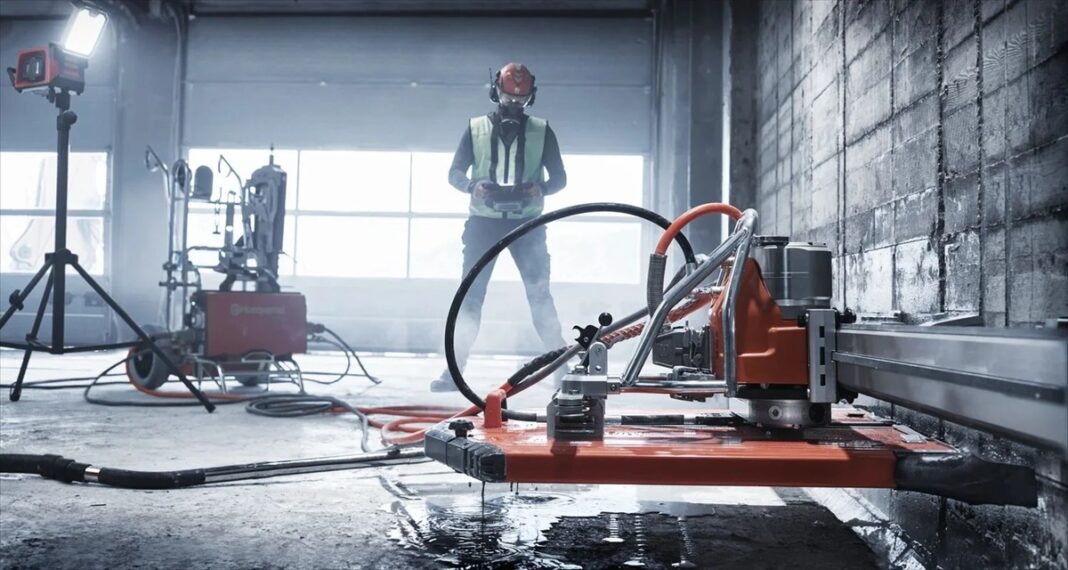
Diamond wire sawing can be useful for cutting large or heavily reinforced concrete sections where conventional methods may not be suitable.
Concrete Scanning
Before drilling or cutting, concrete scanning can help identify reinforcement, embedded pipes, cables, and other objects inside a structure.
Slab Cutting
Slab cutting may be required during renovation, demolition, structural modification, and MEP installation projects.
A company offering a complete range of services can often recommend the most suitable method instead of trying to use the same technique for every project.
3. Make Sure They Use Professional Equipment
The quality of concrete cutting depends heavily on the equipment being used.
Professional contractors use specialized diamond cutting and drilling equipment designed for different concrete applications. The right equipment allows operators to achieve cleaner cuts, better depth control, and more accurate results.
Before hiring a contractor, ask what equipment they use for your particular project.
For example, different tools may be required for:
- Deep core drilling
- Reinforced concrete
- Thick slabs
- Concrete walls
- Large structural sections
- Confined spaces
- High-access areas
Modern equipment can also help reduce vibration and unnecessary damage compared with unsuitable methods.
The goal should not simply be to cut the concrete. The goal is to cut it accurately, safely, and with minimal impact on the surrounding structure.
4. Ask About Safety Procedures
Safety should never be treated as an optional extra on a concrete cutting project.
Concrete cutting can involve heavy machinery, electrical equipment, dust, water, falling materials, reinforced structures, and potentially hidden services inside concrete.
A professional contractor should have proper safety procedures in place before work begins.
Ask whether the company carries out:
- Site risk assessments
- Work area inspections
- Equipment checks
- PPE requirements
- Safe access planning
- Dust and slurry management
- Barricading and warning measures
- Emergency procedures
The company should also make sure workers understand the site conditions and the risks associated with the specific job.
A contractor that takes safety seriously is more likely to approach the entire project professionally.
5. Verify That Operators Are Trained
Even high-quality machinery will not produce good results if it is operated incorrectly.
Concrete cutting requires skilled operators who understand how to use the equipment, control cutting depth, work around reinforcement, and respond to changing site conditions.
Ask whether the company’s operators are experienced and trained to use the equipment required for your project.
This becomes particularly important when cutting structural or heavily reinforced concrete.
A skilled operator can help maintain accurate dimensions and avoid unnecessary damage, while inexperienced work can result in uneven cuts, delays, additional repairs, or safety issues.
6. Check Their Understanding of Structural Risks
Not every concrete wall, slab, beam, or column can simply be cut without further consideration.
Some elements are structural and may carry significant loads. Cutting them without proper assessment can create serious problems.
A professional contractor should understand the difference between routine concrete cutting and work that may affect structural integrity.
For certain projects, coordination with a structural engineer may be necessary before cutting begins.
Before hiring a contractor, explain exactly what you want to cut and why. The contractor should be willing to discuss potential risks rather than simply agreeing to start work immediately.
This is particularly important when dealing with:
- Structural walls
- Beams
- Columns
- Reinforced slabs
- Load-bearing elements
- Large openings
7. Ask About Concrete Scanning Before Drilling
One of the most useful questions to ask is whether the company can scan the concrete before drilling or cutting.
Concrete structures can contain reinforcement bars, electrical conduits, pipes, post-tensioning elements, and other embedded components that may not be visible from the surface.
Cutting without knowing what is inside the concrete can create unnecessary risks and costly damage.
Concrete scanning technology, including ground-penetrating radar systems, can help identify objects within the structure before work begins.
This allows the contractor to plan the cut more carefully and select a safer drilling or cutting location.
For complex projects, concrete scanning can be an important part of the preparation process rather than an afterthought.
8. Review Previous Projects and Client Feedback
Reviews can tell you a lot about a contractor’s reliability.
Look for feedback related to:
- Work quality
- Professionalism
- Punctuality
- Communication
- Safety
- Project completion
- Response time
- Clean-up after work
Do not focus only on the overall star rating. Read the actual comments and look for repeated patterns.
For example, a company may have excellent technical work but poor communication, or it may be responsive but regularly miss deadlines.
You should also look for project photos, case studies, or references where available.
A contractor that can show real work completed on similar projects is often easier to evaluate than one that only makes general claims.
9. Compare Quotes Carefully
Price matters, but the cheapest quote is not always the best option.
When comparing quotations, make sure you understand what is included.
A professional quotation should ideally explain important details such as:
- Type of cutting or drilling
- Number of cuts or holes
- Cutting depth
- Equipment requirements
- Labour
- Access requirements
- Scanning, if required
- Water management
- Slurry or waste removal
- Mobilization
- Additional charges
Two companies may give very different prices because they are offering different scopes of work.
For example, one quotation may only cover cutting, while another may include scanning, skilled operators, equipment, water management, and clean-up.
Always compare the total scope, not just the headline price.
10. Check Their Availability and Response Time
Construction projects in Dubai often run on tight schedules. Delays in one activity can affect several other trades.
For this reason, availability and response time should also be part of your decision.
Ask the contractor:
- How soon can they visit the site?
- When can the work begin?
- How many operators will be assigned?
- How long is the expected work period?
- Can they work outside normal hours if required?
- Do they handle urgent projects?
A contractor that communicates clearly about scheduling is easier to coordinate with.
For commercial projects, this can be especially important because cutting work may need to be completed during a specific shutdown or installation window.
11. Consider Their Experience With Dubai Projects
Local project experience can be an important advantage.
Construction sites in Dubai can have different access restrictions, building requirements, working-hour limitations, and coordination challenges depending on the location and property type.
A contractor familiar with Dubai construction environments may already understand how to work in:
- Commercial towers
- Residential buildings
- Villas
- Hotels
- Retail properties
- Industrial sites
- Warehouses
- Parking structures
Local experience may also help the contractor coordinate more efficiently with other trades and site management teams.
For businesses searching for core cutting services in Dubai, choosing a contractor familiar with local project conditions can make the process smoother.
12. Make Sure the Company Can Handle Your Project Size
A contractor that is suitable for a small residential opening may not necessarily be the right choice for a major commercial or industrial project.
Before hiring a company, explain the size and complexity of the project.
Ask whether they have previously handled similar work.
For example, a large project may require:
- Multiple cutting teams
- Several machines
- Concrete scanning
- Large-diameter core drilling
- Deep cutting
- Wire sawing
- Night work
- Detailed site coordination
The company should have enough equipment, manpower, and planning capability to handle the required workload.
13. Ask About Clean-Up and Waste Management
Concrete cutting can create dust, water, slurry, and concrete debris.
A good contractor should explain how these materials will be controlled and removed.
This is particularly important inside occupied buildings such as offices, hotels, retail spaces, hospitals, and residential properties.
Ask the contractor:
- How will dust be controlled?
- Will water or slurry be contained?
- Who removes concrete debris?
- Will the work area be cleaned afterward?
- How will surrounding surfaces be protected?
Good site management can make a major difference to the overall experience.
14. Look for Clear Communication
Good communication is often overlooked when selecting a contractor.
Before work starts, the company should clearly understand:
- What needs to be cut
- Where the cuts are required
- Dimensions and depth
- Site access
- Working hours
- Safety requirements
- Completion deadlines
The contractor should also be easy to contact if changes occur during the project.
Poor communication can lead to incorrect cuts, scheduling problems, unexpected costs, and delays.
A company that asks the right questions before starting is often a better choice than one that immediately gives a price without understanding the job.
15. Choose the Company Based on Overall Value
The best core cutting company is not necessarily the one with the lowest price or the largest equipment list.
The better choice is usually the contractor that offers the right combination of:
Experience + skilled operators + professional equipment + safety + accuracy + reliability + clear pricing.
A slightly higher quotation may represent better value when it includes proper planning, trained operators, quality equipment, scanning, safe working practices, and reliable completion.
The cost of correcting a poor concrete cut can be far greater than the initial savings from choosing an inexperienced contractor.
Questions to Ask Before Hiring a Core Cutting Company
Before making your final decision, consider asking these questions:
- How many years of experience do you have?
- Have you completed projects similar to mine?
- What type of cutting equipment will you use?
- Can you perform concrete scanning before drilling?
- Are your operators trained and experienced?
- What safety procedures do you follow?
- Is the quotation all-inclusive?
- How long will the work take?
- How do you manage dust, slurry, and concrete waste?
- Can you provide examples of previous projects?
- Do you handle urgent or out-of-hours work?
- Can you coordinate with the main contractor and other site teams?
The answers can help you separate a professional contractor from a company that is simply competing on price.
Why Choosing the Right Contractor Matters
Core cutting may look like a straightforward construction task, but the quality of the work can affect the entire project.
Accurate cutting can make it easier to install pipes, cables, HVAC systems, doors, windows, and other components. Poorly planned cutting, on the other hand, can result in damage, delays, additional costs, and safety concerns.
This is why the contractor you choose should be evaluated based on more than price.
A reliable company should understand the project, recommend an appropriate cutting method, use suitable equipment, follow safety procedures, and complete the work according to the required dimensions.
Final Thoughts
Finding the best core cutting company in Dubai starts with looking beyond a simple price comparison.
Check the contractor’s experience, service range, equipment, operator skills, safety procedures, project history, availability, and communication. Ask detailed questions about how the work will be carried out and make sure the quotation clearly explains what is included.
For complex work, especially where structural elements or embedded services are involved, proper planning and concrete scanning can be just as important as the cutting itself.
Companies such as Core Cutting DXB provide a range of concrete cutting and drilling solutions for construction, renovation, demolition, and MEP-related projects in Dubai. When evaluating any contractor, however, the same basic principle applies: choose a company that can demonstrate experience, accuracy, safety, and dependable project delivery.
The right contractor can help your project move forward smoothly while reducing unnecessary risk, delays, and costly rework.