
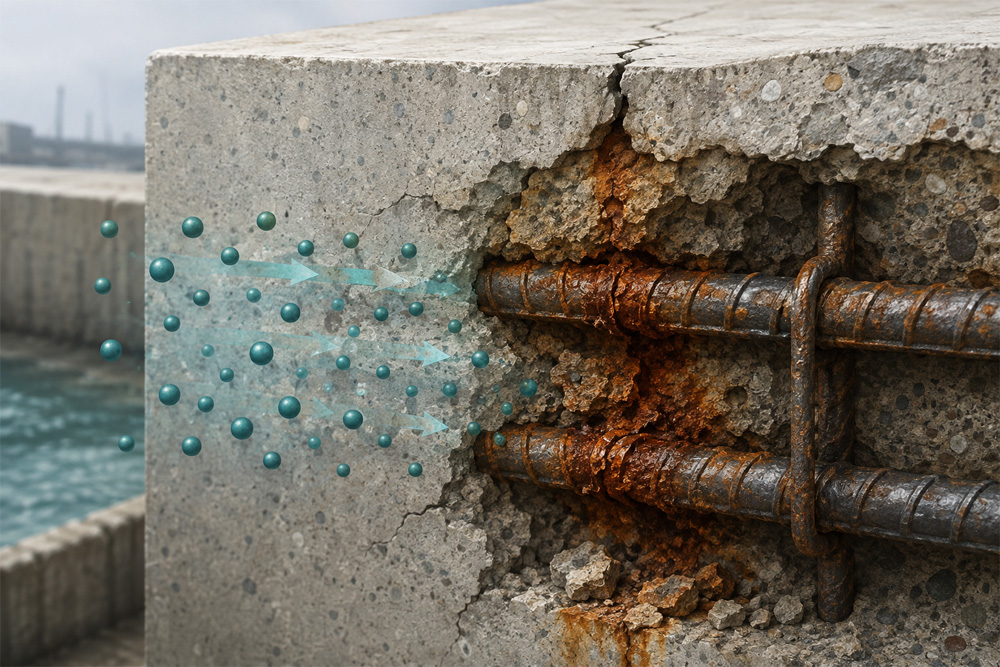
Chloride-induced corrosion is one of the major causes of deterioration in reinforced concrete structures, particularly in coastal buildings, bridges, marine structures, parking facilities and infrastructure exposed to deicing salts. Chlorides can penetrate concrete through pores and cracks and eventually reach the embedded reinforcement. Once the chloride concentration at the steel surface reaches a level that disrupts the protective condition around the reinforcement, corrosion can begin.
The deterioration process is gradual, but the resulting damage can affect reinforcement cross-section, bond with concrete and structural durability.
What Is Chloride-Induced Corrosion?
Reinforced concrete normally provides protection to embedded steel because the highly alkaline concrete environment promotes the formation of a passive layer on the reinforcement.
Chloride ions can penetrate this protective environment. When sufficient chlorides reach the reinforcement surface, they can locally break down the passive layer. The exposed steel then becomes susceptible to an electrochemical corrosion process.
The corrosion process requires conditions such as moisture and oxygen. As corrosion progresses, rust products accumulate around the reinforcement and can create internal pressure within the surrounding concrete.
How Do Chlorides Enter Concrete?
Chlorides can enter reinforced concrete from several sources.
Seawater and Marine Exposure
Structures located near the coast are exposed to salt-laden moisture and seawater spray. Chlorides can gradually penetrate the concrete surface and move toward the reinforcement.
Deicing Salts
Bridges, parking structures and roads in cold regions may be exposed to chloride-based deicing salts. Repeated wetting and drying can transport chlorides deeper into concrete.
Contaminated Construction Materials
Aggregates, mixing water or other construction materials containing excessive chlorides can introduce chloride ions into concrete during construction.
Industrial Exposure
Industrial environments may expose concrete structures to chloride-containing chemicals or contaminated water.
Chloride-Containing Water
Continuous exposure to contaminated water can increase chloride penetration, particularly where concrete has high permeability or existing cracks.
How Chlorides Reach Reinforcement
Chloride penetration is influenced by the concrete’s pore structure and permeability. Chlorides can move through concrete by mechanisms such as diffusion, absorption and water movement.
The process can be understood in stages:
1. Chlorides Reach the Concrete Surface
Salt-laden water or chloride-containing liquids come into contact with the concrete surface.
2. Chlorides Enter the Concrete
Chloride ions penetrate through pores, capillaries and cracks.
3. Chloride Transport Continues
Moisture movement and concentration differences transport chlorides deeper into the concrete.
4. Chlorides Reach Reinforcement
The chloride concentration gradually increases around the embedded steel.
5. Passive Layer Breakdown
When the chloride concentration at the reinforcement becomes sufficient to destabilise the passive condition, localised corrosion can initiate.
6. Corrosion Propagation
Electrochemical reactions result in the formation of corrosion products around the reinforcement.
Role of Concrete Permeability
Concrete quality has a major influence on chloride penetration. Dense, well-compacted concrete with an appropriate cementitious matrix generally provides greater resistance to the movement of chlorides.
Higher permeability can result from:
- High water-cement ratio
- Poor compaction
- Inadequate curing
- Honeycombing
- Cracking
- Poor-quality materials
- Inadequate concrete cover
Concrete defects can provide easier pathways for chloride ingress.
Effect of Cracks on Chloride Penetration
Cracks can significantly change the way chlorides enter concrete.
Instead of travelling only through the concrete pore structure, chloride-containing water can move through cracks and reach reinforcement more directly. Cracks caused by shrinkage, thermal effects, structural loading or inadequate construction practices can therefore increase the risk of reinforcement corrosion.
Where cracks intersect reinforcement, localised corrosion may develop at the affected locations.
What Happens After Corrosion Starts?
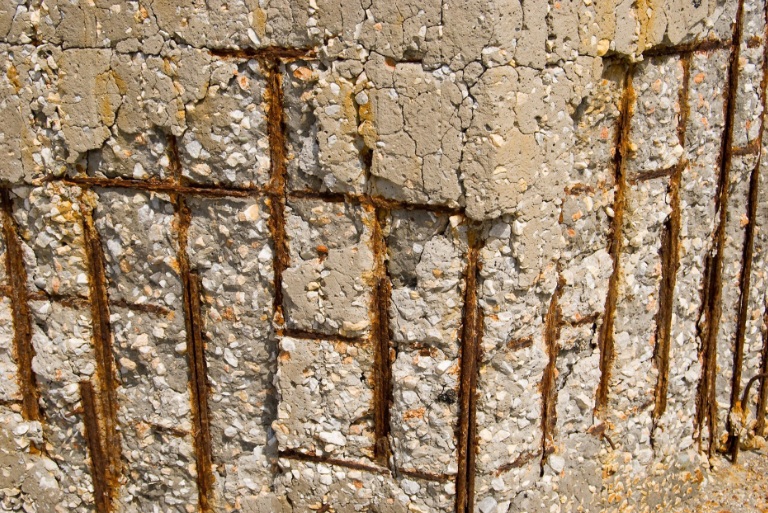
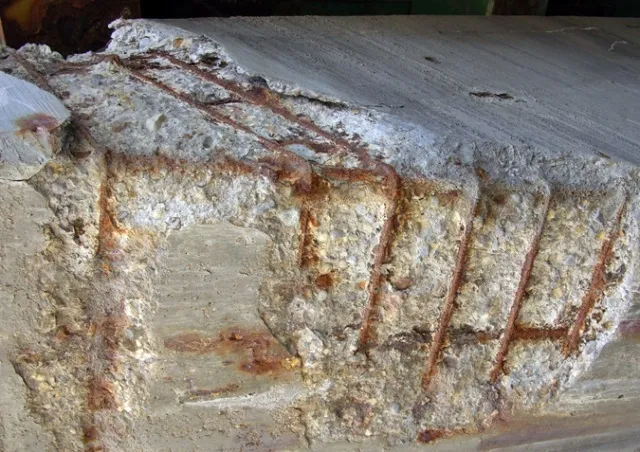
Once corrosion begins, the steel loses material through an electrochemical process. Corrosion products occupy a greater volume than the original steel.
This expansion generates pressure within the surrounding concrete.
The deterioration can progress through several stages:
Reinforcement corrosion → Internal expansion → Concrete cracking → Delamination → Spalling → Further reinforcement exposure
Once concrete cover is lost, reinforcement becomes increasingly exposed to moisture, oxygen and chlorides, which can accelerate further deterioration.
Factors That Influence Chloride-Induced Corrosion
Several factors determine how quickly chloride-induced corrosion develops.
Concrete Cover
Greater concrete cover provides a longer path for chlorides to travel before reaching reinforcement. However, cover quality is also important; increased cover does not compensate for highly permeable or poorly compacted concrete.
Water-Cement Ratio
A higher water-cement ratio can produce a more permeable concrete matrix, facilitating chloride movement.
Curing
Adequate curing supports the development of the concrete microstructure and can reduce permeability.
Cracking
Cracks provide pathways for chloride-containing water to penetrate the concrete.
Moisture Availability
Corrosion requires suitable moisture conditions. Repeated wetting and drying can be particularly relevant to chloride-exposed structures.
Temperature
Temperature influences the rate of chemical and electrochemical reactions and can affect corrosion progression.
Chloride Concentration
Higher chloride exposure can increase the likelihood of chloride reaching reinforcement at concentrations capable of disrupting passivity.

Structures Vulnerable to Chloride-Induced Corrosion
Chloride-induced corrosion is particularly relevant to:
- Coastal buildings
- Marine structures
- Bridges
- Parking garages
- Ports and harbours
- Waterfront infrastructure
- Industrial facilities
- Reinforced concrete tanks
- Offshore structures
- Structures exposed to deicing salts
In these structures, repeated exposure to chloride-containing moisture can create long-term corrosion risks.
Signs of Chloride-Induced Corrosion
Corrosion may remain hidden inside concrete during its initial stages. Visible signs generally appear after deterioration has progressed.
Common indicators include:
- Rust staining
- Longitudinal cracks along reinforcement
- Concrete delamination
- Concrete spalling
- Exposed reinforcement
- Surface discoloration
- Localised cracking
- Reduction in reinforcement diameter
However, the absence of visible damage does not necessarily indicate that reinforcement is free from corrosion.
Methods for Assessing Chloride-Induced Corrosion
A combination of inspection and testing methods can be used to evaluate chloride-related deterioration.
Visual Inspection
Engineers examine cracks, rust staining, spalling, exposed reinforcement and other signs of deterioration.
Half-Cell Potential Testing
Half-cell potential measurements can help identify areas where reinforcement has a higher probability of corrosion activity.
Concrete Resistivity Testing
Electrical resistivity measurements can provide information about the concrete’s resistance to ionic movement and corrosion-related conditions.
Chloride Content Testing
Concrete samples can be tested at different depths to determine chloride concentration and establish the extent of chloride penetration.
Cover Measurement
Cover meters and related techniques can help determine reinforcement depth and assess the available concrete cover.
Reinforcement Inspection
Where concrete has been removed, the condition and cross-sectional loss of reinforcement can be assessed directly.
Preventing Chloride-Induced Corrosion
Corrosion prevention begins at the design and construction stage.
Use Low-Permeability Concrete
Concrete designed to restrict chloride penetration can provide greater protection to embedded reinforcement.
Provide Adequate Concrete Cover
Proper reinforcement detailing and adequate cover increase the distance chlorides must travel before reaching steel.
Ensure Proper Compaction
Good compaction reduces voids and honeycombing that can facilitate moisture and chloride penetration.
Provide Adequate Curing
Proper curing helps develop the concrete matrix and reduce permeability.
Control Cracking
Appropriate reinforcement detailing, construction practices and curing can help control cracks that may facilitate chloride ingress.
Use Corrosion-Resistant Reinforcement
Depending on exposure conditions, corrosion-resistant reinforcement options can be considered to reduce corrosion susceptibility.
Apply Protective Treatments
Surface treatments and protective coatings can reduce the entry of water and chloride ions into concrete.

Repair of Chloride-Damaged Concrete
Once chloride-induced corrosion has developed, repair should be based on the extent and cause of deterioration.
Repair may involve:
- Removal of damaged concrete
- Cleaning of reinforcement
- Replacement or strengthening of severely deteriorated reinforcement
- Application of suitable repair materials
- Reinstatement of concrete cover
- Surface protection
- Corrosion-control treatments
- Electrochemical protection where appropriate
Simply repairing visible cracks or replacing loose concrete may not address the underlying chloride contamination. The repair strategy should consider the condition of both concrete and reinforcement.
Conclusion
Chloride-induced corrosion begins when chloride ions penetrate reinforced concrete and reach embedded steel in concentrations capable of disrupting its passive condition. Moisture, oxygen, concrete permeability, cracking, concrete cover and exposure conditions influence the development and progression of corrosion.
Because early-stage corrosion can remain hidden, inspection and testing are important for identifying affected areas before extensive concrete cracking, delamination and spalling occur. Proper concrete quality, adequate cover, crack control, curing, protective treatments and suitable reinforcement selection can reduce chloride-related deterioration.
For existing structures, chloride assessment combined with corrosion investigation can help determine the appropriate repair and protection strategy.






