
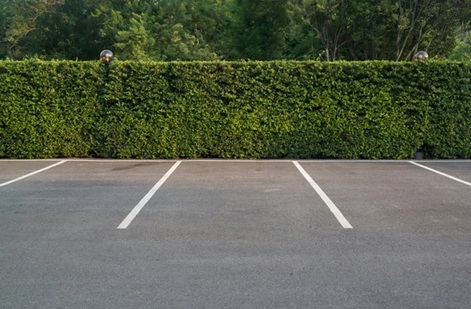
A parking lot is one of the most overlooked business assets until it starts failing. Cracks spread, water pools, lines fade, and suddenly customers question the professionalism of the entire property. In our work evaluating commercial pavement projects, we have seen one mistake repeat more than any other. That is hiring a contractor based on price instead of competence. Choosing the right contractor determines whether your lot lasts fifteen years or needs replacement in less than five years. When the goal is a durable, compliant surface designed for heavy traffic, the decision must center on experience, process, and accountability, especially when investing in professional asphalt for a high-use commercial environment.
Finding the right contractor is not difficult, but it does require discipline. The best operators rarely advertise aggressively. They rely on repeat clients, municipal references, and performance records. The challenge is learning how to separate skilled pavement specialists from crews that simply own paving equipment.
Why Contractor Selection Matters More Than Materials
Asphalt quality matters, but installation matters more. Research indexed by the Transportation Research Board shows that poor subgrade compaction and insufficient drainage design are major contributors to premature pavement failures. These mechanisms allow water infiltration and reduce structural integrity, which accelerates distress in paved surfaces such as commercial lots. A parking lot that looks perfect on day one can deteriorate quickly if the base is poorly prepared or the asphalt is placed at incorrect thickness.
Based on experience reviewing warranty claims, most failures originate below the surface. Poor subgrade stabilization, incorrect slope, and rushed compaction create weaknesses that no sealcoat can hide later. This is why contractor evaluation should focus first on engineering competence and process control, not surface appearance alone.
Homeowners across the island are re-evaluating what materials make sense for driveways in a hot, coastal environment. To see why one option is gaining traction fast, check out Why Asphalt Construction is Becoming So Popular For Oahu, HI Driveways.
Start With Market Knowledge
Every region presents different pavement challenges. In Florida, moisture management dominates design decisions. In Texas, heat resistance and oxidation control matter most. In northern states, freeze thaw cycles dictate base depth and asphalt formulation.
A contractor who performs well in Phoenix may struggle in Cleveland. Local knowledge influences mix selection, drainage design, and joint construction. In our work across Ohio and western Pennsylvania, we routinely see contractors underestimate frost depth, leading to early cracking within three winters.
The smarter approach is to ask who services municipal roads, school districts, and logistics centers in your region. These organizations track performance carefully and remove underperforming vendors quickly. Reputation in public infrastructure carries more weight than residential testimonials.
What Credentials Actually Matter
Licensing alone is not enough. Many paving companies hold basic contractor licenses but lack advanced pavement certifications. Look for affiliation with recognized organizations such as the National Asphalt Pavement Association and state asphalt associations.
- Request documentation showing:
- Years operating under the same company name
- Supervisor certifications for compaction and quality control
- Safety program records and OSHA compliance history
- Bonding capacity suitable for commercial scale projects
According to the Federal Highway Administration, contractor quality control programs are used to ensure that materials and construction meet performance specifications, reducing the risk of non-conforming work compared to operations without documented testing and inspection procedures.
Demand Process Transparency Before Pricing
In our consulting work, the strongest predictor of project success is how well a contractor explains their process before work begins. Skilled contractors discuss base preparation, drainage slope, lift thickness, compaction testing, and joint construction without hesitation.
Ask for a written scope that includes:
- Existing pavement evaluation method
- Subgrade preparation plan
- Asphalt thickness by traffic classification
- Compaction testing protocol
- Drainage and slope targets
- Striping and accessibility compliance
If a bidder cannot explain these details clearly, they likely do not control them consistently in the field.
Understand the Tradeoffs in Asphalt Design
There is no single best asphalt mix for all parking lots. Heavier traffic requires thicker structural sections. Retail centers benefit from smoother surface mixes for appearance. Industrial yards prioritize rut resistance over aesthetics.
Tradeoffs matter:
- Thicker sections cost more but extend service life
- Higher binder content improves flexibility but increases oxidation risk
- Tighter aggregate gradation improves smoothness but reduces drainage capacity
A credible contractor explains why a particular design fits your usage profile. Generic specifications usually signal limited engineering involvement.
Common Mistakes That Lead to Expensive Failures
Based on years reviewing failed projects, three mistakes usually appear. First, owners accept thin overlays over unstable bases. This hides cracks temporarily but accelerates reflection cracking within two years. Second, drainage is ignored. Standing water weakens base layers faster than traffic loads. Third, warranty terms are misunderstood. Many warranties exclude base failure, which is where most problems originate.
Avoid contractors who promise unrealistic lifespans without inspecting subgrade conditions. No surface layer can compensate for structural weakness below.
Why Process Control Beats Low Bids
Low bids often reflect rushed schedules, undercompacted lifts, or recycled material ratios beyond recommended limits. In our field audits, undercompaction is the leading cause of early rutting and alligator cracking.
Ask whether the contractor performs density testing during placement. Contractors who test and adjust in real time deliver measurably longer pavement life. Those who rely on visual inspection alone increase long-term maintenance costs substantially.
Local Conditions Change Everything
In coastal regions, salt exposure accelerates binder aging. In desert climates, ultraviolet degradation dominates. In northern markets, frost heave drives structural requirements.
In Chicago, we routinely recommend thicker bases than in Nashville for identical traffic loads. Climate data and soil classification influence every design decision. A contractor who ignores these variables produces inconsistent results.
How to Verify Performance Without Marketing Claims
The strongest indicator of contractor quality is project history. Request addresses of parking lots completed five to ten years ago. Visit them. Look for cracking patterns, joint separation, drainage performance, and surface oxidation.
Ask property managers how the pavement performed through winters and heavy traffic seasons. Marketing brochures rarely reflect long-term durability.
Final Advice From the Field
The right contractor protects your capital investment, reduces maintenance cycles, and preserves the image of your property. The wrong one creates recurring repairs, liability exposure, and premature replacement.
Seek guidance from professional contractors who explain process clearly, document quality control, understand local conditions, and demonstrate proven performance. Price matters, but performance matters more.
Img Source : https://depositphotos.com/






