
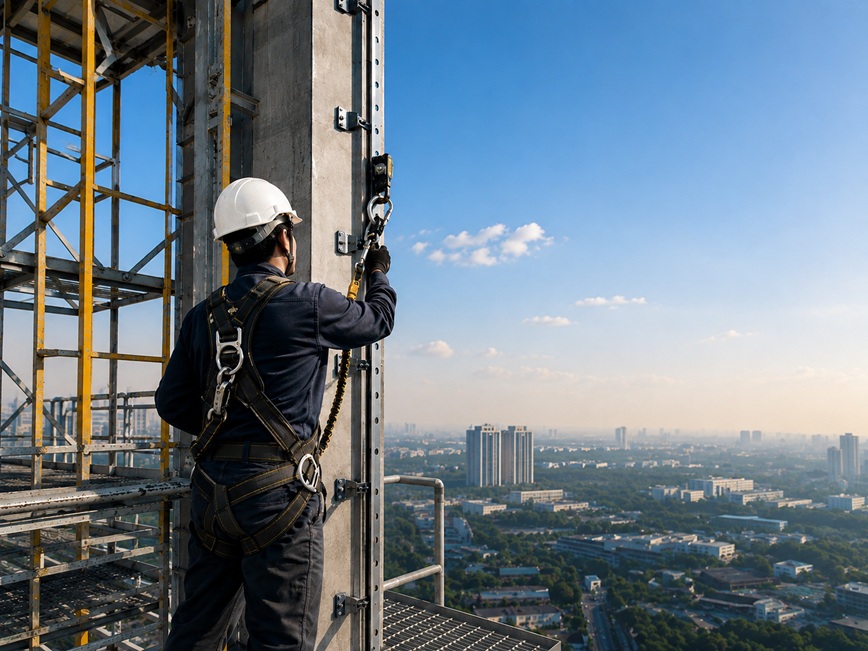
Working at height on towers and elevated structures exposes workers to fall hazards that require carefully selected and properly installed protection measures. Vertical lifeline systems provide workers with a means of connecting their personal fall protection equipment to a continuous or segmented lifeline while climbing ladders, towers, masts and other vertical access structures.
What Is a Vertical Lifeline System?
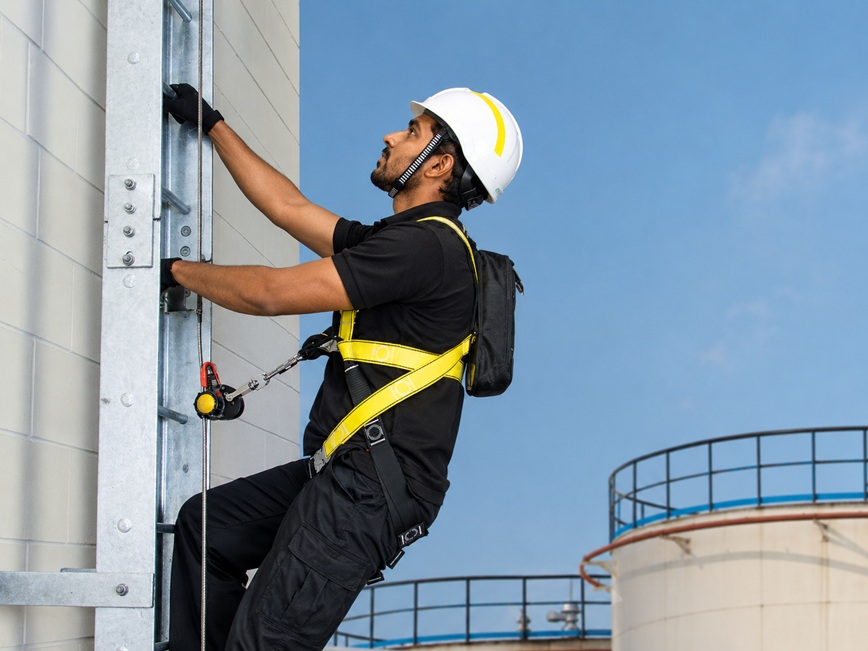
A vertical lifeline system is a fall protection arrangement installed along a vertical climbing path. It generally consists of a vertical lifeline, anchorage points, connectors and a guided fall arrester or similar device that connects the worker’s harness to the lifeline.
The worker attaches a full-body harness to the fall arrester. As the worker climbs, the device travels along the lifeline. If the worker slips or falls, the fall arrester is designed to engage and limit the fall, subject to the performance characteristics of the complete system.
Vertical lifelines can be installed on:
- Communication towers
- Transmission towers
- Industrial chimneys
- Wind turbine towers
- Water tanks
- Building ladders
- Utility structures
- Access towers
- Elevated platforms
- Bridges and infrastructure structures
- Industrial plants
The system is particularly useful where workers need to repeatedly access elevated areas for inspection, maintenance, repair or installation.
Why Vertical Lifeline Systems Are Important
Falls from height can result from loss of balance, ladder failure, wet surfaces, structural deterioration, equipment failure or worker movement outside a protected area.
A vertical lifeline provides a continuous connection between the worker and the fall protection arrangement while climbing. Instead of relying only on manual movement of a lanyard from one anchorage point to another, a guided fall arrester can travel with the worker.
The protection arrangement can therefore support safer access to elevated work locations when it has been properly designed, installed, inspected and used.
However, a vertical lifeline should not be considered a substitute for eliminating work at height wherever possible. The preferred approach is to first determine whether the work can be performed from ground level or from a protected platform. Where work at height is unavoidable, appropriate collective and personal fall protection measures should be selected.
Main Components of a Vertical Lifeline System
A vertical lifeline is not a single piece of equipment. It is a combination of components that must function together.
1. Vertical Lifeline
The lifeline forms the primary travel path for the guided fall arrester. Depending on the system, it may consist of a flexible wire rope, synthetic rope or rigid rail.
Wire-rope systems are widely used on towers and ladders because they can be installed over considerable vertical distances. Rigid rail systems are also used where the structure and access arrangement require a fixed track.
The selection depends on factors such as:
- Structure geometry
- Height of the climbing route
- Environmental exposure
- Corrosion conditions
- Expected frequency of use
- System manufacturer requirements
- Installation arrangement
- Required fall clearance
2. Top Anchorage
The upper anchorage transfers forces from the lifeline into the supporting structure.
This connection is particularly important because the anchorage must be compatible with the structure and the complete fall protection system. The supporting member should have adequate capacity for the loads associated with the system.
The anchorage should not simply be attached to a convenient structural member without engineering assessment or following the manufacturer’s installation requirements.
3. Intermediate Supports
Long vertical lifelines may require intermediate supports to maintain alignment and control movement of the cable.
The number and spacing of supports depend on the particular system. Excessive deviation, incorrect spacing or poorly installed supports can affect the movement of the fall arrester.
4. Guided Fall Arrester
The guided fall arrester connects the worker’s harness to the vertical lifeline.
During normal climbing, the device follows the worker. If a sudden downward movement occurs, the device engages according to its design.
Different lifeline manufacturers use different guided devices, so components should not be mixed unless compatibility has been established.
5. Full-Body Harness
The harness provides the connection between the worker and the fall protection system.
A suitable harness should fit the worker correctly and be used according to the manufacturer’s instructions. Harnesses require regular inspection for cuts, abrasion, damaged stitching, deformation, chemical damage and other defects.
6. Connectors
Connectors provide the connection between the harness, fall arrester and other components where required.
Carabiners, hooks and other connectors must have the required characteristics for the application and should be compatible with the equipment to which they are attached.
7. Structural Attachments
Brackets, clamps and other structural attachments secure the lifeline to the tower, ladder or supporting structure.
Their design becomes particularly important when the structure is exposed to wind, vibration, corrosion or repeated worker movement.
Vertical Lifeline Systems for Towers
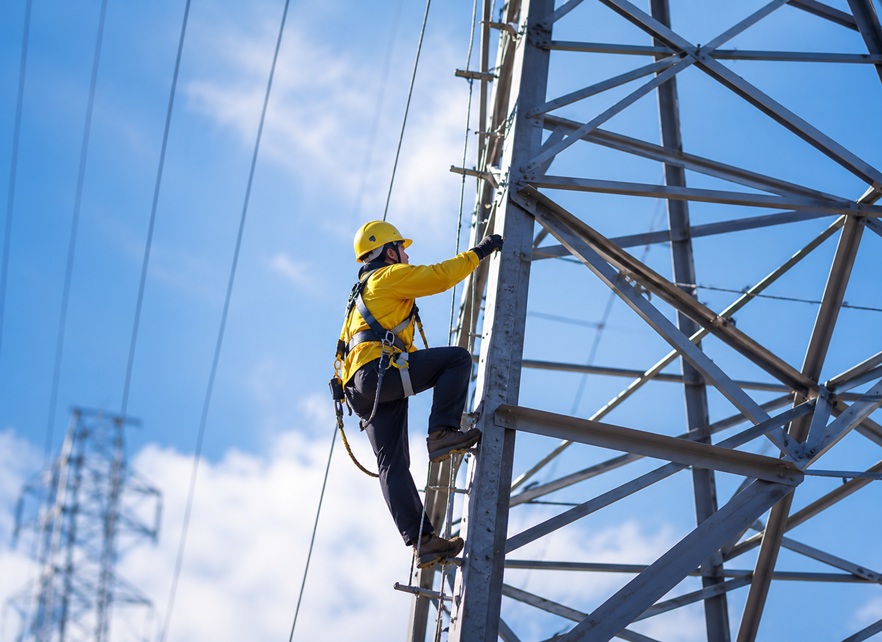
Telecommunication and transmission towers often have ladders or climbing routes extending many metres above ground level. Workers may need to climb these structures to install equipment, inspect components or carry out maintenance.
A vertical lifeline can be installed along the climbing route so that the worker remains connected while ascending and descending.
Tower applications require special attention to:
- Tower geometry
- Ladder configuration
- Cable routing
- Structural capacity
- Corrosion
- Wind exposure
- Lightning exposure
- Worker clearance
- Rescue access
- Equipment compatibility
The lifeline should follow a route that allows the worker to climb without creating unnecessary obstruction or contact with other tower components.
Vertical Lifelines for Elevated Structures
Vertical lifelines are also used on industrial and infrastructure structures where workers need regular access to elevated locations.
For example, an industrial chimney may require access for inspection or maintenance. A vertical lifeline installed alongside the access ladder can provide fall protection during climbing.
Similarly, vertical access systems can be used on:
- Storage tanks
- Process structures
- Cooling towers
- Elevated machinery platforms
- Building service areas
- Utility structures
- Wind turbine towers
The design needs to consider the specific environment. Industrial structures may expose equipment to chemicals, heat, moisture, dust or corrosive atmospheres. These conditions can influence material selection and inspection frequency.
Flexible Cable vs Rigid Rail Systems
Vertical fall protection systems can broadly be divided into flexible lifeline and rigid rail arrangements.
Flexible Lifelines
Flexible lifelines commonly use wire rope or other flexible materials.
Advantages can include:
- Adaptability to different structures
- Relatively straightforward installation
- Suitability for long climbing routes
- Compatibility with many ladder configurations
However, the system can be affected by cable tension, intermediate supports, environmental exposure and installation geometry.
Rigid Rail Systems
Rigid rail systems use a fixed track or rail along the climbing route.
Potential advantages include controlled movement and reduced cable deflection. They may be appropriate where a rigid climbing route can be incorporated into the structure.
The choice between cable and rail should be based on the structure, working conditions, manufacturer’s design requirements and applicable regulations.
Important Design Considerations
Designing a vertical lifeline involves more than selecting a cable and fixing it to a tower.
Structural Capacity
The supporting structure and attachment points must be capable of resisting the forces generated during a fall event.
The engineer should assess the relevant structural members, connections and anchorage arrangement.
For older towers, corrosion, fatigue, previous modifications and deterioration should also be considered.
Fall Clearance
Adequate clearance below the worker is essential.
The required clearance depends on several factors, including:
- Worker position
- Lifeline configuration
- Fall arrester characteristics
- Harness behaviour
- System elongation
- Possible deflection
- Connection arrangement
- Manufacturer-specified requirements
A worker can still strike a lower structure even when connected to a fall protection system if the available clearance is inadequate.
Swing Fall
A vertical lifeline should generally be aligned with the climbing path to reduce the possibility of lateral movement.
If the worker moves significantly away from the lifeline, a fall can produce a pendulum or swing-fall effect. This can cause the worker to strike the structure or another obstacle.
Structural Movement
Towers and elevated structures may experience movement due to wind, thermal expansion, vibration and operational loads.
The lifeline system should accommodate relevant structural movement without compromising its intended function.
Corrosion Protection
Outdoor towers are frequently exposed to rain, humidity and atmospheric pollutants.
Metal components should therefore have appropriate corrosion resistance for the environment. Galvanised steel and stainless-steel components are used in different applications depending on system requirements and exposure conditions.
Inspection remains necessary even where corrosion-resistant materials are used.
Installation of Vertical Lifelines
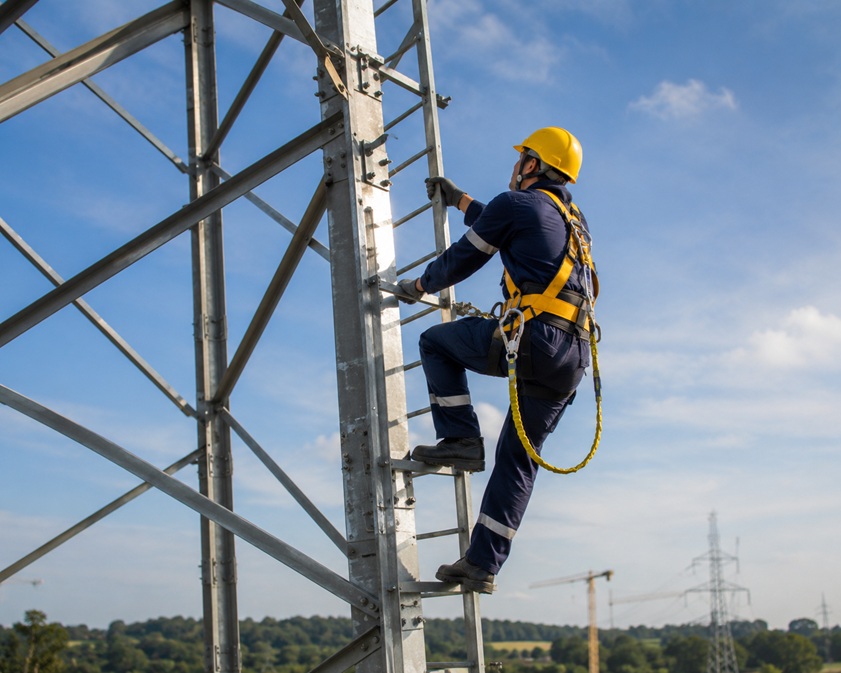
Installation should follow the system manufacturer’s instructions and applicable requirements.
A typical installation process includes:
- Surveying the climbing route.
- Inspecting the supporting structure.
- Identifying suitable anchorage locations.
- Determining the lifeline route.
- Installing structural brackets or supports.
- Installing the vertical lifeline.
- Installing the top and intermediate connections.
- Installing the compatible guided fall arrester.
- Checking system alignment and connections.
- Inspecting the completed installation.
- Providing user instructions and training.
For an existing tower, structural condition should be evaluated before installing the system. Attaching a fall protection system to a deteriorated or inadequately designed member can create additional risk.
Training for Workers
Even a correctly designed lifeline cannot provide effective protection if workers do not know how to use it.
Workers should understand:
- How to wear and adjust the harness
- How to connect the fall arrester
- How the guided device operates
- How to climb while remaining connected
- How to identify damaged equipment
- Fall clearance requirements
- Potential swing-fall hazards
- Emergency procedures
- Rescue procedures
Training should also address the specific tower or elevated structure rather than relying only on general classroom instruction.
Rescue Planning
Fall protection planning should include a rescue procedure.
After a fall, a worker may remain suspended in the harness and require prompt assistance. Simply providing a lifeline does not constitute a complete rescue plan.
A rescue plan should identify:
- Rescue equipment
- Trained rescue personnel
- Access routes
- Communication arrangements
- Emergency contacts
- Rescue methods
- Site-specific hazards
- Availability of suitable lifting or lowering equipment
For towers and other remote structures, rescue planning becomes particularly important because emergency response may take longer than at ground-level work locations.
Standards and Compliance
Vertical lifeline systems should be selected and installed in accordance with the applicable occupational safety regulations, national standards and manufacturer’s requirements.
Requirements can vary according to the country, application and type of equipment. In India, project teams should identify the relevant provisions applicable to the specific workplace and equipment rather than relying on a generic fall protection arrangement.
For internationally sourced equipment, standards such as EN, ANSI/ASSP and CSA may also be relevant depending on the product and project requirements.
Compliance should cover the complete system, including the lifeline, anchorage, connectors, fall arrester, harness and supporting structure.
Conclusion
Vertical lifeline systems provide a practical fall protection solution for workers who need to climb towers and other elevated structures. Their applications range from telecommunications towers and industrial chimneys to wind turbines, utility structures and building access ladders. However, effective protection depends on the complete system, not simply the presence of a cable or rail. Structural capacity, anchorage, fall clearance, equipment compatibility, corrosion protection, inspection, worker training and rescue planning all need to be considered.






