
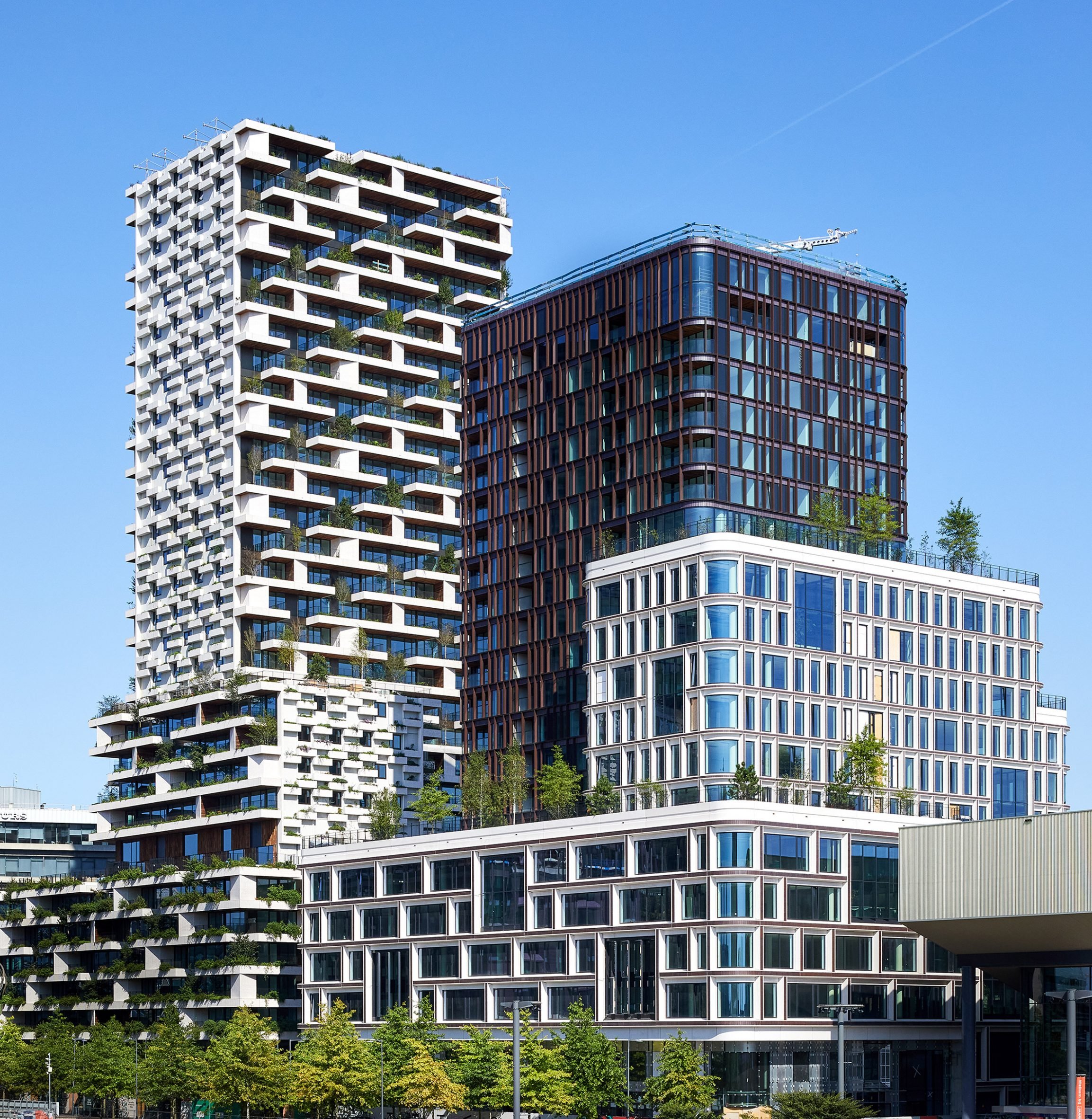
Stefano Boeri Architetti has completed the Wonderwoods Vertical Forest, a 104-metre-tall mixed-use tower in Utrecht, the Netherlands. Located in the newly planned car-free Beurskwartier district, the 31-storey tower is part of the larger Wonderwoods development, which also includes a smaller, tree-covered block by local studio MVSA. The project continues the Vertical Forest typology pioneered in Milan in 2014 and represents the second implementation in the Netherlands following the Trudo Vertical Forest in Eindhoven.
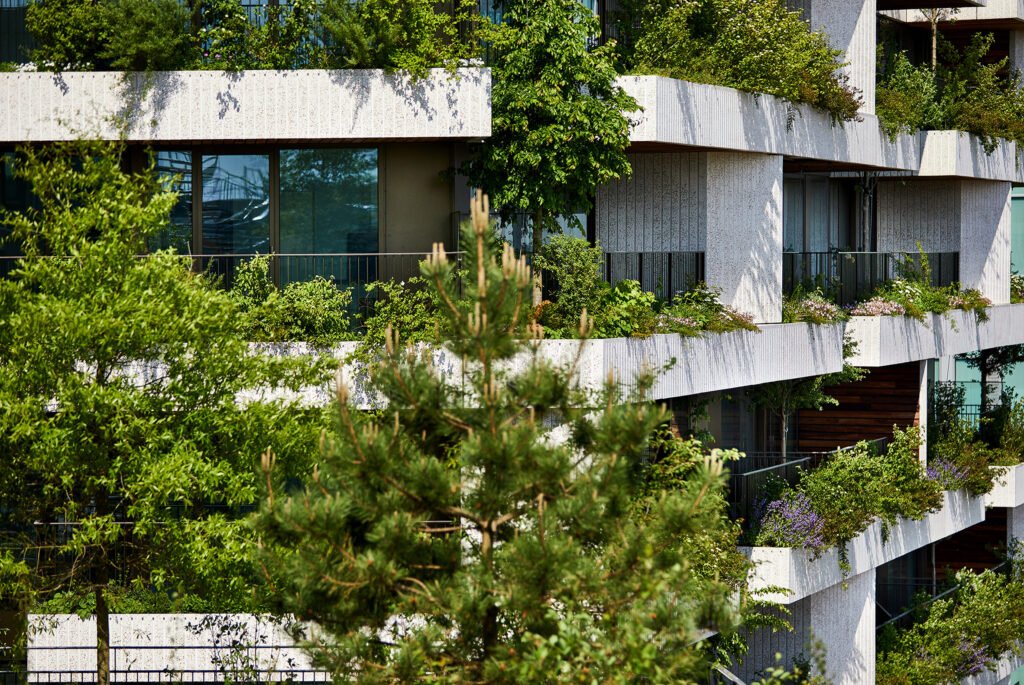
Wonderwoods is designed to integrate residential, commercial, and public spaces while promoting urban biodiversity. The tower’s plant-covered balconies and green terraces provide both environmental and social benefits, creating a vertical ecosystem that interacts with the city’s urban fabric.
Residential and Mixed-Use Construction
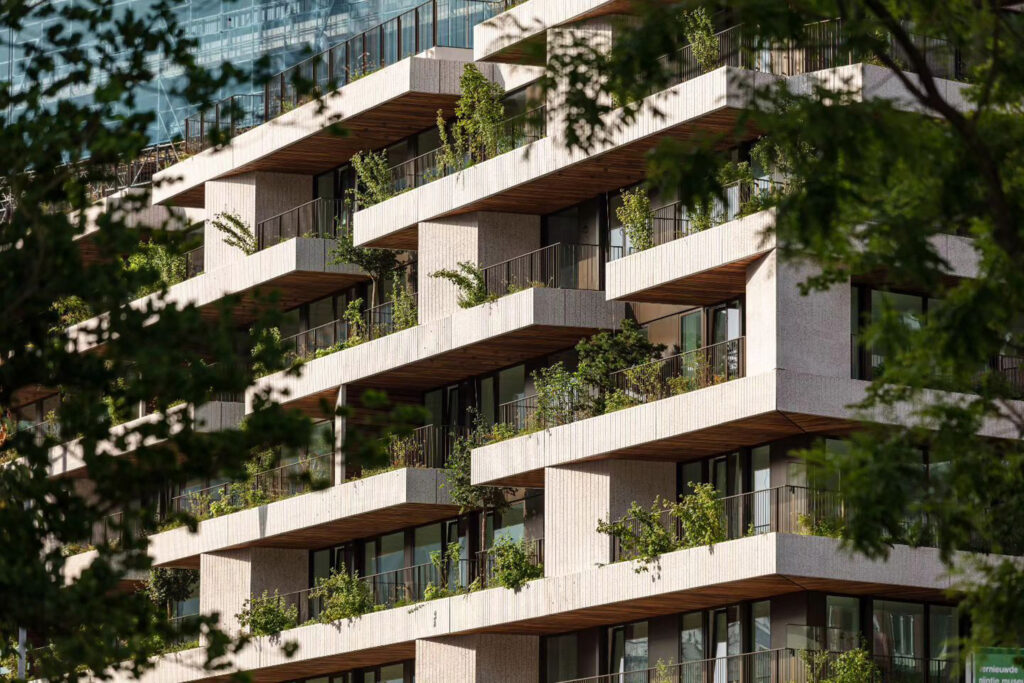
The building accommodates 200 apartments of varying sizes. Each unit has access to at least one balcony planted with trees or shrubs, arranged in a stepped layout to ensure sunlight reaches both residents and vegetation. Beyond residential spaces, Wonderwoods includes ground-level shops, restaurants, and leisure areas, all connected to bicycle parking and public squares.
A bridge on the seventh floor links the Vertical Forest to the adjacent MVSA building, providing additional public gardens and dining terraces. This connection ensures that the greenery extends beyond private balconies, making it accessible to all city residents and visitors.
Architectural Design and Façade
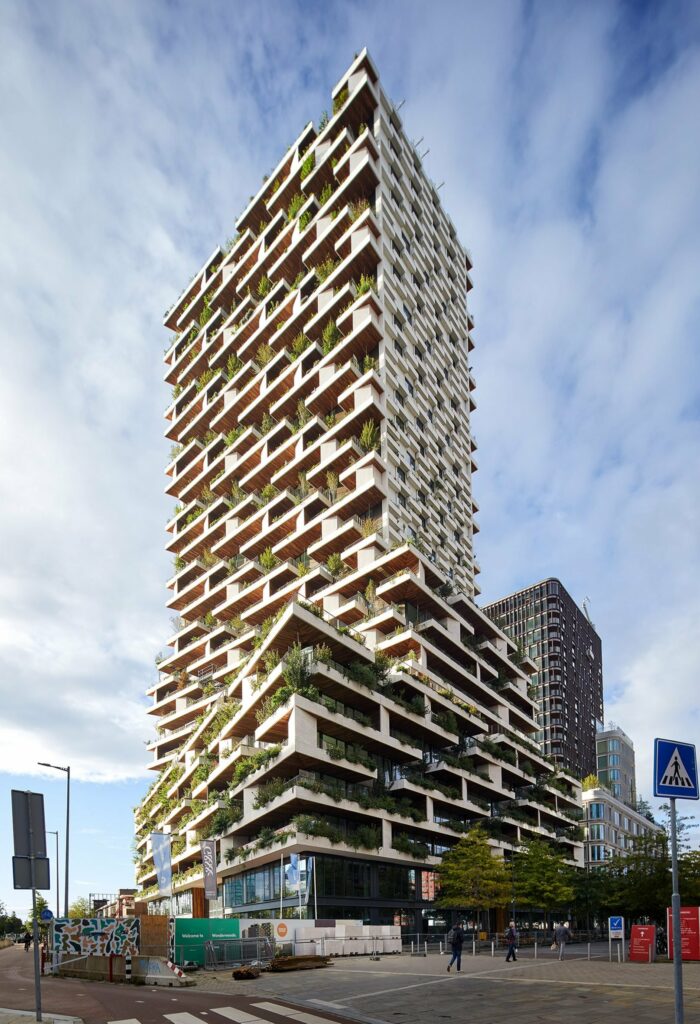
The tower continues Boeri’s signature approach of integrating architecture with natural systems. The façade and balcony design aim to support plant growth while ensuring structural stability.
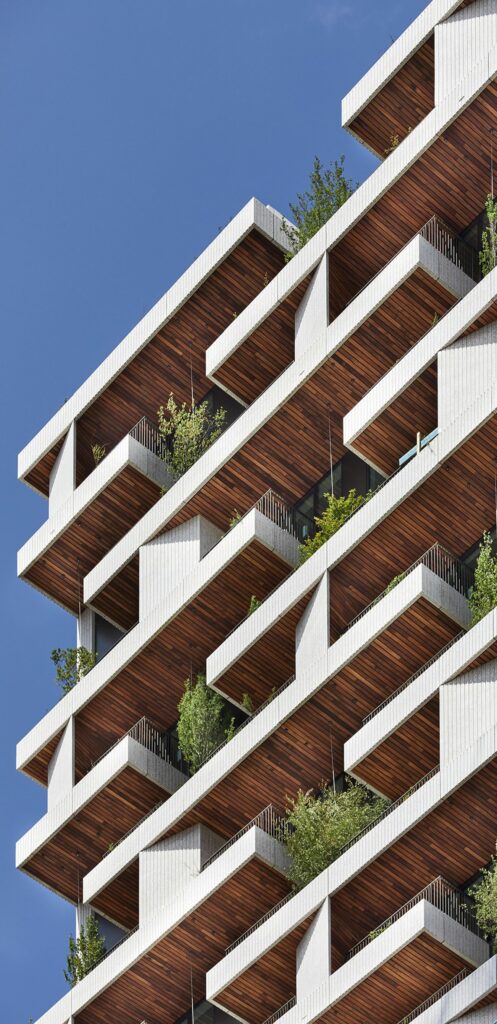
- Stepped Balconies: Arranged to maximize sunlight and provide sufficient space for tree growth.
- Materiality: Prefabricated concrete and steel structure with white concrete and terrazzo finishes. Balcony undersides feature dark wood planks.
- Biodiversity Elements: Circular openings in the façades create bird nesting areas, while bug hotels are integrated in larger communal green zones.
- Dynamic Appearance: Seasonal changes in foliage density, sunlight, and plant growth alter the tower’s visual composition throughout the year.
Structural and Construction Features
Wonderwoods employs a combination of traditional construction methods and prefabrication:
- Steel and concrete form the structural framework, supporting heavy plant-laden balconies.
- Prefabricated façade and balcony modules allow precise assembly and efficient construction.
- Balconies and terraces are designed to handle soil weight, irrigation systems, and plant growth without compromising safety.
This method allows the tower to combine a robust structure with the flexibility needed for living, changing greenery.
Environmental and Sustainability Systems
The tower is designed as an urban ecosystem that integrates water management, irrigation, and biodiversity support:
- Irrigation: A centralized system with sensors monitors plant water needs and schedules pruning interventions.
- Rainwater Management: Collected rainwater is stored underground and reused for irrigation.
- Biodiversity Support: The building accommodates bird nesting areas, insect habitats, and plant diversity.
- Urban Climate Contribution: Extensive greenery reduces the urban heat island effect and improves air quality.
These systems ensure the tower functions as a self-sustaining ecological unit, mitigating environmental impact in the dense urban context.
Urban Integration and Social Access
Wonderwoods is designed to blend with the urban fabric while offering public access:
- Ground-floor shops and leisure spaces connect directly to pedestrian areas and bicycle parking.
- Public gardens on the bridge to the MVSA building create recreational spaces for residents and visitors.
- The project demonstrates how vertical greenery can be integrated with public and private urban functions, supporting both social interaction and environmental performance.
Key Highlights
- 31-storey mixed-use tower with 200 apartments
- Stepped plant-covered balconies for sunlight and tree growth
- Prefabricated concrete and steel structure with terrazzo and wood finishes
- Biodiversity-supporting elements, including bird nesting areas and bug hotels
- Centralized sensor-based irrigation system
- Rainwater collection and reuse for irrigation
- Publicly accessible gardens and restaurant terraces
- Dynamic façade reflecting seasonal plant growth
Conclusion
The Wonderwoods Vertical Forest illustrates a high-rise model where residential, commercial, and public functions coexist with greenery. It demonstrates a practical approach to urban sustainability, biodiversity, and community engagement. By integrating water management, ecological support, and accessible public spaces, the tower offers a scalable example for future urban developments across Europe and beyond.
Image- dezeen-The photography is by Milan Hofmans






