
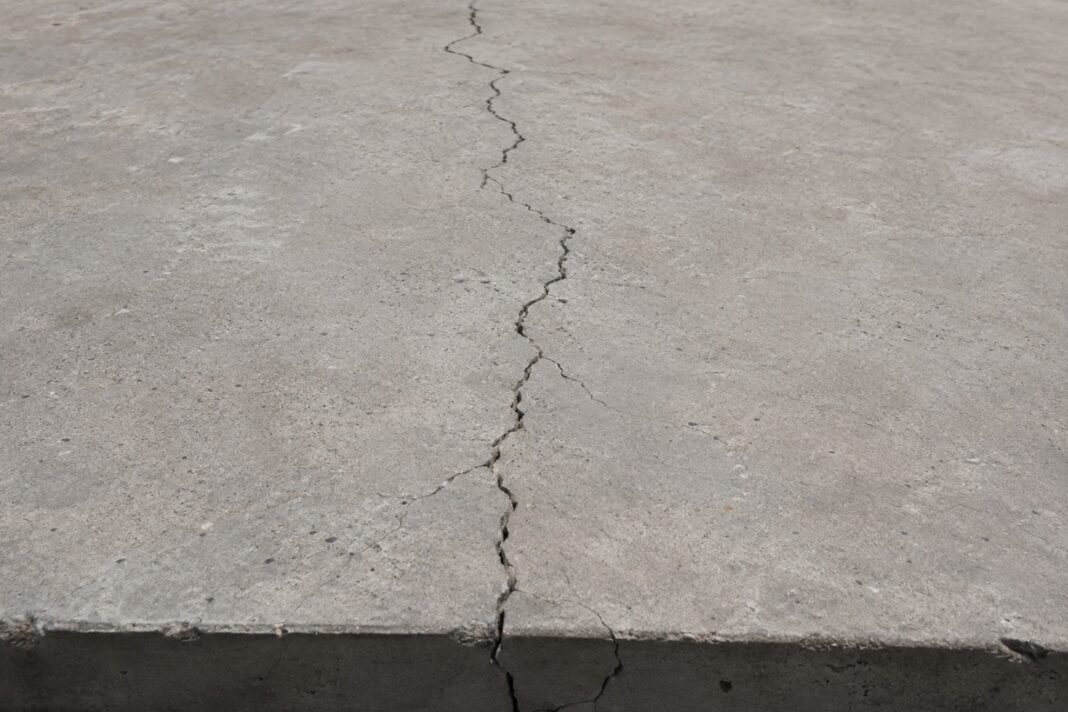
Concrete slabs are among the most widely used structural elements in residential, commercial, industrial, and infrastructure projects. They form floors, roofs, pavements, parking decks, bridge decks, warehouse floors, and industrial platforms. Although concrete is highly durable and capable of carrying heavy loads, it is inherently weak in tension. When tensile stresses exceed the concrete’s capacity, cracks begin to develop. One of the most common structural cracking issues observed in slabs is flexural cracking.
What Are Flexural Cracks in Concrete Slabs?
Flexural cracks are cracks that develop in concrete slabs due to bending or flexural stresses. When a slab bends under load, one side experiences compression while the opposite side experiences tension. Since concrete has low tensile strength, cracks form in the tension zone once the tensile stress exceeds the concrete’s cracking capacity.
In reinforced concrete slabs, steel reinforcement is provided to resist tensile stresses and control crack widths. However, when reinforcement is insufficient, improperly placed, or when loads exceed design capacity, visible flexural cracks can appear.
These cracks usually:
- Develop perpendicular to the direction of bending
- Start at the tension face of the slab
- Extend upward toward the compression zone
- Increase in width with increasing load or deflection
In simply supported slabs, flexural cracks commonly appear at the bottom surface near mid-span. In cantilever slabs, they typically appear at the top surface near the fixed support.
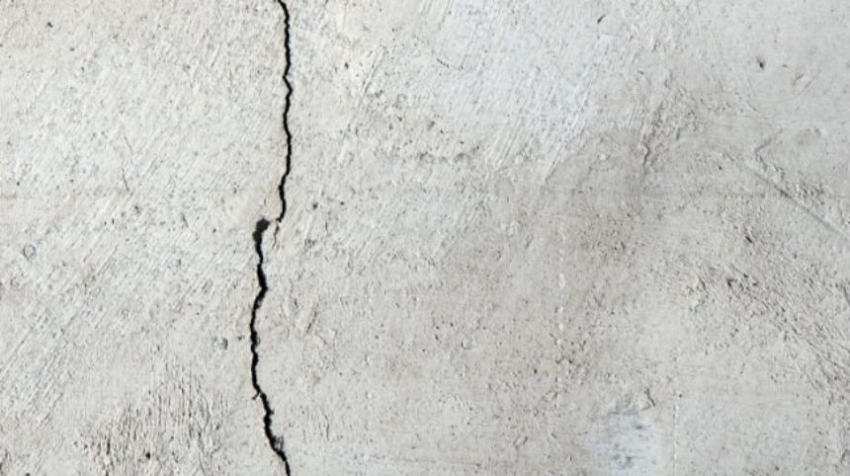
Primary Causes of Flexural Cracking in Concrete Slabs
Flexural cracking occurs due to a combination of structural design deficiencies, loading conditions, material behavior, and construction practices.
1. Excessive Structural Loading
One of the primary causes of flexural cracks is overloading beyond the slab’s design capacity.
Excessive loading may result from:
- Heavy machinery installation
- Storage loads exceeding design limits
- Change in building usage
- Concentrated point loads
- Vehicle loads in parking decks
- Construction staging loads
When the applied bending moment exceeds the slab’s flexural strength, cracks develop in the tension zone.
2. Insufficient Reinforcement
Reinforcement steel controls tensile stresses and limits crack widths. If the slab contains inadequate reinforcement, the concrete alone must resist tensile stresses, leading to cracking.
Common reinforcement issues include:
- Undersized reinforcement bars
- Insufficient reinforcement spacing
- Incorrect reinforcement placement
- Missing reinforcement
- Poor anchorage length
- Improper lap splicing
Insufficient steel reinforcement significantly increases the likelihood of flexural cracking.
3. Poor Concrete Quality
Concrete strength plays a major role in resisting tensile and compressive stresses.
Low-quality concrete may result from:
- High water-cement ratio
- Poor mix design
- Inadequate compaction
- Honeycombing
- Segregation
- Improper curing
Weak concrete develops lower tensile capacity, making slabs more vulnerable to flexural cracking.
4. Excessive Deflection
Large slab deflections generate additional tensile stresses, causing cracks to widen over time.
Excessive deflection may occur due to:
- Thin slab thickness
- Long spans
- Insufficient reinforcement
- Creep effects
- Continuous overloading
Deflection-related flexural cracks are especially common in long-span suspended slabs.
5. Improper Support Conditions
Changes in support behavior can introduce unexpected bending stresses into slabs.
Examples include:
- Differential settlement
- Uneven foundation movement
- Beam deflection
- Column displacement
- Partial support failure
Improper support conditions alter load distribution and may cause localized flexural cracking.
6. Shrinkage and Thermal Effects
Concrete undergoes volume changes due to drying shrinkage and temperature variation. Restrained shrinkage or thermal movement can induce tensile stresses that combine with flexural stresses.
This often results in:
- Wider cracks
- Early-age slab cracking
- Random crack propagation
- Increased crack frequency
7. Inadequate Construction Practices
Poor workmanship during slab construction can significantly contribute to flexural cracking.
Common construction-related causes include:
- Improper bar placement
- Inadequate concrete cover
- Poor vibration
- Cold joints
- Early formwork removal
- Premature loading
Construction defects weaken slab performance and increase crack susceptibility.

Common Locations of Flexural Cracks
Flexural cracks may occur in various slab systems, including:
- Residential floor slabs
- Industrial warehouse floors
- Suspended RCC slabs
- Parking decks
- Bridge decks
- Pavements
- Podium slabs
- Roof slabs
- Airport pavements
- Commercial building floors
The crack location usually depends on slab support conditions and load distribution.
Typical Flexural Crack Patterns
Understanding crack patterns helps engineers identify the root cause of cracking and evaluate the structural behavior of concrete slabs under different loading conditions.
1. Mid-Span Flexural Cracks
Mid-span flexural cracks typically develop near the center portion of simply supported slabs where bending moments are at their maximum. These cracks form because the bottom surface of the slab experiences tensile stress under loading, causing vertical cracks that usually run perpendicular to the slab span. They are generally wider at the tension face and may increase in width if loading conditions become more severe or reinforcement is inadequate.
2. Support Zone Cracks
Support zone cracks commonly occur in continuous slabs and cantilever slabs where negative bending moments create tensile stresses near the top surface. These cracks usually appear close to beams, columns, or fixed supports and often run parallel to the support line. Improper reinforcement placement, insufficient top steel, or excessive loading near supports can contribute to the formation of these cracks.
3. Diagonal Flexural-Shear Cracks
Diagonal flexural-shear cracks develop when flexural stresses combine with high shear forces, particularly near slab supports or heavily loaded regions. These cracks appear in an inclined or diagonal pattern and often extend upward toward the compression zone of the slab. They are considered more critical than normal flexural cracks because they may indicate insufficient shear resistance or structural overloading.
4. Distributed Fine Cracks
Distributed fine cracks are multiple narrow cracks that form due to stress distribution within reinforced concrete slabs. These cracks are generally closely spaced and relatively small in width, indicating that the reinforcement is effectively controlling tensile stresses. In many cases, such cracks are considered acceptable if they remain within permissible design limits and do not affect durability or serviceability.

Signs and Symptoms of Flexural Cracking
Early identification of flexural cracking helps prevent structural deterioration.
Common signs include:
- Visible cracks on slab surface
- Cracks widening over time
- Sagging or excessive deflection
- Uneven floor surface
- Water seepage through cracks
- Rust stains indicating reinforcement corrosion
- Hollow sound near cracked areas
- Surface spalling around cracks
Effects of Flexural Cracks on Concrete Slabs
- Reduced Durability: Cracks allow moisture and chemicals to enter the concrete and accelerate deterioration.
- Reinforcement Corrosion: Water entering through cracks can corrode steel reinforcement and cause spalling.
- Increased Deflection: Cracked slabs may bend or sag excessively over time.
- Water Leakage: Flexural cracks can lead to seepage and leakage in slabs.
- Reduced Service Life: Uncontrolled cracks shorten the lifespan of the structure.
- Aesthetic Issues: Visible cracks affect the appearance and perceived safety of the slab.
Methods to Prevent Flexural Cracks in Concrete Slabs
- Proper Structural Design: Ensure adequate slab thickness, reinforcement detailing, load calculations, deflection control, and crack width limits.
- Adequate Reinforcement Placement: Maintain correct bar spacing, concrete cover, and proper support using bar chairs and shrinkage reinforcement.
- Use High-Quality Concrete: Use durable concrete with a low water-cement ratio, proper aggregate grading, and controlled slump.
- Proper Curing: Apply effective curing methods such as water curing, wet coverings, and curing compounds to reduce shrinkage.
- Control Construction Loads: Avoid premature loading, improper material stacking, and early formwork removal.
- Joint Planning and Detailing: Provide properly spaced expansion and control joints to reduce stress concentration.
- Monitor Environmental Conditions: Control hot weather effects using fogging, windbreaks, night concreting, and temperature management.
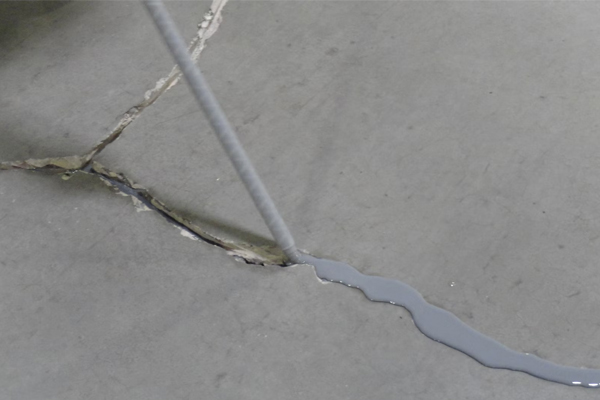
Repair Methods for Flexural Cracks
The repair method depends on crack width, structural significance, and service conditions.
1. Epoxy Injection
Epoxy injection is commonly used for structural flexural cracks.
Benefits include:
- Restores structural continuity
- Prevents moisture ingress
- Improves stiffness
Suitable for narrow structural cracks.
2. Routing and Sealing
Non-structural cracks can be routed and sealed using flexible sealants.
This prevents water penetration and surface deterioration.
3. Surface Grouting
Cementitious or polymer grouts may be used for moderate cracks and void filling.
4. External Strengthening
Structural strengthening methods include:
- Fiber-reinforced polymer (FRP) wrapping
- Steel plate bonding
- Additional reinforcement layers
These methods improve flexural capacity.
5. Concrete Overlay Systems
Overlays restore slab surface performance in deteriorated slabs.
Common systems include:
- Polymer-modified overlays
- Micro-toppings
- Fiber-reinforced overlays
6. Slab Replacement
Severely damaged slabs with extensive cracking may require partial or complete replacement.
Conclusion
Flexural cracks in concrete slabs are among the most common structural distress issues encountered in buildings and infrastructure projects. These cracks primarily result from bending stresses caused by loading, insufficient reinforcement, poor construction practices, deflection, or support movement. While controlled cracking is expected in reinforced concrete structures, excessive or widening flexural cracks can compromise durability, serviceability, aesthetics, and long-term structural performance.






