
Introduction
Few kitchen decisions feel as big as the cabinets. They cover more wall than almost anything else in the room, they take daily wear from hands, steam, and cooking grease, and replacing them means weeks of disruption and a long list of trades. Painting them instead can transform the same kitchen in far less time, but it is not the right answer for every set of cabinets.
The real question is not which option is better in general, but which one fits your cabinets, your layout, and your plans for the home. Painters such as HELLO Painting see both sides of this decision regularly, and the happiest homeowners are usually the ones who chose based on the condition of what they already have, not on a photo of someone else’s kitchen.
This article lays out a practical way to decide: what to check on your current cabinets, when painting makes sense, when replacement is the smarter move, and what a good cabinet painting process actually involves.
Start With the Boxes, Not the Doors
Cabinet doors get all the attention, but the boxes decide whether painting is worthwhile. Open the cabinets and look at the structure: are the boxes solid, square, and firmly fixed to the wall? Do drawers slide reasonably well, and do hinges hold doors level? If the structure is sound, a new finish can make the whole kitchen feel new, because the parts you interact with every day are in good shape underneath.
Water damage changes the calculation. Swelling around the sink, soft or crumbling material at the bottom of a cabinet, and a musty smell that does not go away can signal damage that paint will only cover up. The same is true of boxes that are warped, falling away from the wall, or so poorly built that doors will never sit straight. In those cases, painting buys appearance without fixing function, and replacement deserves serious thought.
Hardware matters too. Hinges and drawer slides can often be adjusted or replaced on their own, which is a much smaller job than replacing cabinets. If the only real problems are dated knobs and tired hinges, those are easy wins that pair well with a fresh finish.
Does the Layout Work?
Paint cannot fix a layout you dislike. If the kitchen workflow frustrates you every day, if there is nowhere sensible to put the things you use most, or if you plan to move walls and appliances, then replacement, as part of a larger remodel, is the honest path. Painting first and remodeling later means paying for a finish you will tear out.
On the other hand, if the layout works and only the look feels dated, painting is often the most efficient change you can make. A lighter color can brighten a dark kitchen, a consistent finish can unify cabinets added at different times, and updated hardware can complete a change that feels far bigger than the work involved.
Think about how long you plan to stay as well. A painted finish that refreshes a kitchen you enjoy is a sensible improvement whether you stay for years or sell sooner, because it updates the most visible surface in the room without the disruption of a full remodel. What matters is matching the investment to your plans, not overspending on a kitchen you intend to gut.
What Cabinet Painting Actually Involves
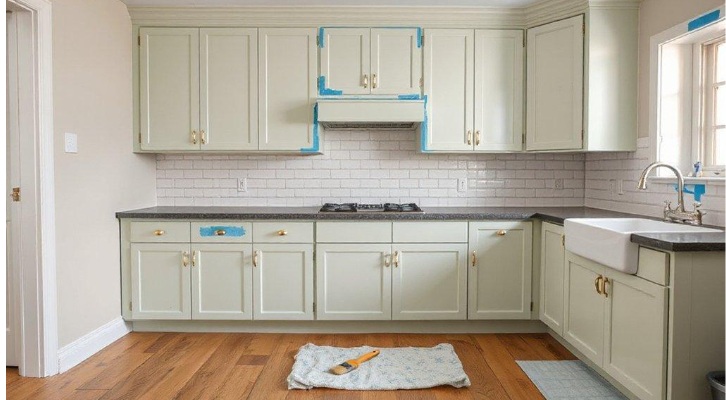
Good cabinet painting is mostly preparation. Doors and drawer fronts are usually removed and labeled, surfaces are cleaned to remove grease, sanded to give the new finish something to grip, and primed before the topcoats go on. Dust control and a clean spraying or brushing environment matter, because kitchens show every flaw in a finish. When you are weighing having existing cabinets professionally painted, ask how the painter handles cleaning, priming, curing time, and reassembly, since those steps decide whether the finish looks good in a month and still looks good in a year.
Expect the kitchen to be partly out of use during the work, even though it is far less disruptive than a replacement. Doors are off, contents may need to be moved, and freshly finished pieces need time to cure before they take daily knocks. A realistic schedule, agreed in advance, prevents most frustration.
Durability depends on daily habits after the work as well. Gentle cleaning, wiping up splashes promptly, and avoiding harsh abrasives will keep a painted finish looking good far longer than aggressive scrubbing. Ask what cleaning products are safe for the finish used, and keep that advice with your other household notes.
When Replacement Is the Smarter Move
Replacement earns its disruption when the structure is failing, the layout needs to change, or you want storage features that your current boxes simply cannot provide, such as deep drawers where fixed shelves now sit. It also makes sense when the cost of repairing widespread damage approaches the value of new cabinets, or when you are already remodeling the room around them.
Be wary of the middle path that tries to do everything at once: new doors on failing boxes, or a painted finish over damage that should have been repaired. Either approach can look fine on day one and disappoint quickly. A candid assessment of the boxes, given before you commit, is worth more than any brochure photo.
If you are unsure, get an in-person look at the cabinets with someone who will tell you plainly when painting is not enough. A painter who recommends replacement when the boxes are shot is giving you better advice than one who promises a perfect finish over failing structure.
Conclusion
Paint your cabinets when the boxes are sound, the layout works, and the goal is a fresh, updated kitchen without a full remodel. Replace them when the structure is failing, the layout needs to change, or a larger remodel is already planned. Most kitchens fall clearly on one side of that line once the boxes, the layout, and the damage are honestly assessed.
Start with the cabinets you have, not the kitchen you wish you had. Open the doors, check the boxes, live with the layout question for a week, and then choose the option that fixes what actually bothers you. That is how a kitchen project ends up feeling like money well spent rather than a compromise you notice every morning.






