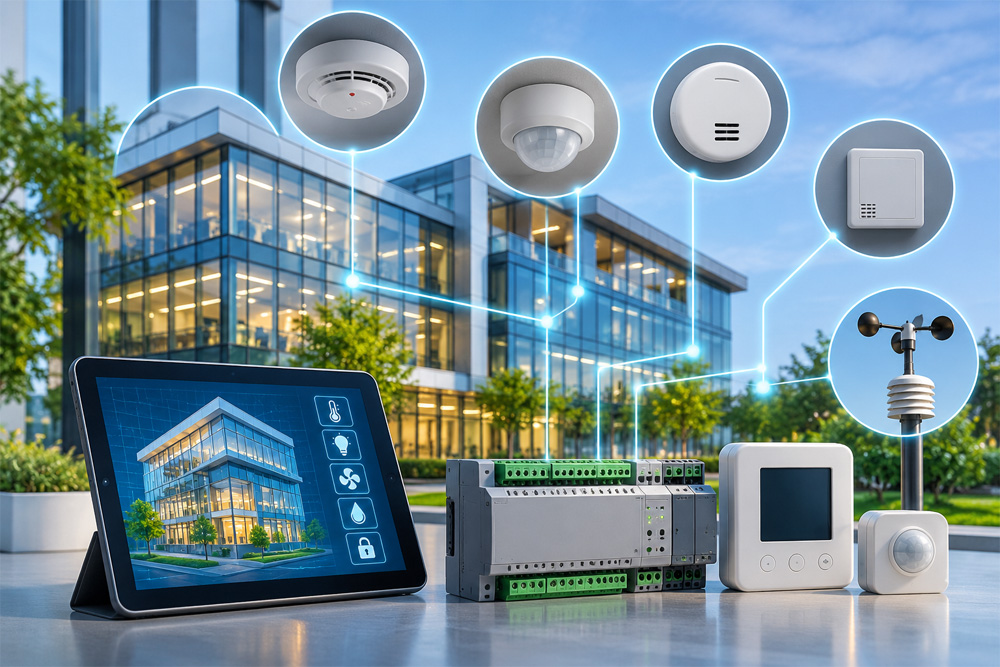
Building Automation Systems (BAS) are increasingly being adopted in commercial buildings, residential complexes, hospitals, hotels, airports, data centres and industrial facilities to monitor and control building operations. These systems integrate services such as heating, ventilation and air conditioning (HVAC), lighting, electrical distribution, access control and energy management through centralised or distributed control networks.
Sensors and controllers are two fundamental components of a building automation system. Sensors collect real-time information about environmental conditions, occupancy, equipment performance and energy consumption, while controllers process this information and execute programmed control actions. Their integration allows building services to respond automatically to changing operating conditions, improving occupant comfort, energy efficiency and operational management.
The performance of a building automation system depends on sensor accuracy, controller capacity, communication compatibility and proper installation. Understanding the different types of sensors and controllers, their functions, working principles and selection criteria is essential during system design, installation, commissioning and maintenance.