
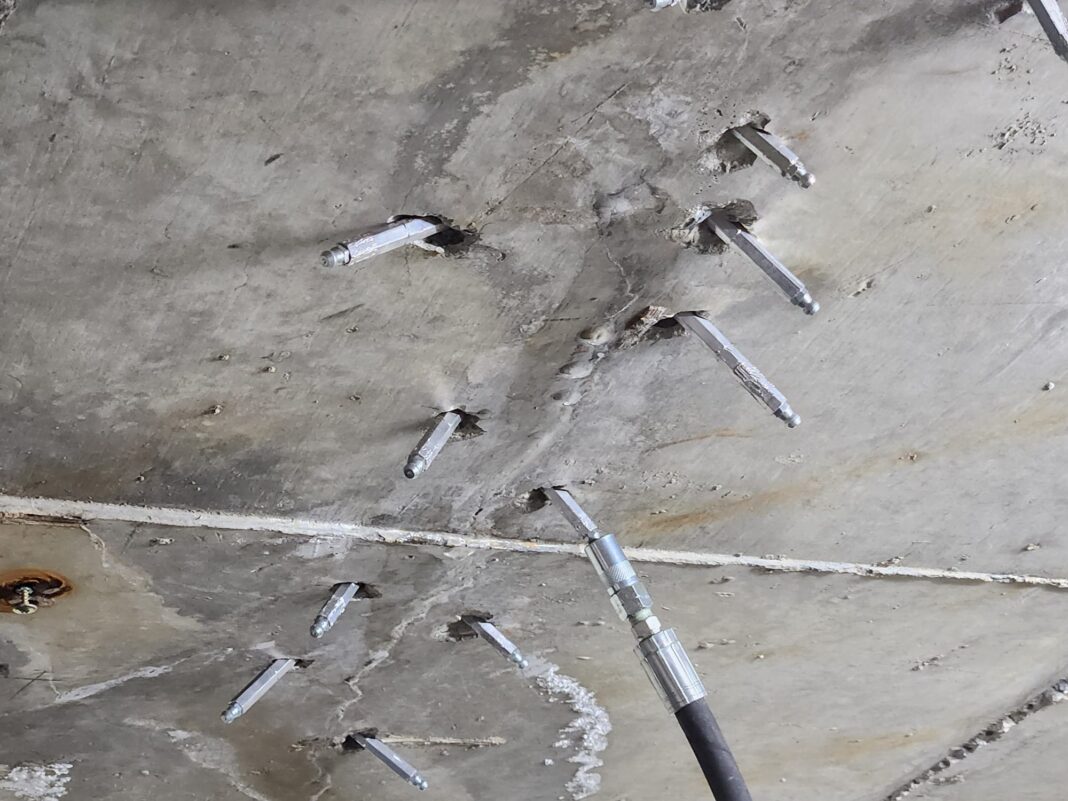
Cracks in RCC structures are a common challenge in modern high-rise buildings. With increasing urbanization and vertical construction, tall buildings are exposed to far more complex structural behavior compared to conventional low-rise structures. Factors such as wind load, differential settlement, thermal movement, construction sequencing, vibration, shrinkage, and long-span structural systems often contribute to cracking in concrete members over time.
In high-rise buildings, cracks are not only a durability concern but also a major issue affecting waterproofing performance, structural reliability, aesthetics, and long-term maintenance costs.
Among the various repair and rehabilitation techniques used in tall structures, crack injection has become one of the most effective and technically reliable solutions. The method enables engineers to repair internal cracks without dismantling major portions of the structure, making it especially suitable for occupied residential towers, commercial high-rises, hotels, hospitals, and mixed-use developments.
Why Crack Injection is Important in High-Rise Buildings
Unlike smaller buildings, high-rise structures experience continuous movement due to environmental and structural forces. Wind-induced sway, thermal expansion, creep, shrinkage, and load redistribution create stress concentrations in different RCC components over time.
When cracks remain untreated in tall structures, several long-term problems may develop:
- Water seepage into occupied areas
- Reinforcement corrosion
- Concrete spalling
- Damage to interior finishes
- Leakage in basements and terraces
- Reduction in durability
- Increased maintenance costs
- Structural deterioration in severe cases
In premium residential and commercial towers, even minor leakage complaints can become major operational issues. Crack injection therefore plays a critical role in preventive maintenance and structural rehabilitation of high-rise buildings.
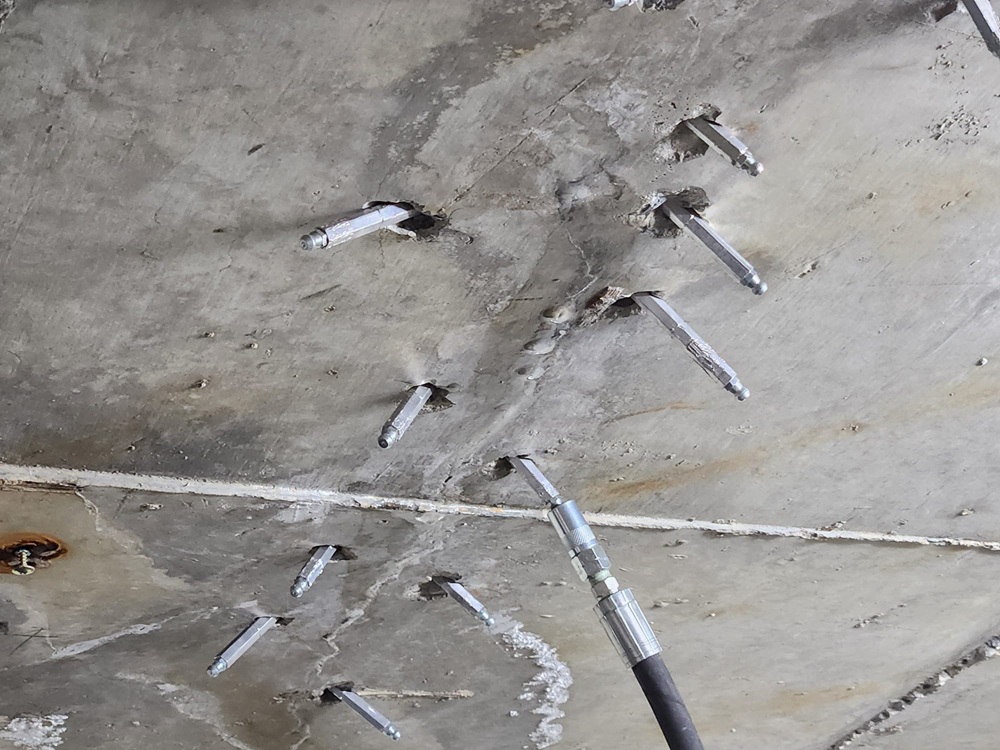
Cracks in High-Rise RCC Structures
Cracks in tall buildings are generally observed in areas subjected to high stress, movement, or waterproofing exposure.
Typical Crack-Prone Areas
Shear Walls
Shear walls in high-rise towers resist lateral forces generated by wind and seismic movement. Due to heavy loading and restraint conditions, vertical and diagonal cracks may develop over time.
Transfer Girders and Transfer Slabs
Transfer structures carry heavy concentrated loads from upper floors. Stress concentration often causes structural cracking in these members.
Basement Retaining Walls
Underground retaining walls are exposed to soil pressure and hydrostatic water pressure, leading to seepage cracks and leakage paths.
Terrace and Podium Slabs
Thermal expansion, waterproofing failure, and shrinkage commonly generate cracks in exposed slabs.
Beam-Column Junctions
High stress concentration zones may develop cracks because of load transfer and differential movement.
Lift Pits and Service Shafts
Continuous moisture exposure often causes leakage-related cracking in these areas.
Understanding Crack Injection in High-Rise Buildings
Crack injection is a repair process where specialized liquid materials are injected into cracks under pressure. The injected material penetrates deep into the crack network and seals or bonds the damaged section internally.
In high-rise structures, crack injection is mainly used for:
- Structural strengthening
- Leakage control
- Waterproofing
- Durability enhancement
- Corrosion prevention
The repair method is preferred because it minimizes demolition and allows repairs in occupied buildings with limited disruption.

Types of Crack Injection Methods Used in High-Rise Buildings
Crack injection methods are widely used in high-rise RCC buildings to repair structural cracks, stop leakage, and improve durability. The selection of the method depends on crack width, moisture condition, structural movement, and repair objectives.
1. Epoxy Injection Method
Epoxy injection is mainly used for structural crack repair in RCC members. It provides high bonding strength, strong adhesion, and excellent load transfer capability.
Applications
- Shear walls
- RCC beams
- Columns
- Structural slabs
- Transfer girders
- Core walls
Procedure
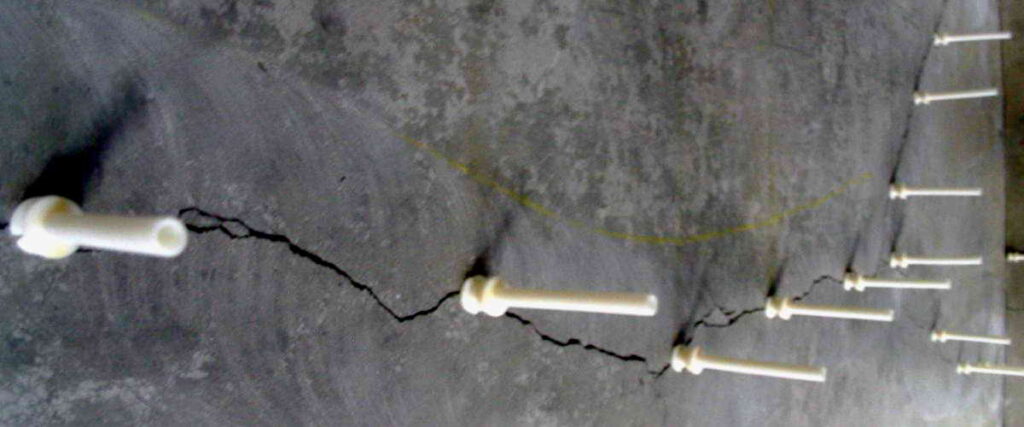
The crack is cleaned, injection ports are fixed, and the surface is sealed. Low-viscosity epoxy resin is then injected under pressure until the crack is fully filled.
Advantages
- Restores structural integrity
- Improves durability
- Strong bonding performance
- Long-term repair solution
Epoxy injection is preferred for dormant structural cracks where strengthening is required.
2. Polyurethane (PU) Injection Method
PU injection is mainly used for waterproofing and active leakage control. The material reacts with water and expands inside cracks to block water flow.
Common Areas
- Basements
- Retaining walls
- Lift pits
- Underground parking
- Terrace slabs
Types of PU Injection
Hydrophilic PU
- High expansion capacity
- Flexible sealing
- Suitable for active leakage
Hydrophobic PU
- Forms rigid closed-cell foam
- Creates permanent waterproof barrier
- Good long-term sealing performance
Advantages
- Excellent waterproofing
- Works in wet conditions
- Fast leakage control
- Suitable for underground structures
PU injection is widely used in high-rise basement seepage repairs.
3. Acrylic Gel Injection
Acrylic gel injection is used for sealing hairline cracks and micro leakage paths. Its very low viscosity allows deep penetration into fine cracks.
Applications
- Basement walls
- Water tanks
- Service tunnels
- Underground RCC structures
Advantages
- Excellent penetration
- Flexible waterproof seal
- Effective for micro cracks
- Good chemical resistance
This system is ideal for fine leakage networks where thicker materials cannot penetrate.
4. Cementitious Grout Injection
Cementitious grout injection uses cement-based materials for filling large cracks, voids, and honeycombed concrete.
Applications
- Raft foundations
- Thick RCC walls
- Transfer structures
- Void filling repairs
Advantages
- Economical solution
- Good compatibility with concrete
- Suitable for large voids
- Easily available materials
This method is commonly used for mass concrete repairs and deep void filling.
5. Microfine Cement Injection
Microfine cement injection uses ultrafine cement particles that penetrate finer cracks than conventional grout systems.
Applications
- Raft slabs
- Deep foundations
- Underground structures
- Rehabilitation projects
Advantages
- Better crack penetration
- Improved durability
- Excellent RCC compatibility
This method combines cement-based compatibility with improved penetration performance.
Factors to consider for Selecting Crack Injection Method
- Type of crack
- Crack width and depth
- Active or dormant crack
- Structural importance of member
- Presence of water leakage
- Dry or wet crack condition
- Purpose of repair
- Location of crack
- Structural movement conditions
- Environmental exposure
- Accessibility of repair area
- Injection pressure requirement
- Compatibility with existing concrete
- Durability and service life needs
- Curing and site conditions
- Cost and execution time
- Availability of skilled applicators
- Safety and maintenance requirements
Challenges of Crack Injection in High-Rise Buildings
Repair work in tall buildings involves several practical difficulties:
- Height-related access issues
- Occupied apartments and offices
- Limited working space
- Continuous building operation
- Waterproofing coordination
- Safety management
Because of these challenges, crack injection work in high-rise projects must be carefully planned and executed by experienced repair specialists.
Conclusion
Crack injection has become an essential rehabilitation technique in modern high-rise RCC buildings. From structural cracks in shear walls and transfer girders to leakage problems in basements and terraces, injection systems provide reliable repair solutions without extensive demolition. As cities continue to expand vertically and existing high-rise infrastructure ages, crack injection technology will remain one of the most important tools in structural rehabilitation and building maintenance.
Image Credit: gubbicivilengineers.com, 2dadswaterproofing.ca, extremeepoxycoatings.com






