
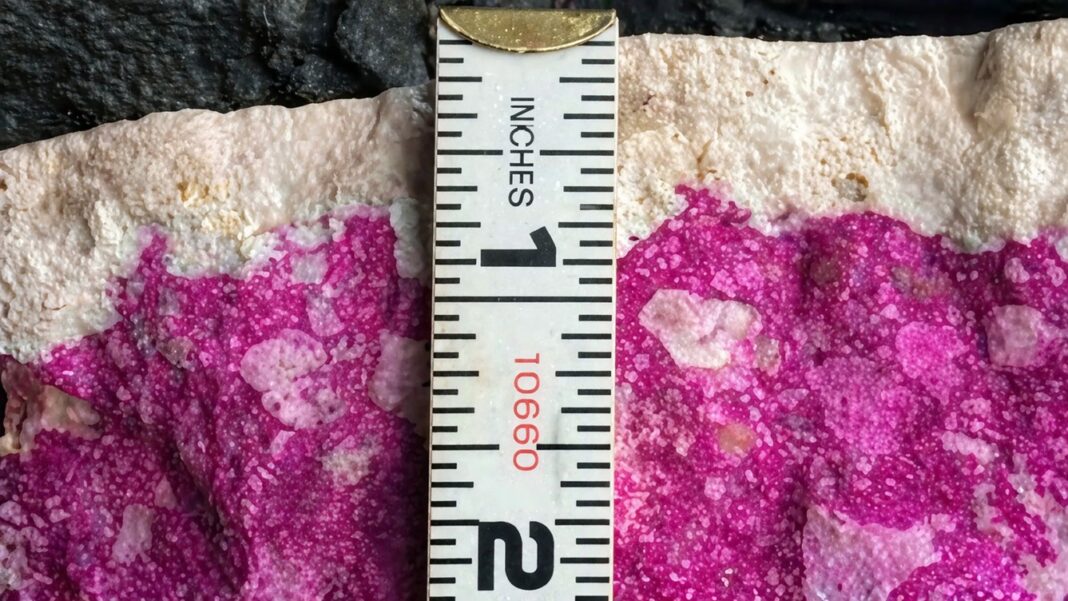
Carbonation depth shows how far carbon dioxide has penetrated into concrete and reduced its alkalinity. This becomes relevant when the carbonation front approaches the reinforcement level, where the steel can lose its passive protection and corrosion may start.
In practice, the test is used during condition assessment to understand durability and remaining service life. It does not indicate strength, but it gives a clear view of how the concrete has been affected by exposure over time.
Carbonation Process and Effect on Reinforcement
Carbonation happens when carbon dioxide slowly enters the concrete through surface pores and reacts with the cement. This reduces the internal pH over time. The effect is not immediate, but the change keeps moving inward from the exposed surface.
The concern starts when this depth reaches the reinforcement level. At that point, the steel is no longer in a protected state, and with moisture present, corrosion can begin and continue over time.
Phenolphthalein Test for Carbonation Depth
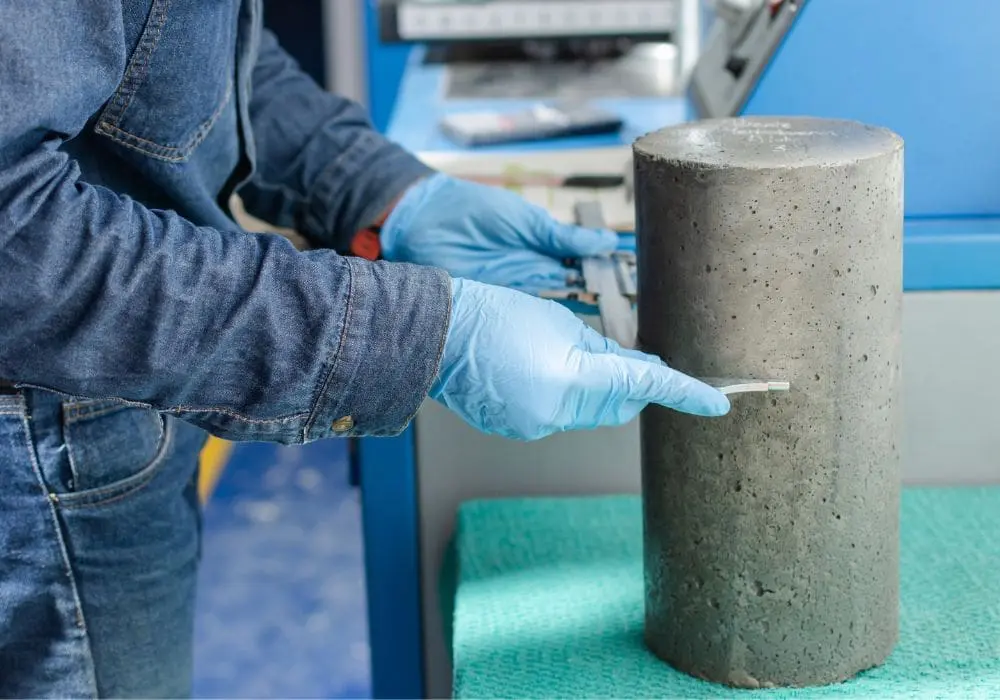
On most sites, carbonation depth is checked using the phenolphthalein indicator test. It is commonly used during inspection because it can be done quickly on a fresh surface.
- Concrete surface is exposed by core cutting or light breaking
- Indicator solution is sprayed on the exposed area
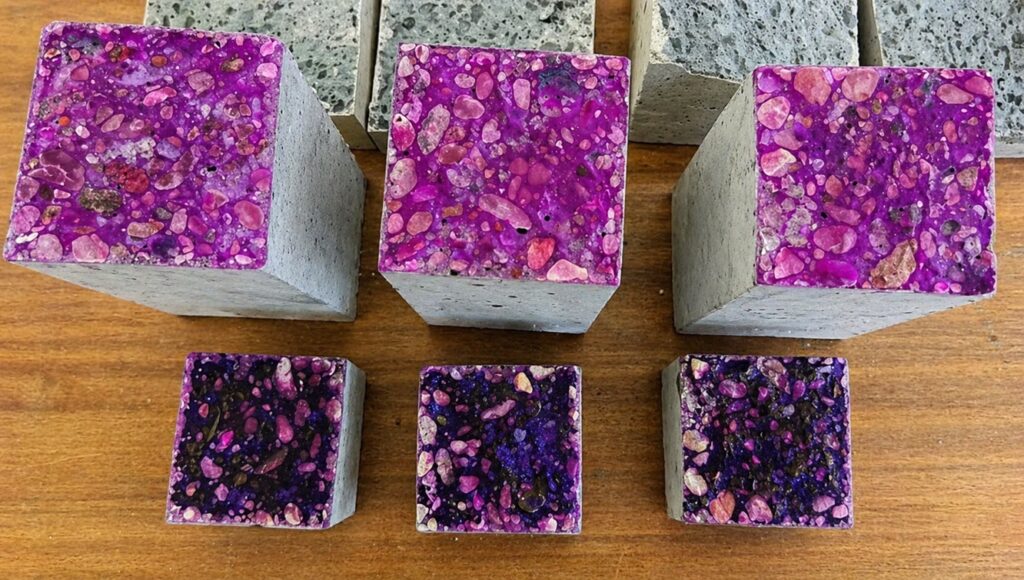
- Pink colour shows non-carbonated concrete
- No colour change indicates carbonated zone
- Depth is taken from surface to the colour boundary
- Readings are taken at multiple points across the section
The result gives a quick indication of how far carbonation has progressed from the surface.
Basic Checks During Carbonation Testing
Results can vary if the surface and handling are not right, so a few basic checks are usually followed during testing.
- Test on a freshly exposed surface, not a weathered face
- Surface should be dry before applying the indicator
- Avoid areas with plaster, coating, or repair layers
- Take readings at multiple points and avoid edges or voids
- Record depth clearly along with location and member type
Small variations in handling can change the depth reading, so consistency across test locations matters.
Detailed Testing Methods
For detailed checks, especially in sensitive or high-value structures, lab-based methods are sometimes used instead of relying only on site readings.
- Powder samples taken at different depths and tested for chemical change
- TGA used to track loss of cement compounds and formation of carbonates
- XRD used to identify material changes within the concrete
- Accelerated testing done to compare performance under controlled exposure
These are mostly used for investigation or validation work, not routine site checks.
Factors Influencing Carbonation Depth
Carbonation depth will not be uniform across a structure. It depends on concrete quality and how the surface is exposed over time.
- Higher water–cement ratio leads to more open pores
- Poor curing leaves the surface less dense
- Humidity in mid-range conditions tends to increase carbonation
- Surface cracks allow deeper local penetration
- Lower concrete cover reduces margin before steel is reached
Because of this, readings usually vary from one location to another on the same structure.
Interpreting Carbonation Test Results
Measured depth is always looked at against the actual concrete cover. This comparison is what indicates the level of concern.
- Depth well within cover generally means steel is still protected
- Depth approaching cover needs closer observation
- Depth beyond cover indicates exposure risk to reinforcement
- Variation across readings points to uneven concrete or exposure
- Results are typically reviewed along with age and site condition
This check is usually combined with other durability observations before taking decisions.
Field Application in Practice
In most projects, carbonation testing comes in during inspection or condition review of existing structures.
- Used during structural audits and routine assessments
- Helps decide if surface protection or repairs are needed
- Supports durability reports for clients or authorities
- Common in bridge, building, and exposed concrete checks
It gives a surface-level durability indication, not a full structural assessment.
Practical Takeaway
Carbonation depth testing is a basic check used to understand how far environmental exposure has affected concrete. It becomes useful when read along with cover, condition, and site factors. In most cases, it helps guide maintenance or repair decisions before visible damage becomes severe.






