
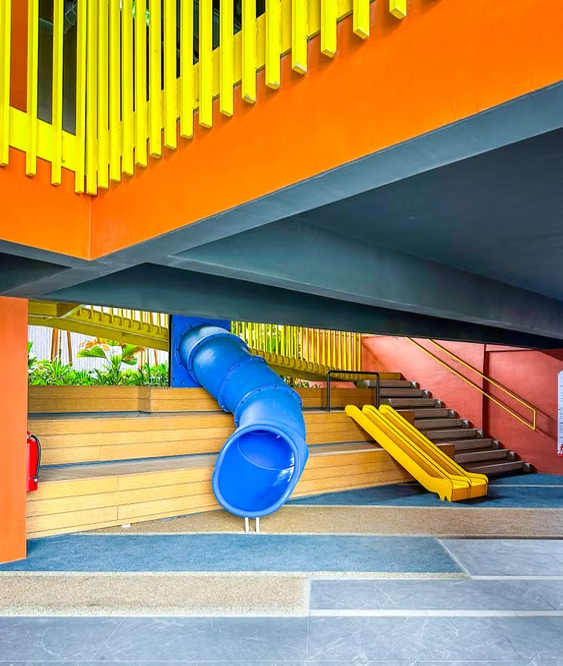
Consider a contractor receiving a shipment of tube slides and rope nets for a new leisure venue. The equipment matches the order, but the quotation excludes unloading, the floor remains unfinished and nobody has agreed who provides the attachments to the supporting construction. The delivery has arrived; the project is not ready for it.
Buying indoor playground equipment involves more than approving an item list. Scope gaps appear between the equipment package and the work that turns a building into an operating venue. Resolve those interfaces while quotations can still be clarified: supporting construction, flooring, building services, installation logistics and handover documents. This is a procurement exercise grounded in the actual components being ordered, with each responsibility assigned before contractors begin relying on someone else’s allowance.
Define what the indoor playground equipment quotation covers
Start with the inclusions. Request a written description of supply, delivery, installation and completion services, with exclusions alongside them. Phrases such as “complete package” need unpacking: ask whether they include the supporting structure, specified fixings, consumables, installation labor and the documentation required by the project team.
The product categories described for Didi Land’s commercial play equipment include rope nets, tube slides, climbing walls, sensory panels and low platforms. Those names establish the types of equipment available to discuss; they do not establish what an individual quotation includes.
Compare the same scope. Separate assembly and delivery allowances before judging the totals, and carry excluded work into the responsible contractor’s quotation so it remains visible in the project budget instead of disappearing between packages. A cheaper supply package can leave a larger installation bill.
Leave unresolved items identified as unresolved. An empty cell beside “floor preparation” is not evidence that it is included, and a general contingency allowance does not tell anyone who must perform the work.
For rope nets, separate the component from its installation
A line reading “rope nets included” leaves useful procurement questions unanswered. Ask which nets are supplied, how they are identified against the approved drawings and which supporting components belong to the same package. Obtain the proposed attachment and adjustment requirements from the supplier.
Then assign the work. Who supplies the attachment hardware, who fits it and who records that the installation follows the agreed instructions? Attachments to construction supplied by another party need a coordinated detail from the equipment designer and the responsible building specialist before either contractor treats its own drawing as final.
Do not improvise a substitute. A locally available fastener or rope is not an agreed replacement merely because it appears similar. Put proposed substitutions back through the relevant design review and obtain the revised specification before ordering them.
Ask about later replacement as part of procurement, including component identification and the instructions the operator will receive. That creates a usable handover requirement without assuming that replacement parts or future adjustment visits are included in the initial price.
For tube slides, price the journey from truck to assembly
Delivery is a sequence of tasks. For tube slides, request the shipment breakdown and handling information for the actual proposal, then identify who unloads it, checks the packages, moves them into storage and transfers them to the installation team. Avoid treating “delivered to site” as an answer to all of those questions.
Discuss the arrival condition with the supplier. If sections need assembly after delivery, confirm who performs that work and what access, tools or temporary arrangements the installer expects the building contractor to provide, including anything that must be available before the installation crew is booked to travel.
Record the receiving process. Name the person who will reconcile the packing list and report missing or visibly damaged items through the agreed commercial procedure. Receipt of boxes and acceptance of a completed installation are different events; the project paperwork should describe each clearly.
Reject vague logistics allowances. An attractive equipment price is difficult to compare when unloading, storage and assembly remain unpriced assumptions that each bidder interprets differently.
For climbing walls, assign responsibility for the supporting work
Establish what the climbing walls attach to in the proposed design. The equipment package might include a supporting arrangement or rely on construction supplied by others; obtain the answer for the quoted system rather than assuming it from a product photograph.
Separate design information from installation labor. Identify who provides the equipment interface requirements, who assesses the proposed supporting construction and who authorizes the details that the installer will use. Keep those responsibilities consistent across the equipment order and the building contractor’s scope.
Resolve the dependency before concealment. Where the approved arrangement requires backing or other work behind a finished surface, agree how the responsible parties will check and record it before the finish closes it in, with any unresolved condition returned to the designer rather than handed to the installer to solve on arrival.
Do not insert guessed loads or generic fixing details into the tender to make it look complete. Request project-specific information. If it is still pending, price and schedule the decision explicitly instead of allowing an unverified assumption to become a construction instruction.
For sensory panels and low platforms, clarify the floor and finish boundary
Didi Land lists sensory panels and low platforms among its indoor play formats. Their inclusion in an equipment proposal is a reason to clarify the surrounding work, not evidence that floor preparation, wall finishing or adjacent surfacing is included in the supply price.
Ask for the required receiving conditions. The supplier should describe what it needs from the surfaces and construction it will connect to; the building team should identify who prepares those conditions and how readiness will be confirmed before installation starts.
Make the boundary specific. For low platforms, distinguish the supplied item from the specified surrounding surfacing, edge details and any making good. For sensory panels, establish responsibility for the intended backing, fixings and finishing around the installation. Use the actual proposal to settle these items rather than a generic checklist that presumes a mounting method.
Review the order of work together. If finishing occurs after installation, agree how the equipment is protected; if it occurs before installation, agree who repairs any disruption arising from the approved installation method and which contractor has allowed for that task.
Allocate electrical and ventilation work by the proposed specification
Do not assume every play item needs a power connection. Ask the supplier to identify any powered elements in the submitted specification and provide their connection requirements, then have the relevant building-services designers coordinate the work that belongs to the wider venue.
Keep room services visible in the budget. Lighting, ventilation and building controls need an assigned scope even when the equipment package contains no powered components. Agree who provides the information needed for their design and who checks the completed work under the project’s arrangements.
Clarify the limits of each contractor’s test. An equipment installer demonstrating an optional powered feature does not, by itself, document the performance of the building’s ventilation or complete the electrical contractor’s agreed checks. Request the appropriate records from the parties responsible for those systems.
Where information is missing, hold the affected interface open in the tender clarification record. Avoid describing the whole building-services package as “by others” without naming those others and confirming that they have priced the work.
Agree the handover documents before comparing final prices
Write the document requirements into the scope early. Request the information the operator will need to identify the installed equipment, follow its maintenance instructions and report a problem without reconstructing the procurement history from email attachments.
Ask bidders to state which documents they will provide, who prepares them and when they become available. The project may need revised drawings, component references, installation records and operating instructions from different parties. Assign each deliverable rather than assuming a single supplier will collect the whole file.
Record changes as they happen. If a tube slide arrangement changes or the agreed climbing wall support is revised, confirm which drawing supersedes the previous version and how that affects price, installation work and the documents due at completion. Otherwise, the operator may inherit instructions for the scheme that was ordered rather than the equipment actually installed.
Review sample document formats before appointment where practical. A promise to provide “all manuals” is less useful than an agreed list linked to the actual package and the people who will maintain it.
Accept indoor playground equipment through a defined handover
Agree what completion means before the installation begins. Distinguish delivery, completed assembly, outstanding work and the project-specific checks required before opening. These milestones deserve their own evidence, even when the same company performs several tasks.
RoSPA Play Safety describes its UK soft play inspections as non-dismantling and includes equipment, building safety, ancillary areas and management procedures within its stated scope. This is a defined inspection service, not evidence that a particular supplier is certified or that every construction package has been accepted.
Set the handover meeting around the agreed scope:
- Reconcile installed items with the final equipment schedule and approved changes.
- Collect the checks and completion records assigned to each contractor.
- Identify outstanding work, its owner and any restrictions affecting use.
- Review maintenance instructions and the route for reporting defects.
- Confirm who makes the opening decision after the project’s required reviews.
Keep an inspection report within its stated limits. Read its findings alongside the other completion evidence and resolve outstanding matters with the responsible specialists. An equipment shipment is a purchasing milestone; a usable handover explains what was installed, what was checked and who remains responsible for unfinished work.






