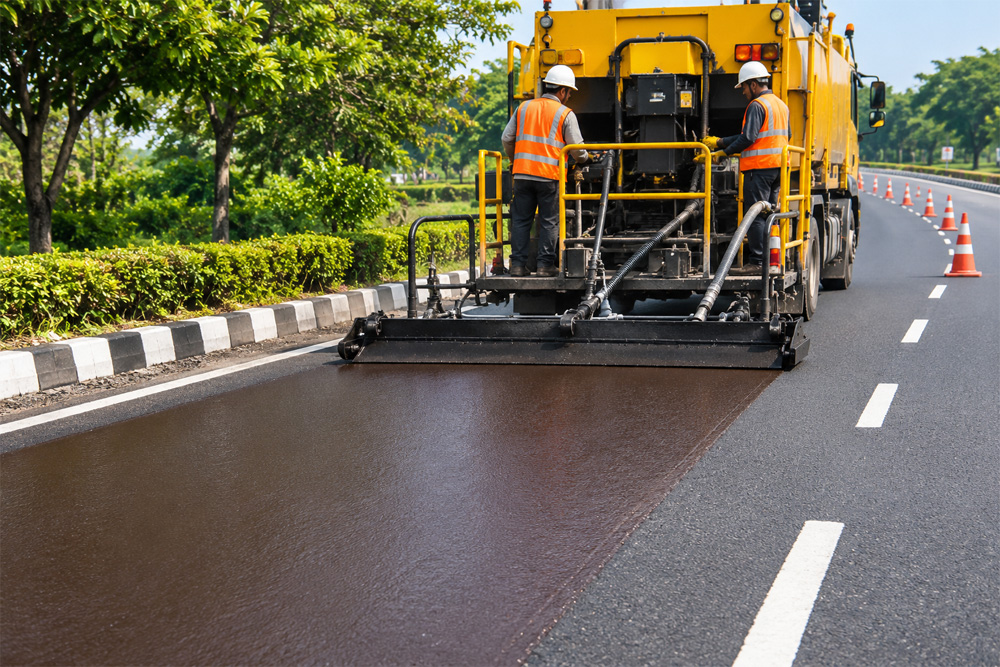
Road maintenance plays an important role in preserving pavement quality, improving driving conditions and extending the service life of road infrastructure. Continuous exposure to traffic loads, temperature variations, rainfall, water infiltration and environmental conditions gradually affects road surfaces. These factors can lead to surface cracks, oxidation, raveling, loss of skid resistance and minor pavement deformation. If these defects are not addressed at an early stage, they can develop into more serious pavement failures requiring extensive and expensive rehabilitation.
Microsurfacing and slurry seal are two widely used preventive road maintenance techniques designed to restore the surface condition of existing bituminous pavements. Both methods involve applying a mixture of bitumen emulsion, graded aggregates, mineral fillers, water and additives over the existing pavement. The treatment forms a new protective surface layer that improves texture, provides better skid resistance, seals minor surface defects and protects the underlying pavement from further deterioration.
Applications of Microsurfacing and Slurry Seal
Microsurfacing and slurry seals are used across different categories of road infrastructure. Their selection depends on pavement condition, traffic volume, surface requirements and maintenance objectives.
1. Highway and Expressway Maintenance
Microsurfacing is used on suitable highway sections to restore surface texture, improve skid resistance and address minor pavement irregularities. Its relatively fast setting characteristics can help reduce traffic disruption during maintenance work.
2. Urban Road Maintenance
Municipal roads and urban streets experience frequent traffic movement, braking, turning and exposure to utility-related disturbances. Slurry seal and microsurfacing can help maintain surface quality where the underlying pavement remains structurally sound.
3. Residential Roads
Slurry seal is commonly used on residential streets to address surface oxidation, minor raveling and general pavement wear. It provides a renewed surface without requiring extensive reconstruction.
4. Airport Pavements
Suitable microsurfacing systems may be considered for selected airport pavement maintenance applications, subject to aviation authority requirements, friction standards and aggregate retention criteria.
5. Parking Areas and Industrial Roads
Both treatments can be used on parking areas, access roads and selected industrial paved surfaces to improve surface texture and protect existing bituminous layers.
6. Intersections and High-Traffic Zones
Microsurfacing can be used at intersections, turning lanes and other areas exposed to frequent braking and acceleration. Polymer-modified binders provide improved cohesion and resistance to traffic-related stresses when properly designed and applied.
7. Road Network Preservation
Local road authorities can use these treatments as part of planned pavement preservation programmes. Treating roads before significant deterioration develops can help reduce the requirement for extensive rehabilitation.
Advantages of Microsurfacing and Slurry Seal in Road Maintenance
Both treatments offer several benefits when selected and applied according to pavement condition and project requirements.
- Extends Pavement Service Life: The surface treatment protects the existing bituminous layer from further deterioration and delays the need for major rehabilitation.
- Reduces Water Infiltration: The treatment seals surface voids and minor cracks, limiting water entry into the pavement structure.
- Improves Skid Resistance: Proper aggregate selection creates a suitable surface texture that supports tyre-pavement friction.
- Addresses Surface Oxidation: The new binder layer helps restore the surface condition of aged and oxidised bituminous pavements.
- Minimises Maintenance Costs: Preventive surface treatments can reduce the frequency of extensive repairs when applied at the appropriate stage.
- Reduces Construction Time: Both methods can be applied using mechanised equipment, allowing relatively quick treatment of long road sections.
- Uses Existing Pavement: These treatments preserve the existing pavement rather than requiring complete removal and replacement of the road surface.
- Supports Resource Efficiency: They generally require fewer new construction materials than conventional asphalt overlay, depending on the project scope.
- Improves Road Appearance: A uniform treatment provides a renewed surface finish and improves the overall appearance of maintained roads.
Understanding Slurry Seal for Road Maintenance
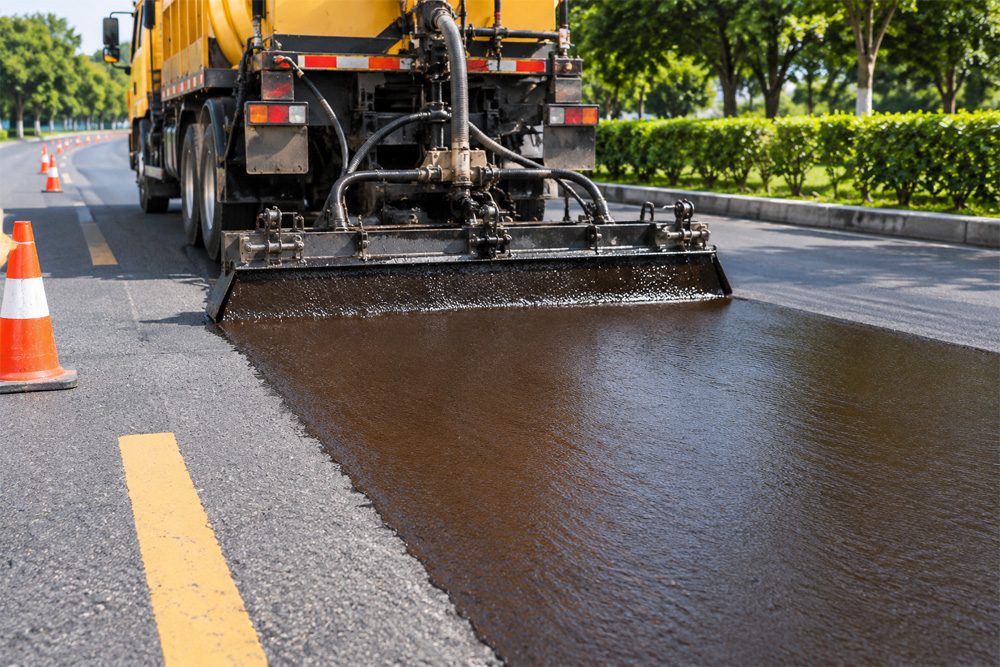
Slurry seal is a surface treatment used to maintain and protect existing asphalt pavements. It consists of a mixture of slow-setting or controlled-setting bitumen emulsion, fine graded aggregates, mineral filler, water and suitable additives. The materials are mixed in controlled proportions and applied as a thin layer over the prepared road surface.
The treatment creates a new wearing surface that seals minor cracks, reduces surface permeability and restores the pavement texture. It also helps address surface oxidation, minor raveling and general wear caused by traffic and weather exposure.
Slurry seal is commonly used on residential roads, urban streets, low- to medium-traffic roads, parking areas and other paved surfaces where the existing pavement does not require major structural repairs.
Materials Used in Slurry Seal
The performance of slurry seal depends on the quality and compatibility of its constituent materials. Each component contributes to the stability, workability and durability of the finished surface.
- Bitumen Emulsion: Acts as the binding material that holds the aggregate particles together and provides adhesion to the existing pavement. The emulsion grade is selected according to the aggregate characteristics, climatic conditions and application requirements.
- Aggregates: Clean, durable and properly graded crushed aggregates form the main body of the treatment. Their grading influences surface texture, thickness and resistance to wear.
- Mineral Filler: Cement, hydrated lime or other approved mineral fillers may be added to improve mixture consistency, control setting characteristics and enhance cohesion.
- Water: Used to achieve the required consistency for mixing, spreading and uniform application.
- Additives: Selected additives may be used to regulate breaking and setting times, improve workability and support compatibility between the emulsion and aggregates.
Slurry Seal Construction Process
The application of slurry seal requires proper surface preparation, accurate material proportioning and controlled spreading. The construction sequence generally includes the following stages.
1. Pavement Inspection and Surface Preparation
The existing pavement is inspected to identify cracks, potholes, surface disintegration, loose aggregates and other defects. Structural failures and significant potholes must be repaired before slurry seal application.
The road surface is cleaned using mechanical sweepers, air blowers or other suitable equipment to remove dust, loose particles, mud and debris. Oil and grease deposits are also treated because they can interfere with bonding between the treatment and the existing pavement.
2. Material Proportioning and Mixing
Aggregates, bitumen emulsion, mineral filler, water and additives are proportioned according to the approved mix design. The materials are introduced into a continuous mixing system installed on a slurry seal machine.
Proper mixing is necessary to achieve uniform distribution of the binder and prevent segregation. The mixture should have sufficient workability to flow through the spreading system without becoming excessively fluid.
3. Application of Slurry Seal
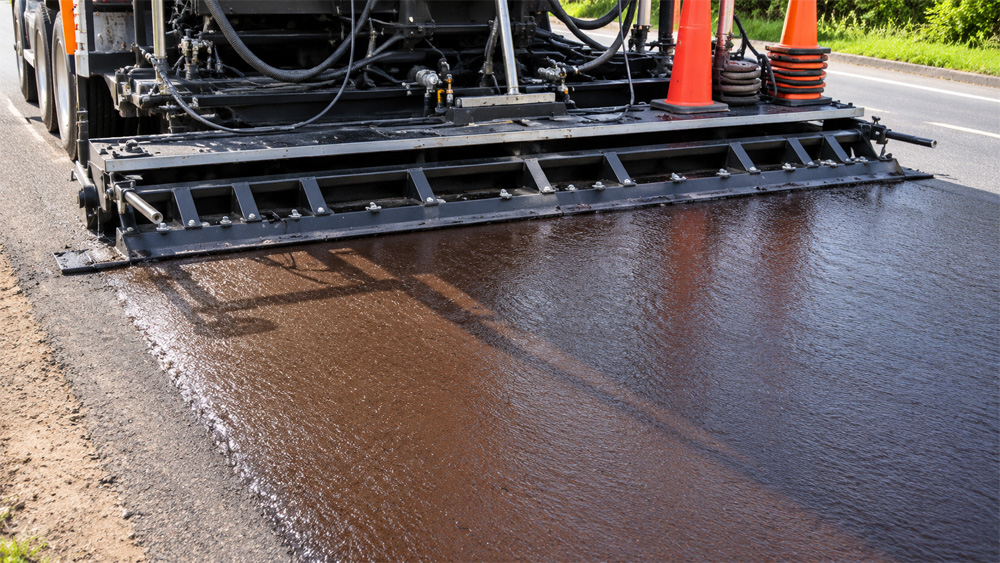
The prepared mixture is discharged into a spreader box attached to the application equipment. The box distributes the slurry evenly across the pavement surface.
The application thickness and spreading rate depend on aggregate grading, pavement condition and project specifications. Care is taken to maintain uniform coverage, particularly near road edges, junctions and surface transitions.
4. Setting and Curing
After application, the water in the mixture begins to separate and evaporate, allowing the bitumen emulsion to break and the binder to coat and hold the aggregate particles together.
The surface is allowed to cure until it develops sufficient cohesion to withstand traffic. The curing period varies according to temperature, humidity, wind conditions, emulsion characteristics and mix design.
5. Opening to Traffic
The treated section is inspected before traffic is permitted. Loose material, uneven application and other visible defects are checked. Traffic is allowed only after the surface has achieved adequate resistance to displacement and damage.
Understanding Microsurfacing for Road Maintenance
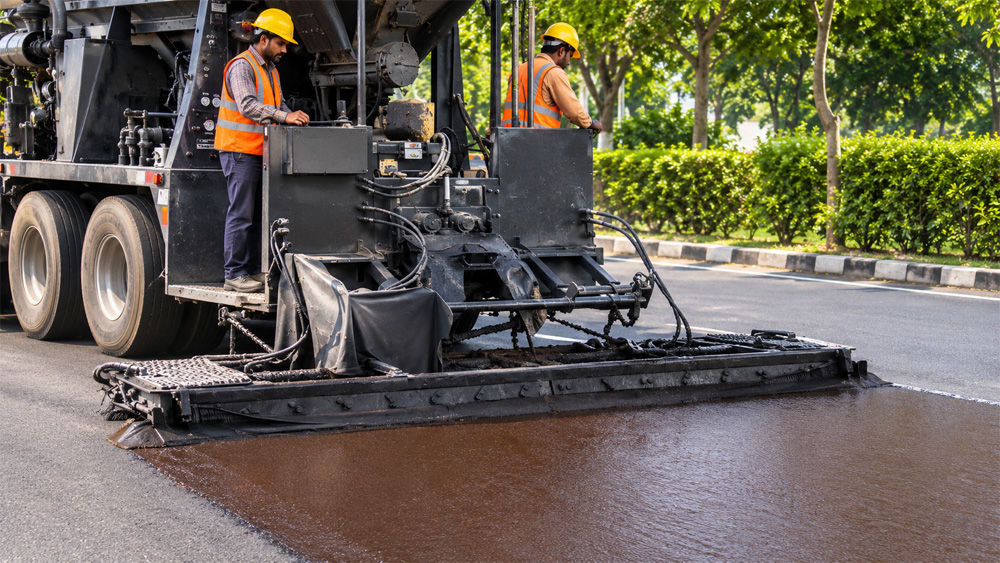
Microsurfacing is an advanced pavement preservation technique used to restore and protect bituminous road surfaces. It involves applying a specially designed mixture of polymer-modified bitumen emulsion, graded crushed aggregates, mineral filler, water and additives over an existing pavement.
Unlike conventional slurry seal, microsurfacing uses a polymer-modified emulsion and a controlled aggregate grading system to achieve faster setting and improved resistance to traffic-related stresses. The treatment can be applied in relatively thin layers and is suitable for roads that experience higher traffic volumes and require improved surface characteristics.
Microsurfacing is also used to correct minor surface irregularities, improve skid resistance, reduce water infiltration and address surface defects such as raveling and shallow rutting. Depending on pavement condition and project requirements, it can be applied in a single layer or multiple layers.
The technique is commonly adopted for highways, arterial roads, urban roads, intersections, airport pavements and other paved surfaces where maintaining traffic movement is important.
Materials Used in Microsurfacing
Microsurfacing requires carefully selected materials to achieve the desired setting time, surface finish and pavement performance.
- Polymer-Modified Bitumen Emulsion: This is the primary binding material. Polymer modification improves binder cohesion, flexibility and resistance to deformation under traffic loads.
- Crushed Aggregates: Hard, durable and properly graded aggregates provide the surface texture, skid resistance and load-distribution characteristics of the treatment.
- Mineral Filler: Cement or hydrated lime may be used to control mixture consistency, improve cohesion and regulate the breaking and setting behaviour.
- Water: Water is added to obtain the required consistency for mixing and spreading. Its quantity is adjusted according to aggregate moisture and environmental conditions.
- Chemical Additives: These are used to control the setting and breaking time of the emulsion, helping maintain suitable workability during mixing and application.
The aggregate grading used in microsurfacing is selected according to the required surface finish and treatment thickness. Coarser aggregate gradings are generally suitable for thicker applications and surface correction, while finer gradings are used where a smoother finish is required.
Microsurfacing Construction Process
Microsurfacing application requires specialised equipment and a controlled construction sequence. The process generally involves pavement assessment, preparation, material proportioning, continuous mixing, spreading and curing.
1. Pavement Condition Assessment
Before starting work, the existing road is inspected to determine whether microsurfacing is suitable. The inspection identifies surface oxidation, minor rutting, raveling, shallow cracks, loss of texture and other pavement defects.
The structural condition of the pavement must also be assessed. Microsurfacing is a surface treatment and cannot correct major structural failures, deep potholes or extensive pavement settlement. Such defects require appropriate repairs before the treatment is applied.
2. Surface Cleaning and Preparation
The pavement is cleaned using mechanical sweepers, compressed air or other suitable cleaning equipment. Dust, loose aggregates, mud, vegetation and other contaminants are removed to ensure proper bonding.
Potholes, severe cracks and localised pavement failures are repaired separately. Existing road markings, drainage structures and roadside features are also checked to ensure that the application does not obstruct them.
3. Material Proportioning and Mixing
The aggregates, polymer-modified bitumen emulsion, mineral filler, water and additives are supplied to a specialised microsurfacing machine.
The machine uses a continuous mixing system to combine the materials in the proportions specified by the approved mix design. Consistent aggregate feed, binder content and water quantity are important for maintaining uniform mixture characteristics.
The mixture should have sufficient workability to move through the mixing chamber and spreading box without segregation or premature breaking.
4. Application Through a Spreader Box
The mixed material is discharged into a specially designed spreader box fitted with adjustable screeds. The box distributes the mixture across the road surface at the specified width and thickness.
The spreading equipment is adjusted according to the pavement profile and treatment requirements. Operators monitor the application to maintain consistent coverage and avoid excessive material accumulation, streaking or uneven edges.
For rut correction, a suitable rut-filling spreader box may be used before applying the main microsurfacing layer. This helps restore the pavement profile before the final surface treatment.
5. Breaking and Curing
After spreading, the water begins to separate from the mixture and the emulsion breaks. The binder develops cohesion around the aggregate particles, allowing the treated surface to gain strength.
Polymer-modified emulsions are formulated to provide relatively rapid setting under suitable conditions. However, the actual curing period depends on temperature, humidity, wind, aggregate characteristics, binder formulation and application thickness.
6. Quality Inspection and Traffic Opening
The completed surface is inspected for uniformity, texture, bonding, loose aggregates and visible application defects. Any localised irregularities are corrected before the road is opened to traffic.
Microsurfacing generally allows traffic to resume sooner than conventional asphalt overlay, subject to the specified curing and opening criteria.
Key Differences Between Microsurfacing and Slurry Seal
Although both techniques use bitumen emulsion and aggregates, microsurfacing and slurry seal have different performance characteristics and application requirements. Selecting the appropriate treatment depends on traffic conditions, pavement condition, maintenance objectives and project specifications.
| Parameter | Slurry Seal | Microsurfacing |
| Binder | Conventional bitumen emulsion | Polymer-modified bitumen emulsion |
| Aggregate | Fine graded aggregates | Specially graded crushed aggregates |
| Setting time | Generally slower | Generally faster |
| Traffic suitability | Low- to medium-traffic roads | Medium- to high-traffic roads |
| Surface correction | Primarily surface sealing and protection | Surface sealing and minor profile correction |
| Rut correction | Limited | Can correct shallow ruts using suitable application methods |
| Application | Generally thin surface layer | Single or multiple layers, depending on requirements |
| Equipment | Slurry seal mixing and spreading machine | Specialised microsurfacing machine |
| Curing | Depends on emulsion and weather conditions | Generally designed for faster traffic opening |
The choice between these treatments should be based on pavement evaluation rather than cost alone. Slurry seal is suitable where the objective is to protect a pavement that is in reasonably good condition. Microsurfacing is more appropriate when faster setting, improved binder performance and minor surface profile correction are required.
Equipments Used for Microsurfacing and Slurry Seal Applications
– Self-Propelled Microsurfacing Machines: Used for continuous mixing, proportioning and spreading of polymer-modified bitumen emulsion and aggregates over road surfaces.
– Truck-Mounted Slurry Seal Machines: Used to mix and apply bitumen emulsion, graded aggregates, water and mineral fillers for pavement surface treatment.
– Continuous Mixing and Application Machines: Combine the treatment materials in controlled proportions and deliver the mixture directly to the spreading system.
– Aggregate Feeder Systems: Control the supply of graded aggregates to maintain consistent material proportions during the application process.
– Bitumen Emulsion Tanker Trucks: Transport and supply bitumen emulsion to the application machines at road construction sites.
– Wheel Loaders: Used to load graded aggregates into storage hoppers and feed systems for continuous construction operations.
– Asphalt Road Sweepers: Remove dust, loose aggregates and debris from existing pavement surfaces before microsurfacing or slurry seal application.
– High-Capacity Air Compressors: Provide compressed air for removing fine dust and loose particles from pavement surfaces before treatment.
– Water Tanker Trucks: Supply water required for mixture preparation, equipment cleaning and pavement surface preparation.
– Material Transport Dump Trucks: Transport aggregates, mineral fillers and other construction materials to the road maintenance site.
– Pavement Milling Machines: Remove deteriorated or uneven asphalt layers before applying microsurfacing or slurry seal where additional surface preparation is required.
– Road Marking Removal Machines: Remove existing road markings where necessary before applying the new surface treatment.
Factors Affecting the Performance of Microsurfacing and Slurry Seal
The long-term performance of these treatments depends on material quality, pavement condition, construction practices and environmental factors. Poor control at any stage can lead to premature surface deterioration.
Aggregate Quality and Grading: Aggregates should have suitable hardness, durability, cleanliness and grading. Excessive dust, weak particles or unsuitable gradation can affect binder adhesion and surface wear resistance.
Bitumen Emulsion Compatibility: The emulsion must be compatible with the selected aggregates. Incompatibility can result in premature breaking, poor coating, segregation or inadequate bonding.
Mix Design: The mix design should establish the correct proportions of aggregates, emulsion, filler, water and additives. Trial mixes and laboratory testing help determine suitable material quantities and setting characteristics.
Weather Conditions: Temperature, humidity, wind and rainfall influence the breaking and curing process. Application during unsuitable weather can affect the surface finish and treatment performance.
Existing Pavement Condition: The treatment performs best on pavements with adequate structural strength. Applying it over unstable, severely cracked or structurally damaged surfaces can lead to early failure.
Application Thickness: The treatment thickness should match the aggregate grading and pavement condition. Excessive thickness or uneven spreading can cause surface defects and delayed curing.
Traffic Management: Traffic should be controlled during application and curing. Premature opening can result in aggregate loss, surface displacement and damage to the newly treated layer.
Selecting Between Microsurfacing and Slurry Seal
The selection of the treatment should begin with a detailed pavement condition assessment. Road authorities, consultants and contractors should evaluate traffic loading, surface deterioration, pavement strength, drainage conditions and maintenance objectives.
Slurry seal is generally suitable when the pavement is structurally sound and requires surface protection, minor crack sealing, texture improvement and correction of general surface wear. It is often considered for residential roads, local streets and low- to medium-traffic pavement sections.
Microsurfacing is more suitable where the road requires improved surface performance, faster setting and minor profile correction. It is commonly considered for higher-traffic roads, intersections and highway maintenance projects.
Other factors that influence the selection include:
- Existing pavement condition and remaining service life.
- Traffic volume and the proportion of heavy commercial vehicles.
- Required surface texture and skid resistance.
- Aggregate availability and binder specifications.
- Construction equipment and contractor capabilities.
- Project budget and maintenance schedule.
- Expected traffic opening time.
- Weather conditions during the construction period.
The treatment should be selected based on technical suitability and lifecycle maintenance requirements rather than initial application cost alone.
This form has been deleted or is unavailable.Conclusion
Microsurfacing and slurry seal are important techniques for maintaining bituminous road surfaces and extending the service life of existing pavement infrastructure. Both methods provide a relatively thin protective layer that helps reduce surface deterioration, improve skid resistance and limit water infiltration. Their use can delay the need for more extensive pavement rehabilitation when maintenance is carried out at the appropriate stage.
Slurry seal is primarily suited to routine pavement preservation and surface protection, while microsurfacing offers additional performance characteristics through polymer-modified bitumen emulsion, controlled aggregate grading and faster setting. The choice between the two depends on road condition, traffic requirements, construction specifications and maintenance objectives.
Successful application requires proper pavement assessment, suitable material selection, accurate mix design, mechanised spreading and quality control throughout the construction process. By incorporating these treatments into planned road maintenance programmes, highway authorities, municipal bodies and road contractors can improve pavement serviceability while managing long-term maintenance requirements.
The article covers both methods, including materials, construction sequences, equipment, quality control, applications, advantages, limitations and selection criteria. Technical requirements should be aligned with the applicable MoRTH, IRC and project specifications.