
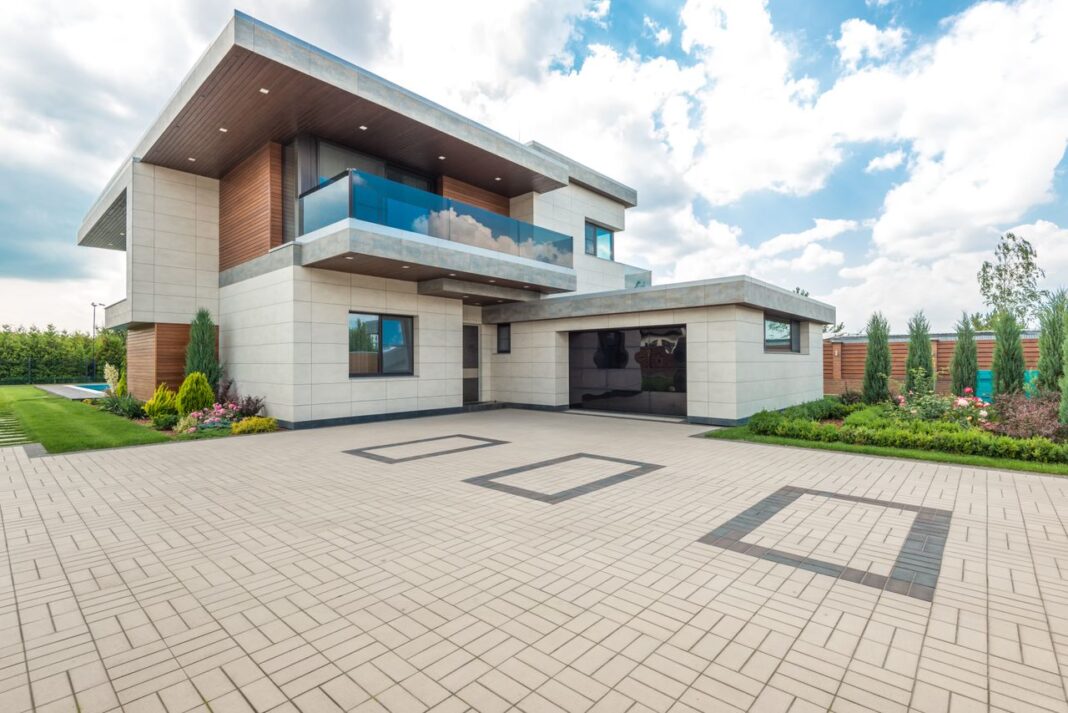
Coastal living in Perth has plenty going for it, but the sea breeze is hard on outdoor surfaces. In suburbs within about 1 to 2 km of the ocean, including Hillarys, Sorrento, Mullaloo, Ocean Reef, Mindarie and Scarborough, salt laden wind drives two problems on porous paving: efflorescence and surface spalling.
What salt actually does
Efflorescence is the white powder left behind when water carries soluble salts up to the surface of a paver and then evaporates. It is common on new clay and concrete pavers anywhere, harmless and usually weathers off within months. Near the coast, there is simply more salt available to keep it coming back.
Spalling is the more serious problem. The surface of the paver slowly breaks away, leaving a rough, crumbling face. Salt attack tends to show up as crusting and spalling on porous paving, so porous materials suffer most.
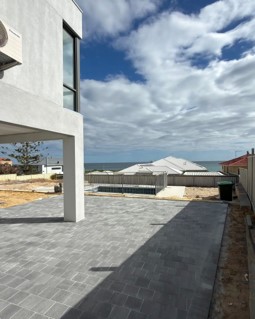
Grey pavers going down beside a new two storey home within sight of the ocean.
Image- 05-images/grey-pavers-coastal-home-ocean-view.webp
Choosing pavers for the coast
The good news is that the right specification goes a long way. For coastal suburbs, the usual advice is dense wet cast concrete pavers or exposure grade clay pavers, laid on washed bedding sand, with sand swept joints and a penetrating sealer. A Landsdale paving contractor’s site, paving-perth.com, sets out this kind of coastal specification for suburbs from Hillarys to Mindarie, which is useful when comparing what different quotes include.
The clay grading comes from the brick industry’s durability classes. A Midland Brick and Think Brick factsheet on brick durability defines a severe marine zone as land within 100 m of a non surf coast or within 1 km of a surf coast, and calls for exposure grade clay there. Those classes are written for clay masonry, so they are a guide for clay pavers rather than a rule for every product.
Clay has another advantage on the coast: its colour runs all the way through, so it does not fade. Concrete pavers can fade under strong UV over the years unless sealed, which is one more reason to seal them near the sea.
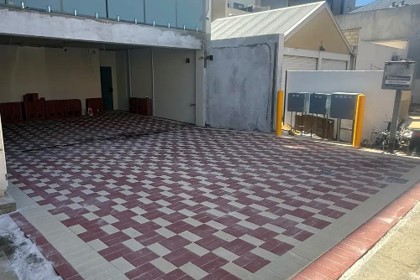
Red and cream pavers in a two tone pattern across a shared garage entry, with a grated drain set into the paving.
Image- 05-images/red-cream-two-tone-pavers-garage-entry.webp
Natural stone needs more thought. Travertine is a popular choice for entries and pool surrounds, but it is porous, with natural holes, and must be sealed. It is also usually only 30 mm thick, so it is laid on a mortar bed over a concrete slab rather than on sand.
Sealing near the sea
Midland Brick’s own guidance is that sealing helps “protect against wear, staining and salt attack especially in coastal environments”. The type of sealer matters.
Penetrating sealers soak into the surface, keep the natural look and let the paver breathe. They suit limestone and travertine. Film forming wet look sealers give deeper colour and better stain protection on concrete and clay, but they can be slippery when wet, hold heat in the sun and need stripping if they peel.
Timing matters too. New pavers should be left for efflorescence to work its way out, typically 4 to 8 weeks, and sealing should follow at least 48 hours of dry weather. Some suppliers mark particular stone lines as not to be sealed with their own sealer, so the right product depends on the paver. As an indicative guide, brick and concrete need resealing every 3 to 5 years, and pool surrounds and natural stone every 2 to 3 years. If water no longer beads on the surface, it is due.
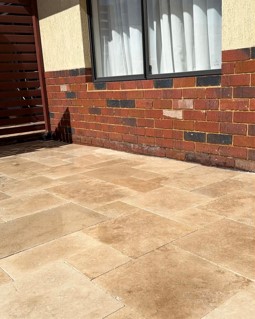
Travertine at the front entry of a brick home. Porous stone like this needs a penetrating sealer.
Image-05-images/travertine-front-entry-brick-home.webp
Cleaning without causing damage
Salt and sand make regular cleaning tempting, and it is easy to overdo. A pressure cleaner with a fan tip should be kept under about 2,000 psi. Pressure washing also strips sand from the joints, so the joints need re-sanding before any sealer goes on.
Chemicals need the same care. Efflorescence can be dry brushed, then treated with household vinegar or a dedicated remover on clay and concrete. Acid should never be used on limestone or travertine, because it etches the stone. A pH neutral cleaner at low pressure is the safe choice for natural stone. Bore water staining, a common problem across Perth’s northern suburbs, is treated by stain type in the same visit.
Published Perth figures put cleaning at about $3 to $6 per square metre and sealing at about $5 to $10 per square metre on top, as indicative industry ranges. Guides to cleaning and sealing pavers near the coast explain the two visit approach: clean and treat stains first, then re-sand and seal once the paving has dried.
Living with the sea breeze
Salt air is part of the price of living near the beach, and paving does not have to suffer for it. A dense paver, a clean bed of washed sand, a suitable sealer and gentle cleaning will keep a coastal driveway or entry looking sharp for many summers.
Cover image- https://www.pexels.com/photo/a-beautiful-house-with-garage-near-the-yard-8134845/