
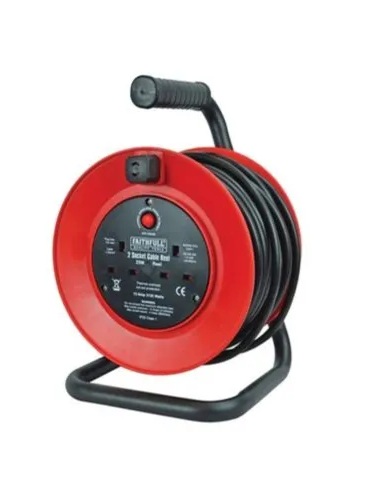
Industrial facilities rarely share identical power requirements. A manufacturing workstation may need a short cord with a specific connector, while a maintenance bay or outdoor service area may require a longer reach, a different conductor size, or a higher-amperage configuration.
For procurement teams and maintenance managers, selecting industrial cord reel suppliers involves more than finding a standard model that appears close to the required specifications. The cord reel must suit the connected electrical load, operating environment, mounting arrangement, and intended use.
When standard products do not meet these requirements, a manufacturer with configuration and engineering capabilities can help evaluate alternatives. Custom cord lengths and amperage options can expand the available choices, provided the final configuration is suitable for the application and supported by the manufacturer’s specifications.
What to Look for in a Custom Industrial Cord Reel Supplier
Before comparing manufacturers, define the electrical and mechanical requirements of the installation.
- Amperage and voltage: Confirm the connected equipment’s requirements and the cord reel’s applicable electrical ratings
- Cord length: Measure the required working reach, including mounting height and the distance to the connection point
- Wire gauge and conductor count: Match conductor specifications to the electrical load and application
- Cord type: Check the suitability of the cord construction for the operating environment
- Connectors and terminations: Verify compatibility with the equipment and available power supply
- Mounting and retraction: Consider ceiling, wall, or other mounting arrangements and the required cord-management mechanism
- Environmental rating: Confirm that the selected enclosure and configuration suit the installation conditions
These factors help buyers evaluate custom cord reel manufacturers based on their ability to address the actual application rather than simply offering a broad catalog.
5 Industrial Cord Reel Suppliers to Consider
1. KH Industries
KH Industries manufactures industrial retractable extension cord reels for indoor, outdoor, and demanding industrial applications. Its product range includes different amperage ratings, cord lengths, conductor sizes, cord types, and enclosure configurations. Options vary by series and model, so buyers should confirm the exact specifications and availability for their application.
Where a standard model does not meet the application’s requirements, KH Industries can evaluate build-to-order or custom configurations. Depending on the product series, options may include modified cord lengths, specialized connectors, different gauges, voltage requirements, and environmental upgrades. Available combinations depend on the specific reel and must be confirmed during the engineering review.
The company’s industrial product range includes heavy-duty retractable cord reels for industrial facilities, outdoor-rated configurations, and options for specialized applications. This gives procurement teams a starting point for comparing standard products with application-specific requirements.
2. Alert Reel Manufacturing
Alert Reel Manufacturing produces retractable power cord reels and related cord-management products. Its custom engineering capabilities include application-specific cord lengths, gauges, enclosure ratings, mounting configurations, and private-label solutions.
For buyers evaluating Alert Reel Manufacturing, the key step is to submit the complete application requirements and confirm which combinations are feasible for the selected product. The final specifications, lead time, and applicable ratings should be documented before ordering.
3. Reelcraft
Reelcraft manufactures cord reels alongside hose and cable reels for industrial and commercial applications. Its published product catalog allows buyers to compare cord reel models and their specifications.
For a custom application, distributors should first identify the relevant cord reel product family and compare the published cord length, electrical rating, cord type, and mounting options. Any nonstandard length or amperage combination should be confirmed for the exact model rather than assumed to be available across the product range.
4. Coxreels
Coxreels offers spring-driven, EZ-Coil, hand-crank, and motorized reel mechanisms for different cord, hose, and cable-management applications. Its custom-products program describes options that include combining features across product lines and developing application-specific components, brackets, mounts, and accessories.
For distributors evaluating a custom cord reel, the relevant step is to identify the suitable product family and then confirm whether the required cord length, electrical rating, and termination can be supplied together. Coxreels’ published customization capabilities do not mean every requested electrical configuration is available, so the final specifications should be approved by the manufacturer.
5. Hubbell Wiring Device-Kellems
Hubbell Wiring Device-Kellems offers industrial and industrial weatherproof cord reels, including the inREACH series. Its published range includes model-specific combinations of cord length, conductor size, amperage, and environmental rating. For example, the catalog includes weatherproof models with different cord and amperage specifications, rather than one specification that applies to every product.
Buyers should compare individual models against the intended electrical load, required working reach, and installation environment. If the required cord length and amperage are not available together in a listed model, confirm whether an approved alternative exists instead of assuming that the combination can be customized.
How Custom Cord Lengths Affect Industrial Cord Reel Selection
Cord length determines how far a tool or connected device can reach from the cord reel. Too little reach can limit access to the work area, while excessive length can create unnecessary cord handling and storage needs.
When evaluating custom cord reel lengths, measure the full route between the planned mounting position and the equipment connection point. Include vertical drop, horizontal reach, and the movement required during normal use.
The cord reel’s rated cord length should not be treated as identical to usable working reach in every installation. Mounting height, cord routing, and the required extension path can affect how much cord is available at the point of use.
Buyers should also confirm which lengths are standard and which require a custom configuration. Available lengths may differ between reel series, cord types, and electrical ratings.
Choosing the Right Amperage and Wire Gauge
Amperage is another critical specification when comparing industrial cord reel amperage options. The cord reel must be appropriate for the connected electrical load and electrical supply, and the conductor size must suit the application’s requirements.
A higher amperage rating should not be selected simply because it appears to offer more capacity. Voltage, current draw, conductor size, cord construction, connector ratings, and the specific cord reel’s limitations must be evaluated together.
Before requesting a quotation, document:
- The equipment’s voltage and current requirements
- Expected operating load and duty conditions
- Required conductor count and gauge
- Cord type and intended environment
- Connector or termination requirements
- Any applicable electrical code or certification requirements
The supplier can then confirm whether a standard model is suitable or whether a custom configuration needs engineering review. A requested combination should not be assumed to be available until the manufacturer confirms it.
Customization and Lead Times: Questions to Ask Before Ordering
Custom industrial cord reel configurations can help address unusual installation requirements, but customization should follow a documented review process.
Ask the manufacturer:
- Which cord lengths, gauges, and amperage ratings are available for the selected series?
- Can the cord reel be supplied with the required connector, termination, or mounting arrangement?
- Will the requested configuration retain the necessary ratings and certifications?
- Is the configuration standard, modified, or fully custom?
- What are the minimum order requirements, pricing, and confirmed lead time?
- Can the approved configuration be identified and reordered for future projects?
These questions help prevent a specification gap between the initial quotation and the product ultimately supplied.
A Practical Checklist for Comparing Industrial Cord Reel Suppliers
| Evaluation area | What to verify |
| Electrical ratings | Amperage, voltage, conductor size, and compatibility with the connected electrical load |
| Cord length | Standard and custom lengths, plus actual working reach |
| Cord and connectors | Available cord types, conductor counts, plugs, and terminations |
| Custom engineering | Whether the supplier can evaluate application-specific requirements |
| Environmental suitability | Enclosure ratings and appropriate cord construction |
| Documentation | Current specifications, installation instructions, and applicable certifications |
| Lead time | Confirmed availability for the exact configuration |
| Repeat orders | Documentation and identification of approved custom builds |
The best supplier is not necessarily the one that offers the most options. It is the one that can confirm the suitability of the selected configuration, document the specifications, and provide a clear path from the initial request to delivery.
Choosing the Right Partner for Custom Industrial Cord Reels
Custom cord length and amperage options can help address installation requirements that standard products do not meet. The process starts with a clear description of the connected load, required working reach, cord and connector specifications, and environmental conditions.
When comparing suppliers, check which configurations are documented as standard, which require engineering review, and how the final specifications and lead time are confirmed. This helps procurement teams select a cord reel that suits the application without assuming that every combination of length, gauge, and amperage is available.






